



FAQs for NDIS Providers - Independent Living Options (ILO)
- ILO (Independent Living Options) funds personalised support — not housing — to help NDIS participants live in a home of their choice, with the people they choose and in a way that best suits their needs and goals.
- ILO is more flexible than SIL: it blends paid support with informal networks like housemates, neighbours, and family rather than structured 24/7 shared care.
- Participants cannot hold ILO and SIL funding simultaneously — the NDIA will generally fund the model that best meets the participant's individual needs and goals, although participants may transition between models as their circumstances change.
- ILO has two funded stages: Stage 1 (Exploration and Design), where participants explore and design their preferred living arrangement, and Stage 2 (Implementation and Monitoring), where approved supports are established, monitored and reviewed.
Independent Living Options (ILO) give participants personalised and flexible support arrangements that allow them to live in a home of their choice including their own home, with the people they choose, and in a way that best suits their lifestyle. ILO is designed for participants who want more independence without moving into a group home or formal Supported Independent Living (SIL).
Below is a comprehensive FAQ to help participants, families, support coordinators, and providers better understand how ILO works and how it can be accessed.
What is an Independent Living Option (ILO)?
An Independent Living Option is a personalised living arrangement where a participant receives tailored supports to live independently in the home they choose. ILO is not a type of housing but rather it is a model of support that adapts to the participant’s goals, preferences, and living situation. Supports can be provided in the participant’s own home, a rental, a shared arrangement, or a home they live in with friends or family.
How is ILO different from Supported Independent Living (SIL)?
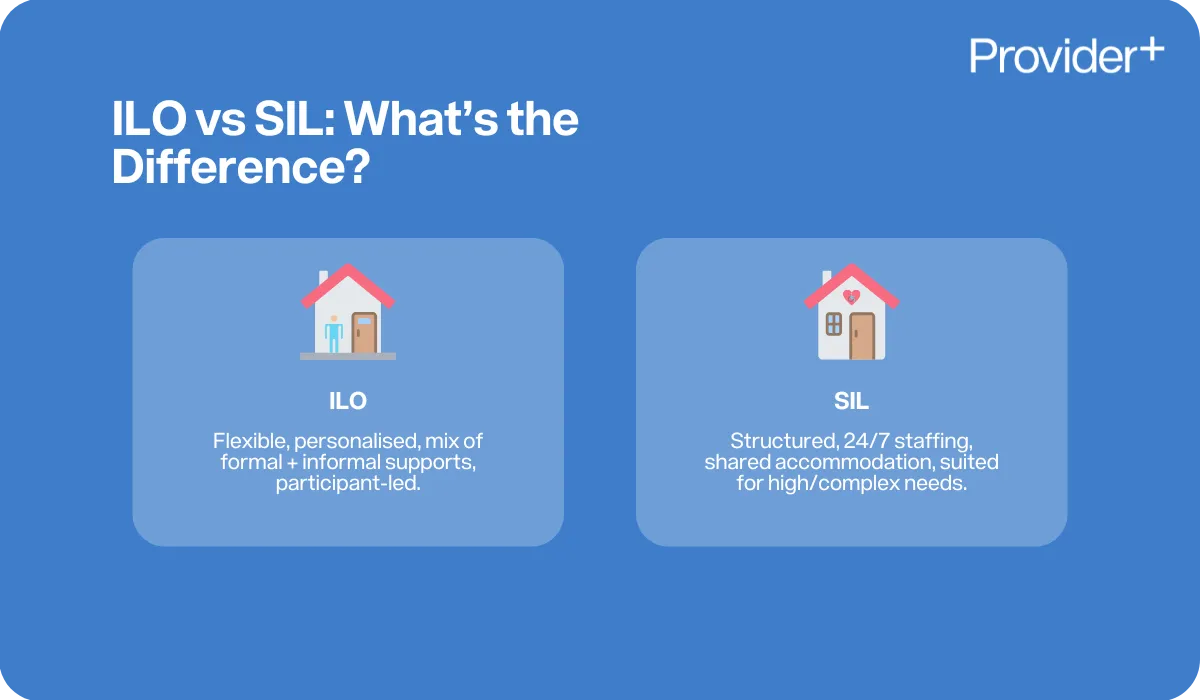
ILO is more flexible and individualised than SIL.
SIL provides structured daily support delivered in a shared accommodation setting, whereas ILO focuses on creating a personalised and flexible support arrangement that suits the participant’s unique lifestyle and living preferences. SIL typically involves 24/7 support with multiple participants sharing staff, while ILO can involve a mix of formal paid support, informal supports, neighbours, or housemates.
ILO is a better option for participants who want independence, while SIL is suited to those with higher and more complex daily support needs.
Who is eligible for ILO?
ILO is designed for participants who:
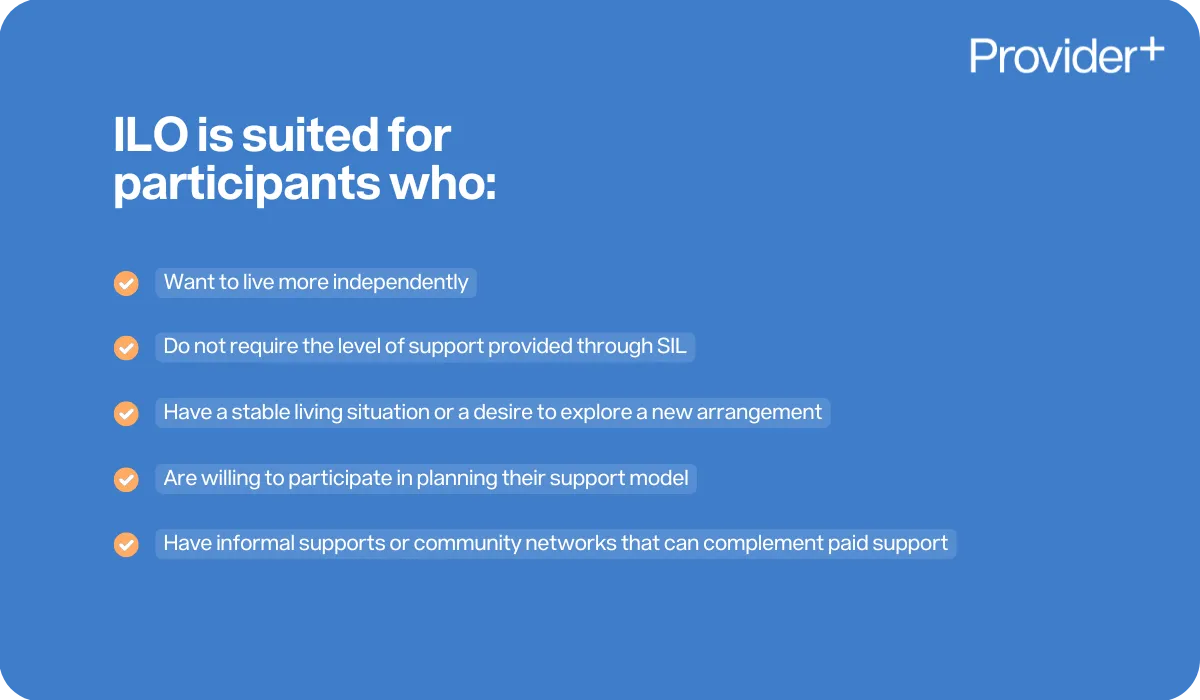
- Want to live more independently
- Do not require the level of support provided through SIL
- Have a stable living situation or a desire to explore a new arrangement
- Are willing to participate in planning their support model
- Have informal supports or community networks that can complement paid support
The NDIA usually assesses whether ILO is reasonable and necessary based on the participant’s goals, risks, support needs, and long-term aspirations.
What types of supports can be included in an ILO?
ILO supports are highly flexible and can include:
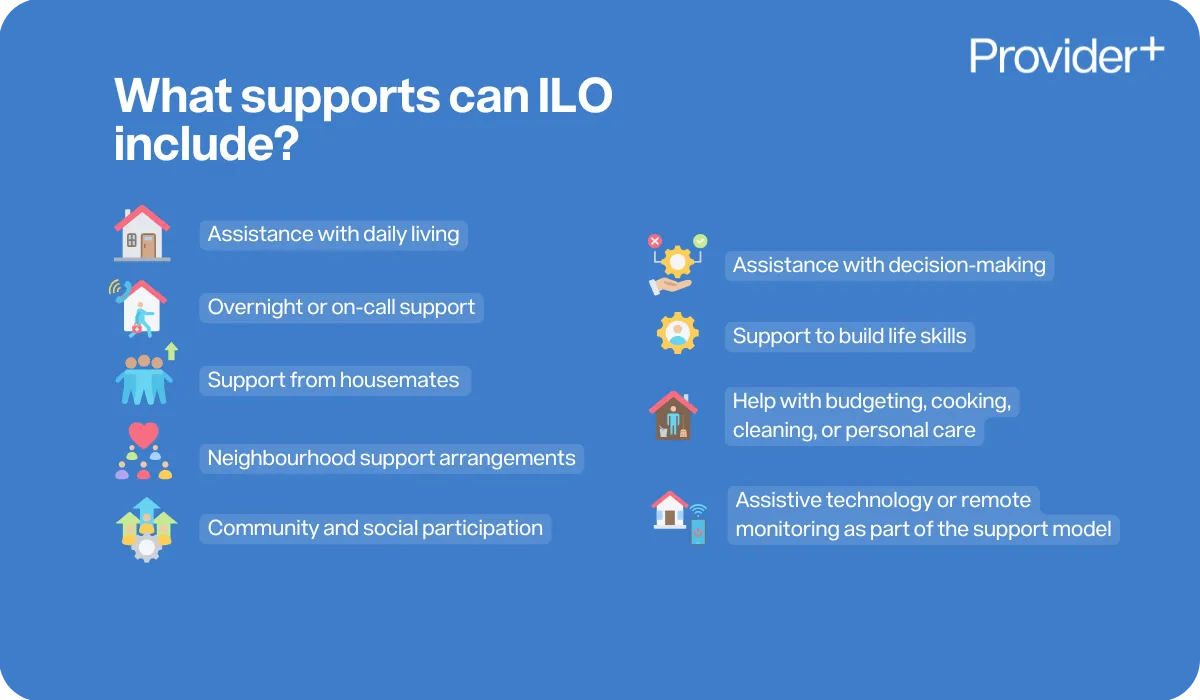
- Assistance with daily living
- Overnight or on-call support
- Support from housemates
- Neighbourhood support arrangements
- Community and social participation
- Assistance with decision-making
- Support to build life skills
- Help with budgeting, cooking, cleaning, or personal care
- Assistive technology or remote monitoring as part of the support model
Does ILO include housing?
No. ILO funding pays for the supports, not the home. Participants may live in:
- Private rentals
- Public housing
- Their own home
- A family home
- Shared living arrangements
Housing costs such as rent, utilities, furniture, and groceries are not covered by ILO.
How is ILO funded in an NDIS plan?
ILO funding usually appears under Capacity Building and Core Supports. It is broken into two stages:
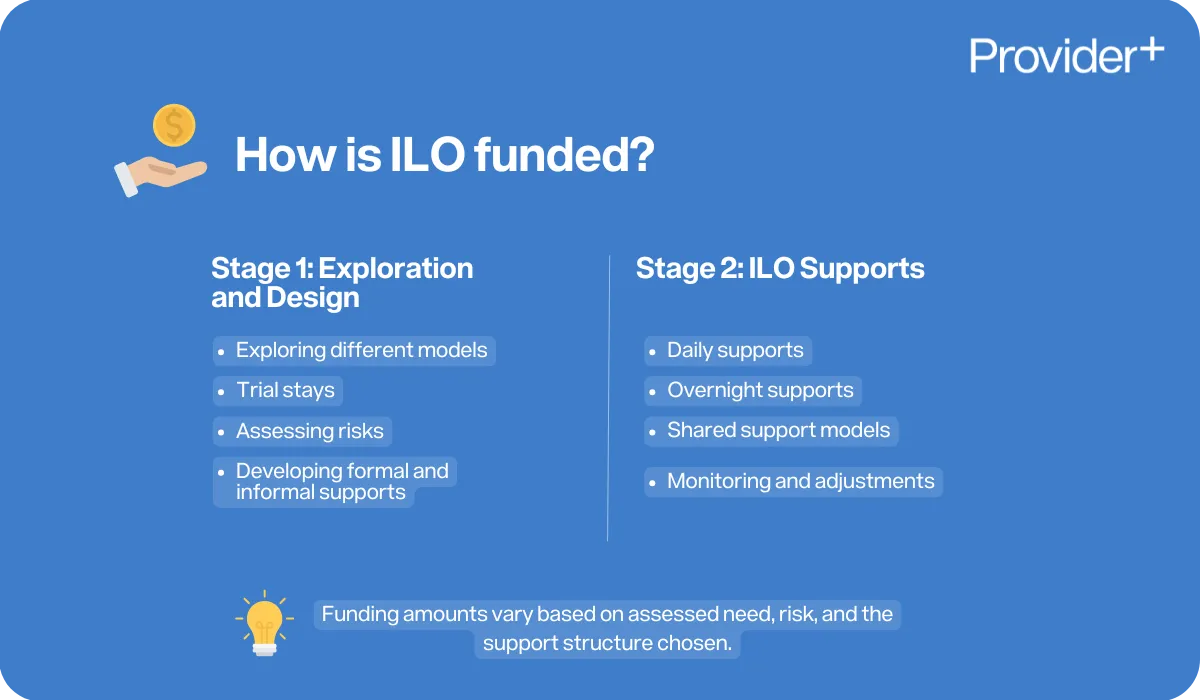
Stage 1: Exploration and Design
This stage funds the planning needed to design the participant’s living arrangement. This includes:
- Exploring different models
- Trial stays
- Assessing risks
- Developing formal and informal supports
Stage 2: ILO Supports
This stage funds the ongoing supports needed to maintain and sustain the arrangement, such as:
- Daily supports
- Overnight supports
- Shared support models
- Monitoring and adjustments
Funding amounts vary based on assessed need, risk, and the support structure chosen.
How long does an ILO arrangement last?
ILO arrangements are long-term and usually align with the duration of the participant’s plan.
However, the arrangement can be regularly reviewed and adjusted based on:
- Changing needs
- Updated goals
- New risks
- Life transitions
- Changes in living circumstances
Can a participant have both ILO and SIL funding?
No. A participant cannot be funded for both ILO and SIL at the same time. They must choose the option that best fits their support needs and independence goals. However, participants can transition between SIL and ILO if their needs or circumstances change.
What responsibilities do ILO providers have?
ILO providers must:
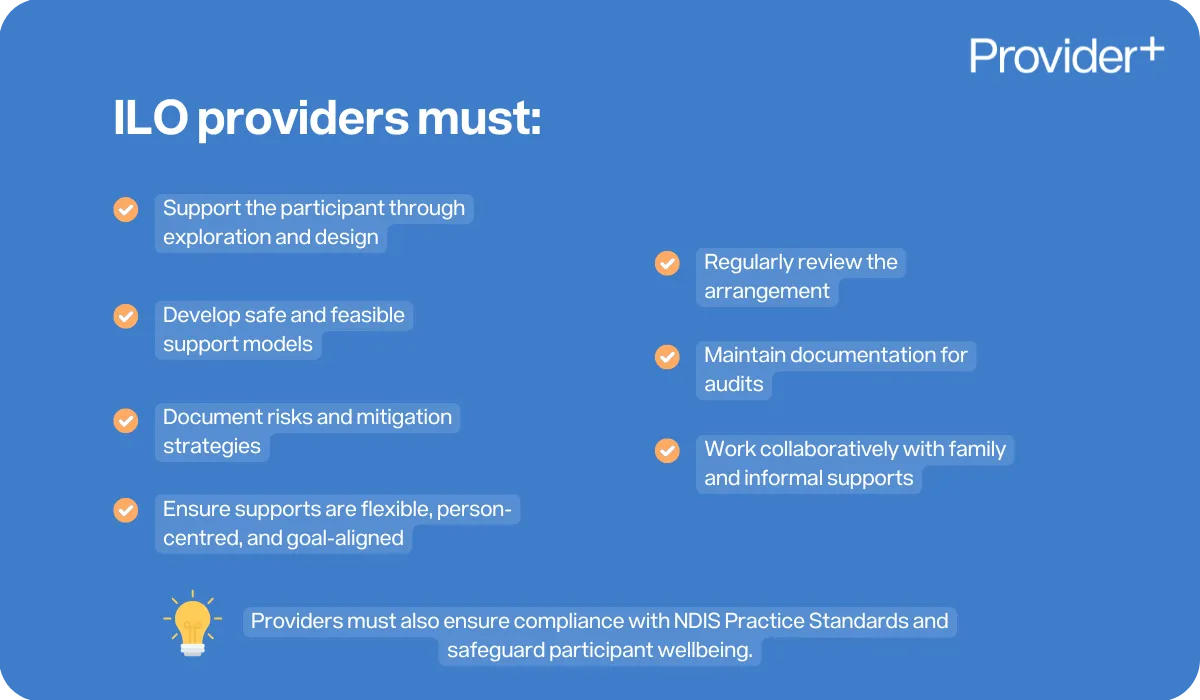
- Support the participant through exploration and design
- Develop safe and feasible support models
- Document risks and mitigation strategies
- Ensure supports are flexible, person-centered, and goal-aligned
- Regularly review the arrangement
- Maintain documentation for audits
- Work collaboratively with family and informal supports
Providers must also ensure compliance with NDIS Practice Standards and safeguard participant wellbeing.
Is ILO suitable for people with complex behaviours?
It can be, depending on the individual. The NDIA will assess whether ILO provides enough support and whether risks can be managed appropriately.
Participants with high behavioural needs may still be able to access ILO if strong informal supports and robust risk plans are in place.
Conclusion
Independent Living Options offer a highly flexible and empowering approach to living independently under the NDIS. Unlike more structured models such as SIL, ILO gives participants the opportunity to design a lifestyle that reflects their personal goals, preferences, and strengths. By understanding how ILO works, participants and providers can create safe, sustainable, and meaningful living arrangements that promote long-term independence and wellbeing.
We strive to keep our content accurate and up to date; however, NDIS Commission rules and requirements can change. For the latest information, visit the NDIS Quality and Safeguards Commission website or contact our team.
Need help with the NDIS?
Fill in the form below to get started.

Understand exactly why registration takes 6–12+ months

.webp)

