



FAQs for NDIS Providers - Medium Term Accommodation (MTA)
- MTA (Medium Term Accommodation) covers housing costs only — meals, support workers, utilities, and daily living expenses must be funded separately through Core Supports.
- Eligibility requires a confirmed long-term housing plan — participants without an approved permanent solution such as SDA, SIL, or home modifications will generally not qualify.
- MTA is funded under Home and Living Supports — making it a distinct, specialised category used solely during housing transitions.
- Extensions beyond 90 days are possible but rare — approved only when delays are documented, outside the participant's control, and the permanent solution is nearly ready.
Medium Term Accommodation (MTA) is an important but often misunderstood NDIS support designed to help participants transition safely into long-term housing. This FAQ guide answers the most common questions about how MTA works, who it is for, and what is included.
What is Medium Term Accommodation (MTA)?
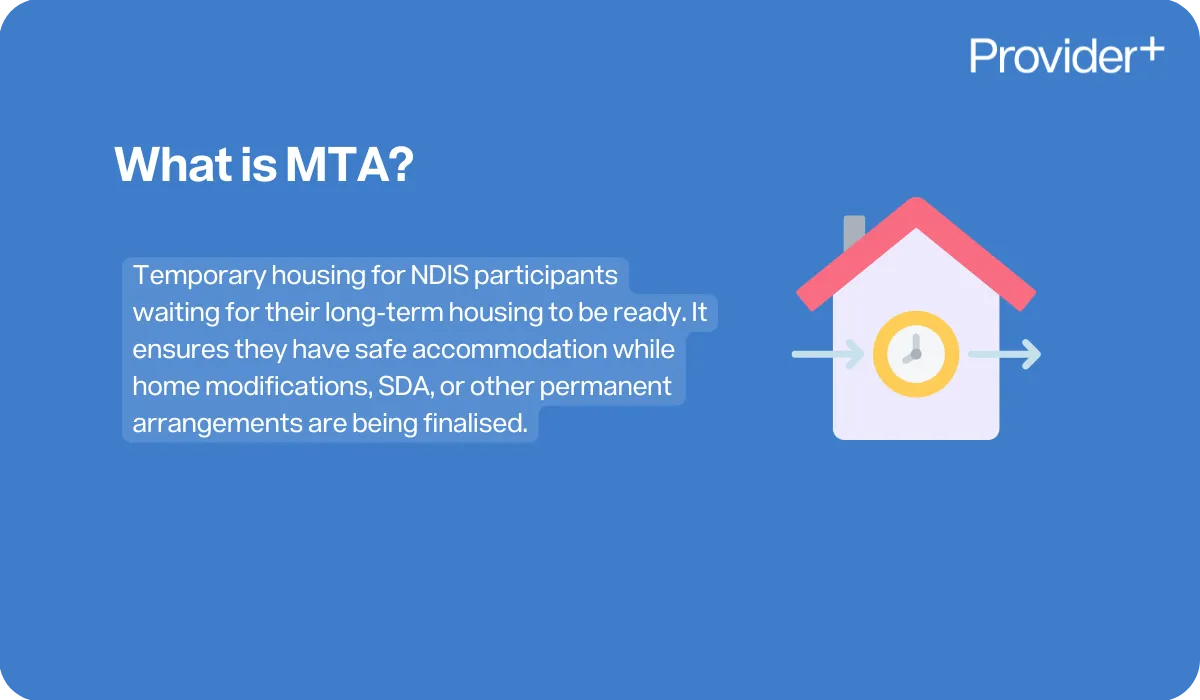
Medium Term Accommodation is temporary housing for NDIS participants who are waiting for their long-term housing solution to become available. MTA ensures that participants are not left without safe accommodation while they wait for home modifications, Specialist Disability Accommodation (SDA), or other permanent arrangements to be finalised.
Is MTA a long-term housing option?
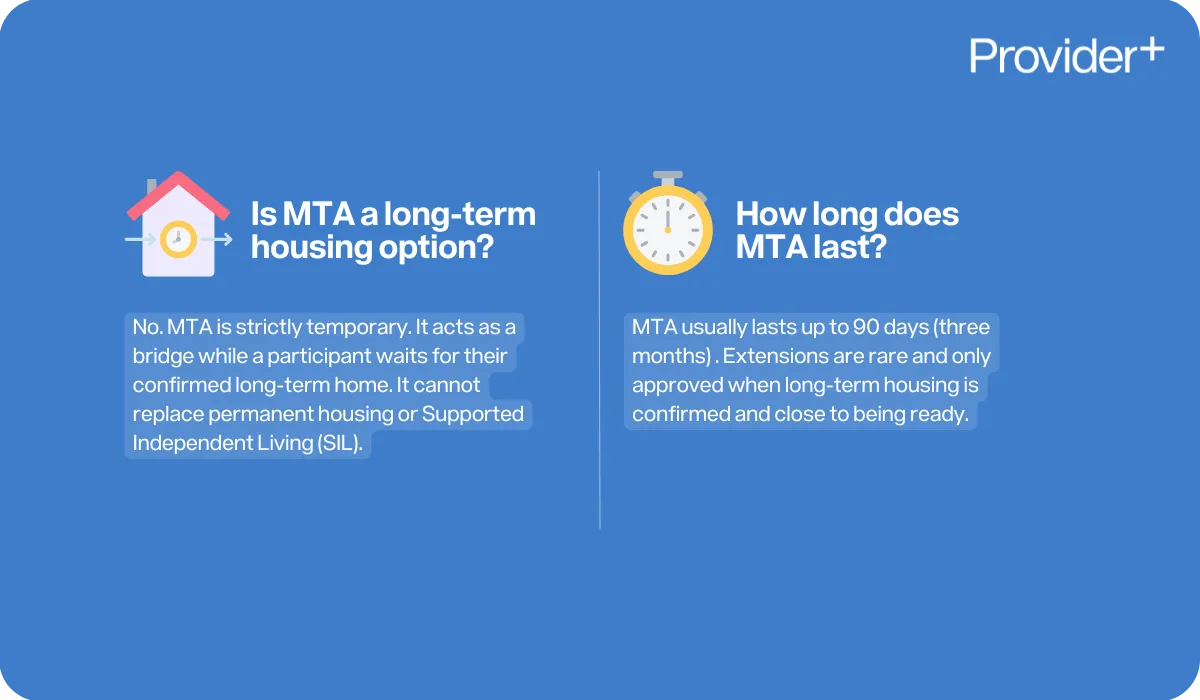
No. MTA is strictly temporary. It is designed to act as a bridge between a participant’s current living situation and their confirmed long-term home. MTA cannot be used as a substitute for permanent accommodation or Supported Independent Living (SIL).
How long does MTA last?
MTA is typically funded for up to 90 days (three months). In some exceptional circumstances, the NDIA may approve an extension, but this is uncommon and always based on clear evidence that long-term housing is confirmed and nearing completion.
Who is eligible for MTA?
MTA is available to participants who:
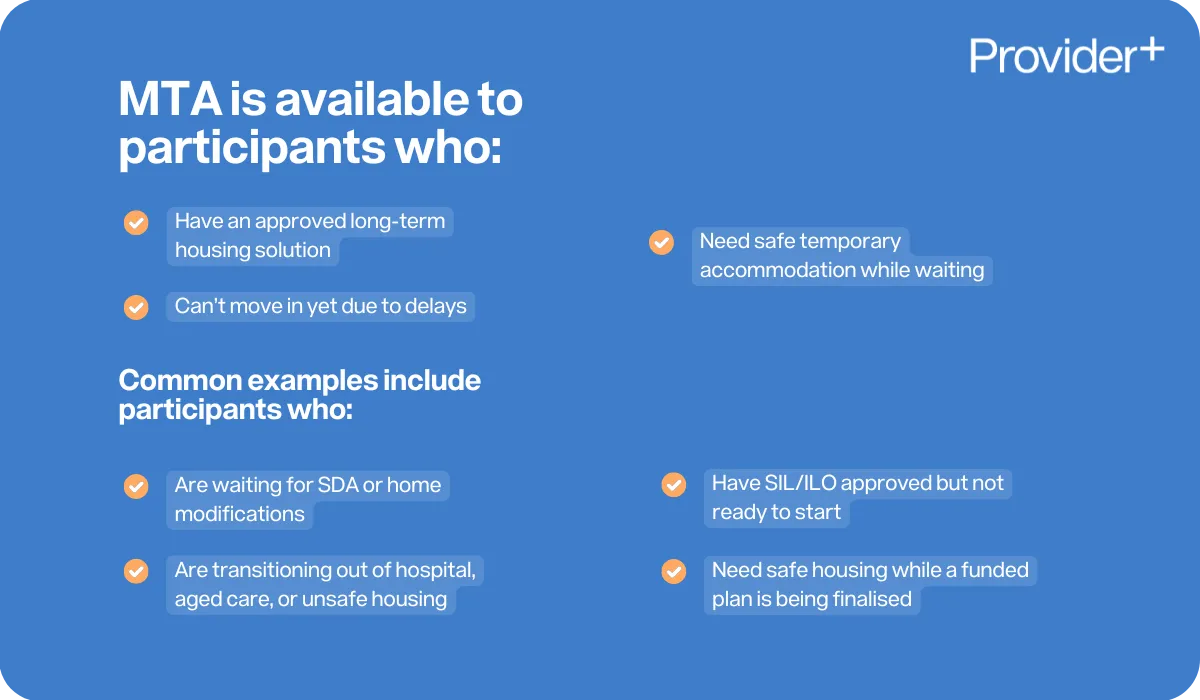
- Have a long-term housing solution already approved,
- Cannot move into that solution yet due to delays or ongoing work, and
- Require safe, temporary accommodation in the meantime.
Common examples include participants who:
- Are waiting for their SDA property to be finalised or become available,
- Are waiting for home modifications to be completed,
- Are transitioning out of a hospital, aged care, or unsuitable environment,
- Have SIL or ILO supports approved but not yet ready to begin,
- Need a safe place to stay while a funded housing plan is being prepared.
Participants without a confirmed long-term plan are generally not approved for MTA.
What does MTA include?
MTA covers accommodation only. It does not include:
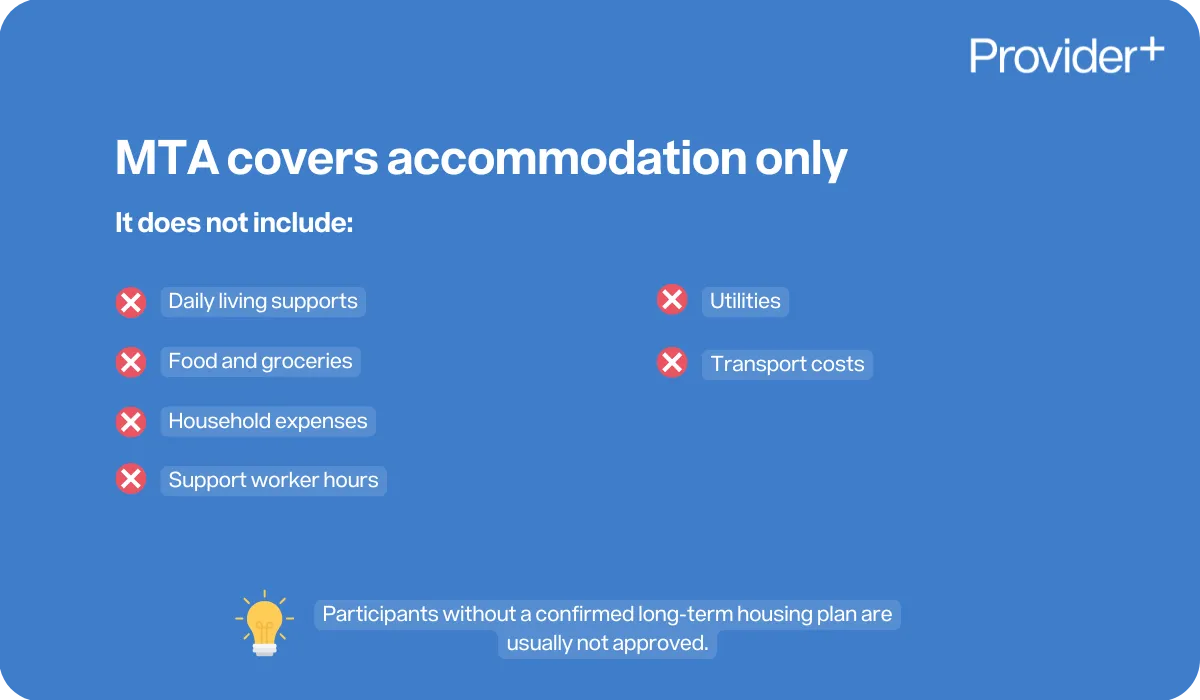
- Daily living supports,
- Food and groceries,
- Household expenses,
- Support worker hours,
- Utilities,
- Transport costs.
The participant’s support needs must be funded separately through Core Supports or other relevant funding categories.
Where is MTA funded in an NDIS plan?
MTA is funded under Capital Supports – Home and Living. It is not part of Core Supports, and it is not considered daily living assistance. It is a specialised category specifically for short-term housing during a transition period.
How is MTA different from STA (Short Term Accommodation)?
MTA and STA differ in several important ways. Medium Term Accommodation (MTA) is designed to provide temporary housing only and is funded under the Capital Supports category. It typically lasts for up to 90 days and does not include meals, daily supports, or activities. It is used when a participant is waiting for their long-term housing solution, such as SDA or home modifications, to become available.
In contrast, STA (Short Term Accommodation) is a short-term support that includes accommodation, meals, support workers, and goal-focused activities. It is funded from the Core Supports budget and usually covers up to 28 days per year. STA is primarily used for respite, skill-building, or trying a new routine or environment.
Why would someone need MTA?
A participant may require MTA when they are unable to remain in their current home and need somewhere safe to stay throughout a transition period. Examples include:
- A participant being discharged from hospital but unable to return home,
- A participant’s home undergoing significant modifications,
- A new SDA dwelling experiencing construction delays,
- A participant requiring SIL support that is not ready to commence,
- A participant living in unsafe or inappropriate accommodation.
MTA ensures the participant does not fall into crisis or homelessness during these transitions.
Do participants have choice and control over their MTA provider?
Yes. Participants have the right to choose their preferred MTA provider. Providers must explain what is included, the duration, and any personal costs the participant may be responsible for.
Can MTA be extended beyond 90 days?
Extensions may be approved, but only if:
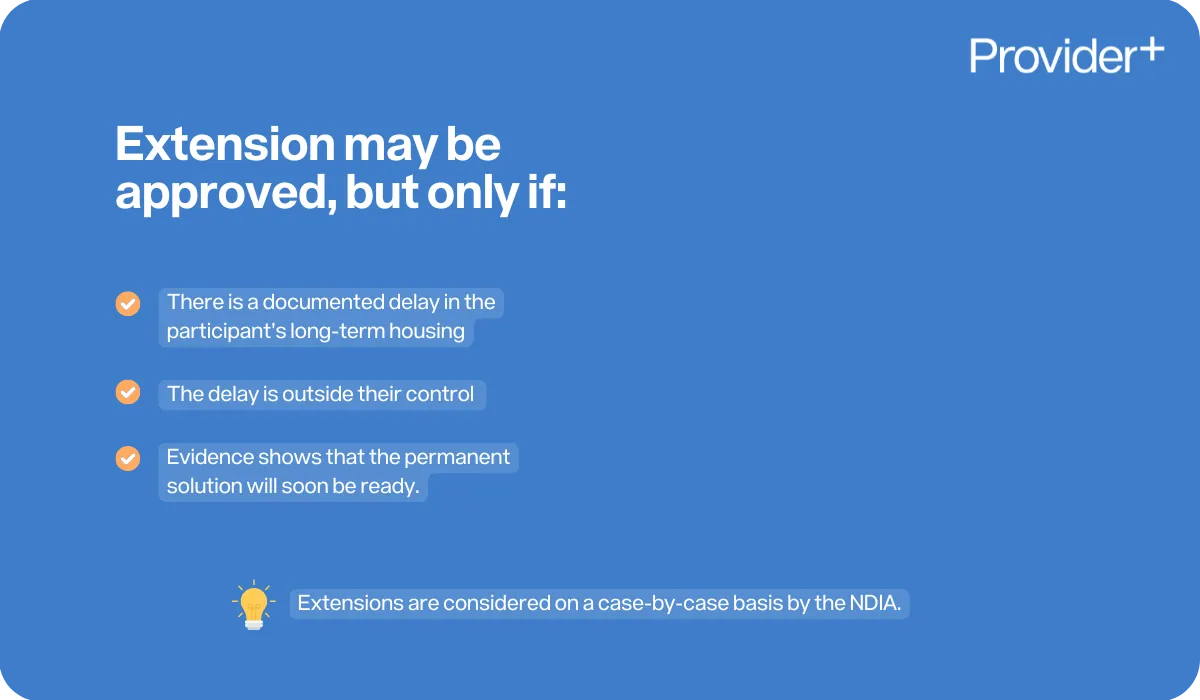
- There is a clear and documented delay in the participant’s long-term housing, and
- The delay is outside the participant’s control, and
- Evidence shows that the permanent solution will soon be ready.
Extensions are considered on a case-by-case basis by the NDIA.
What should providers document when delivering MTA?
Providers should keep detailed records, including:
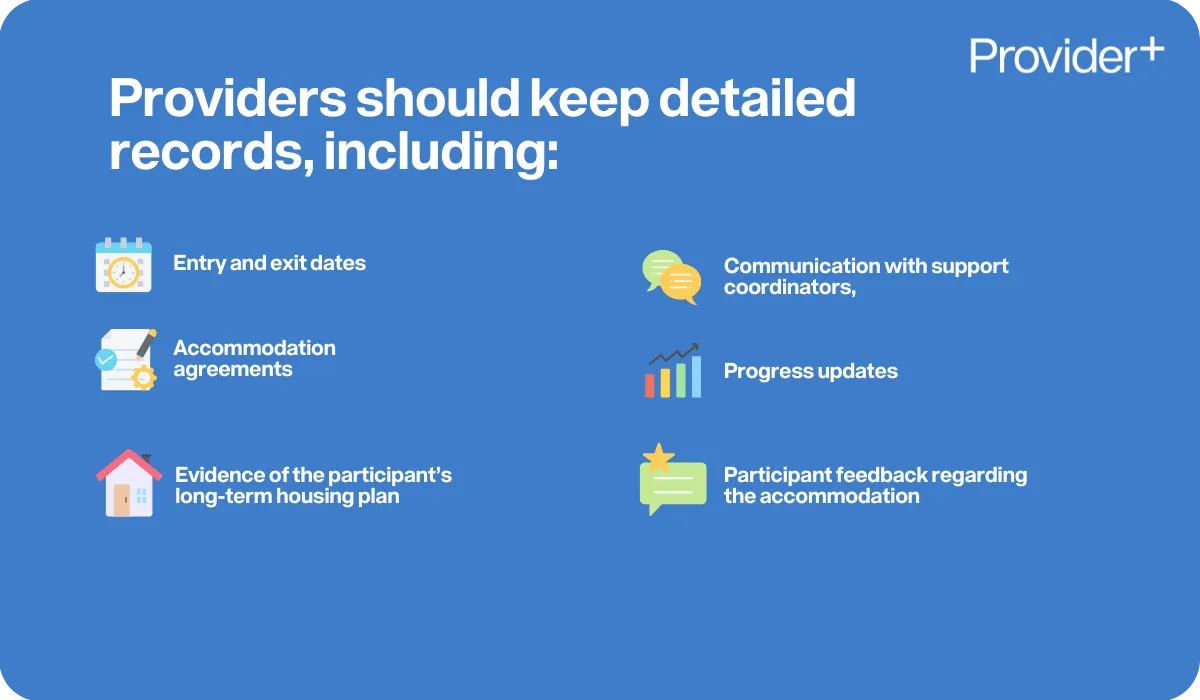
- Entry and exit dates,
- Accommodation agreements,
- Evidence of the participant’s long-term housing plan,
- Communication with support coordinators,
- Progress updates,
- Any safety or incident notes,
- Participant feedback regarding the accommodation.
Can MTA be used as emergency accommodation?
In some cases, MTA can be used for emergency situations, particularly when a participant is being discharged from hospital or facing homelessness. However, the NDIA still requires evidence of a long-term plan before approving MTA.
If no long-term plan exists, other short-term or crisis support may be more appropriate.
Does MTA come with support workers?
No. MTA only covers the cost of the accommodation itself. All supports, supervision, and personal care must be funded separately, usually through Core Supports. Participants must ensure they have the appropriate supports in place before entering MTA.
Can a participant use MTA to trial independent living?
No. Trialling independence or exploring new living arrangements is not the purpose of MTA. Those activities are more suitable for STA, SIL trial stays, or other capacity-building options.
MTA is strictly for participants with a confirmed long-term housing goal that is pending completion.
Medium Term Accommodation plays a crucial role in ensuring NDIS participants have a safe place to stay when transitioning between housing solutions. Although it is temporary and limited in scope, it prevents participants from becoming stuck in hospital, aged care, or unsafe environments while they wait for long-term arrangements.
By understanding what MTA includes, who it is for, and how it is funded, participants and providers can ensure it is used appropriately and effectively within the NDIS framework.
Need help with the NDIS?
Fill in the form below to get started.

Understand exactly why registration takes 6–12+ months

%20.webp)
.webp)