


FAQs for NDIS Providers - Short Term Respite (STR)
Short Term Respite (STR) is one of the most flexible and widely accessed supports under the NDIS. While many people know STR as respite, it is much more than just a temporary stay away from home.
Short Term Respite is covered under the registration group 0115 - Assistance with Daily Life Tasks in a Group or Shared Living Arrangement and is the newly renamed term for Short Term Accommodation as advised by the NDIS.
This FAQ guide answers the most common questions about how STR works, who it is for, and what is included.
What is Short Term Respite (STR)?
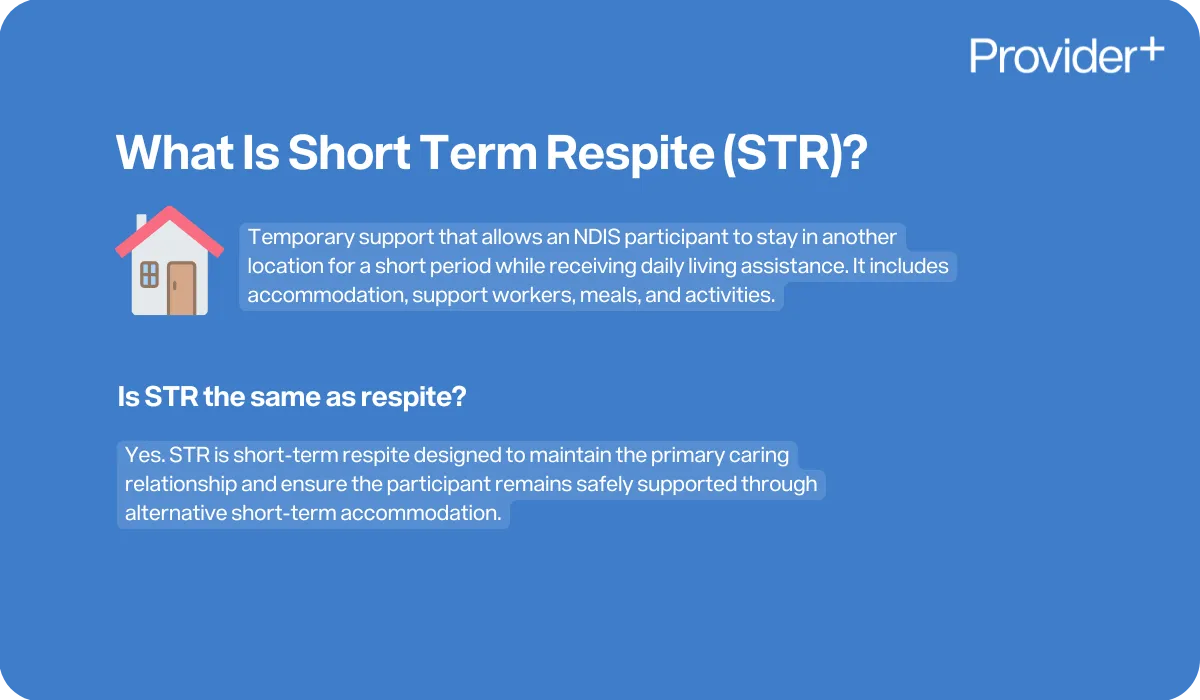
Short Term Respite is a temporary support option that allows NDIS participants to stay in a different location for a short period while receiving assistance with daily living activities. STR includes the cost of accommodation, support workers, meals, and activities.
Is STR the same as respite?
Yes, it is a short, temporary support designed to maintain the primary caring relationship and ensure the participant remains safely supported at home through short-term alternative accommodation options.
Who can access STR?
Short Term Respite is available to NDIS participants who rely heavily on primary informal supports who tend to be family or unpaid carers.
You may be eligible if you:
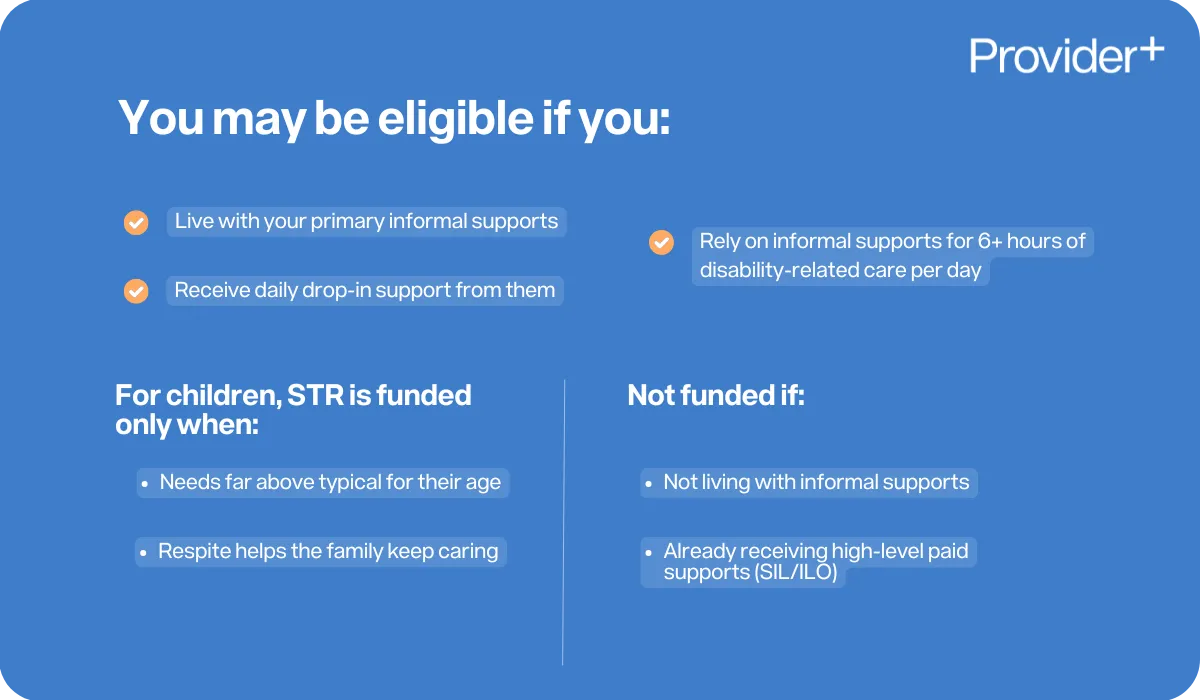
- Live with your primary informal supports, or
- Receive daily drop-in support from them, and
- Rely on those informal supports for more than 6 hours of disability-related care per day.
For children, STR is funded only when:
- The child’s disability support needs are significantly greater than typical for their age, and
- Respite helps the family sustain their caring role.
Short Term Respite is not funded if you:
- Do not live with family or other informal supports, or
- Already receive extensive paid supports such as Supported Independent Living (SIL) or Individualised Living Options (ILO).
How long can a participant stay in STR?
The NDIS typically funds STR for up to 28 days per year, with a maximum of 14 days per stay. These days can be used as:
- A single block stay
- Several short weekends
- Occasional nights throughout the year
The frequency and duration depend on what best supports the participant’s goals and circumstances.
What does STR include?
STR is an all-inclusive service. Every STR provider may offer slightly different programs or activities, but provided supports must meet NDIS quality and safety standards. It usually includes:
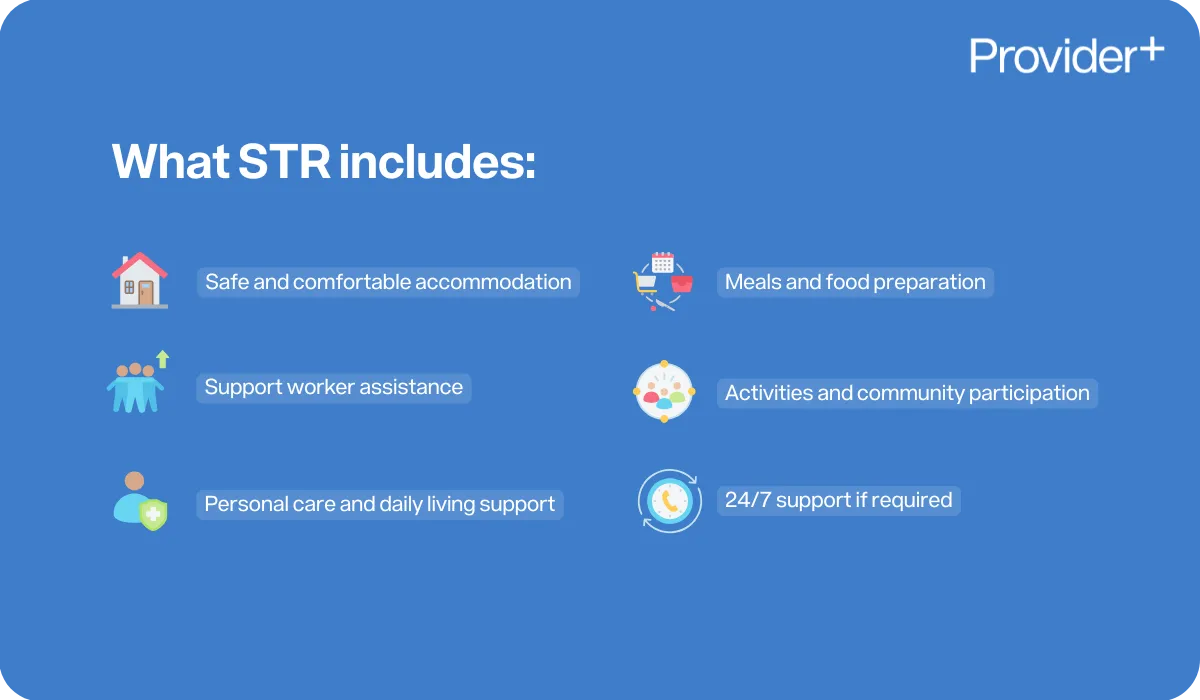
- Safe and comfortable accommodation
- Support worker assistance
- Personal care and daily living support
- All meals and food preparation
- Skill-building activities
- Community participation
- 24/7 support if required
How is STR funded in an NDIS plan?
STR is funded from the Core Supports – Assistance with Daily Living budget. It does not require a separate category unless the participant has very specific needs or high ratios of support.
Support Coordinators or providers should provide evidence showing how STR supports the participant’s goals, independence, and wellbeing.
Do participants need to contribute personal money during an STR stay?
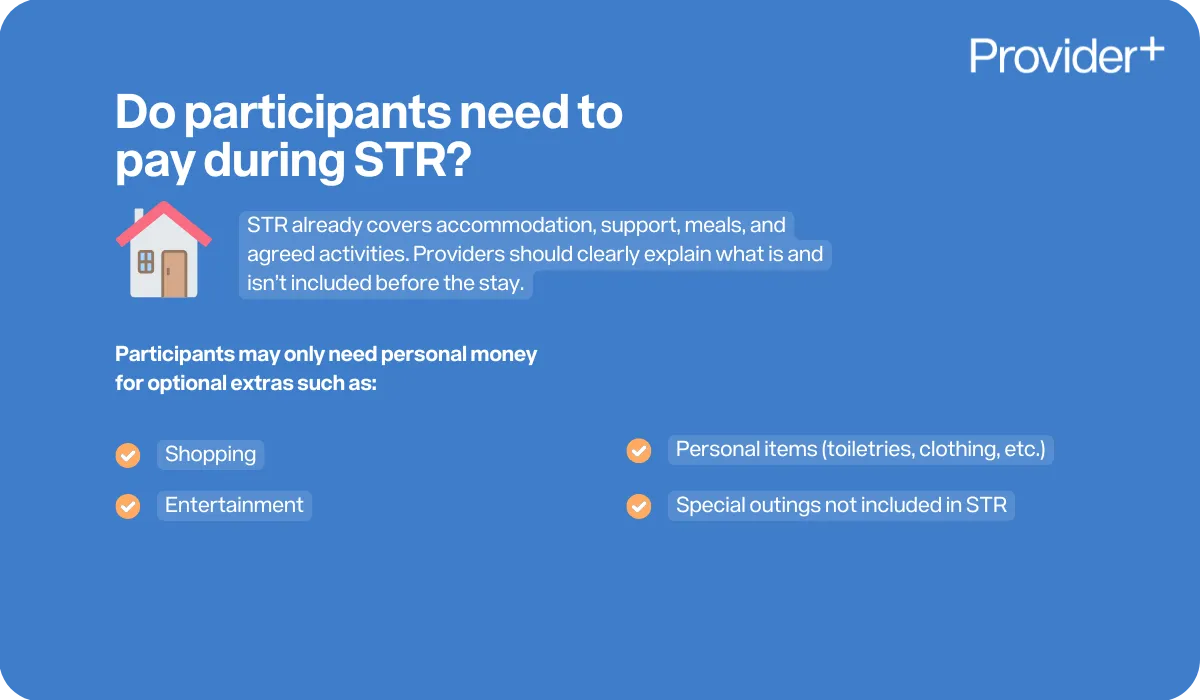
STR covers accommodation, support, meals, and agreed activities. Providers should explain what is and is not included before the stay begins. Participants may need personal spending money for optional activities such as:
- Shopping
- Entertainment
- Special outings not included in the STR service
- Personal items like toiletries or clothing
Can STR be used to trial independent living?
Yes. STR is commonly used by participants who are preparing for:
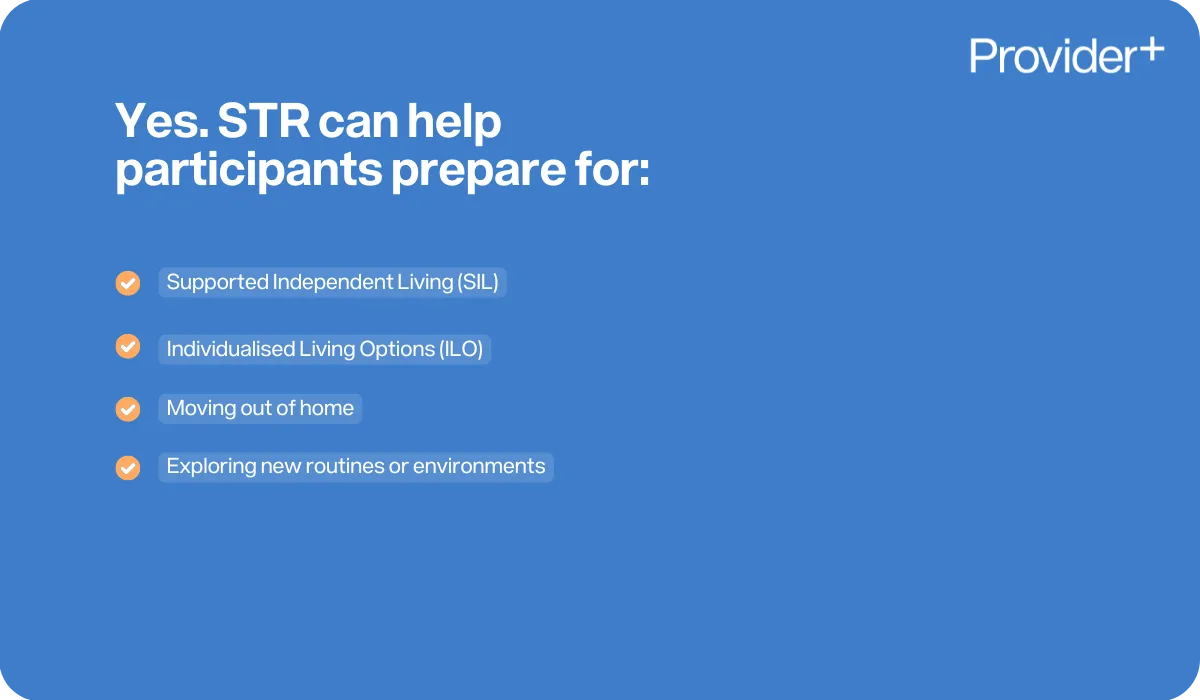
- Supported Independent Living (SIL)
- Individualised Living Options (ILO)
- Moving out of home
- Exploring new routines or environments
Can STR be used for emergencies?
Short Term Respite does not replace crisis accommodation services, but, in some cases STR can be used for short-term crisis or emergency accommodation, this may occur when:
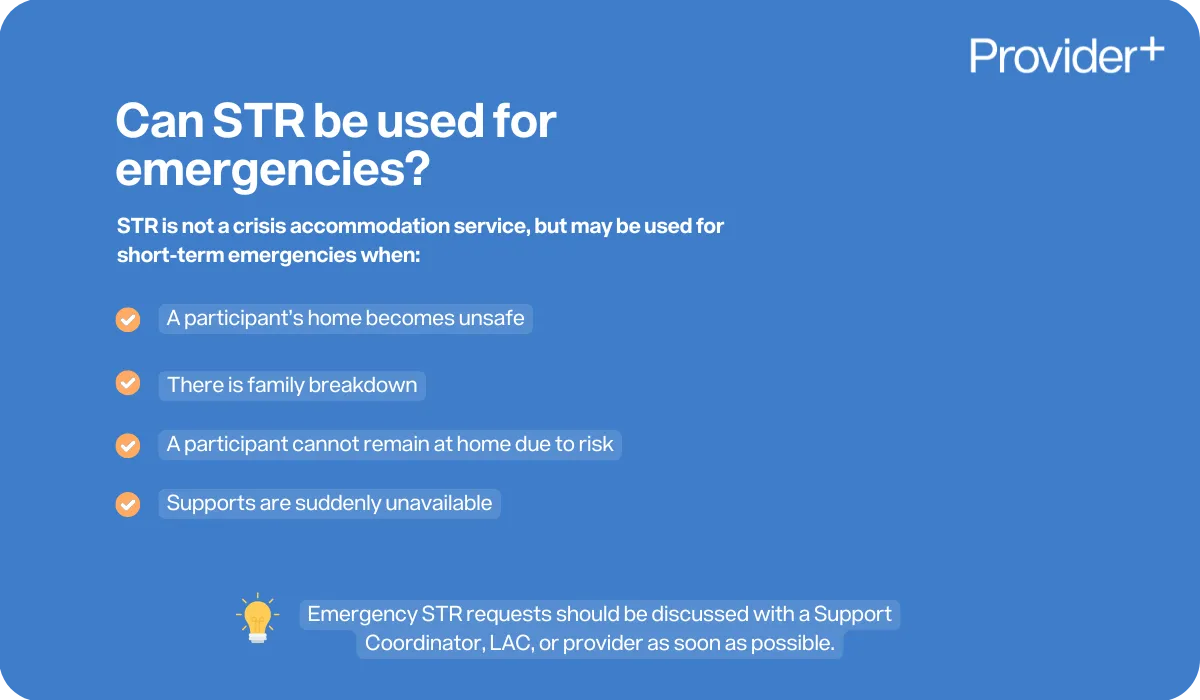
- A participant’s home becomes unsafe
- There is family breakdown
- A participant cannot remain at home due to risk
- Supports are suddenly unavailable
Emergency STR requests should be discussed with a Support Coordinator, LAC, or provider as soon as possible.
Can participants choose their own STR provider?
Yes. Participants have full choice and control over which STR provider they use. They may select providers based on:
- Location
- Type of accommodation
- Activities offered
- Cultural fit
- Support needs
- Availability
Participants can also choose different providers throughout the year depending on their goals.
What is the difference between STR and MTA?
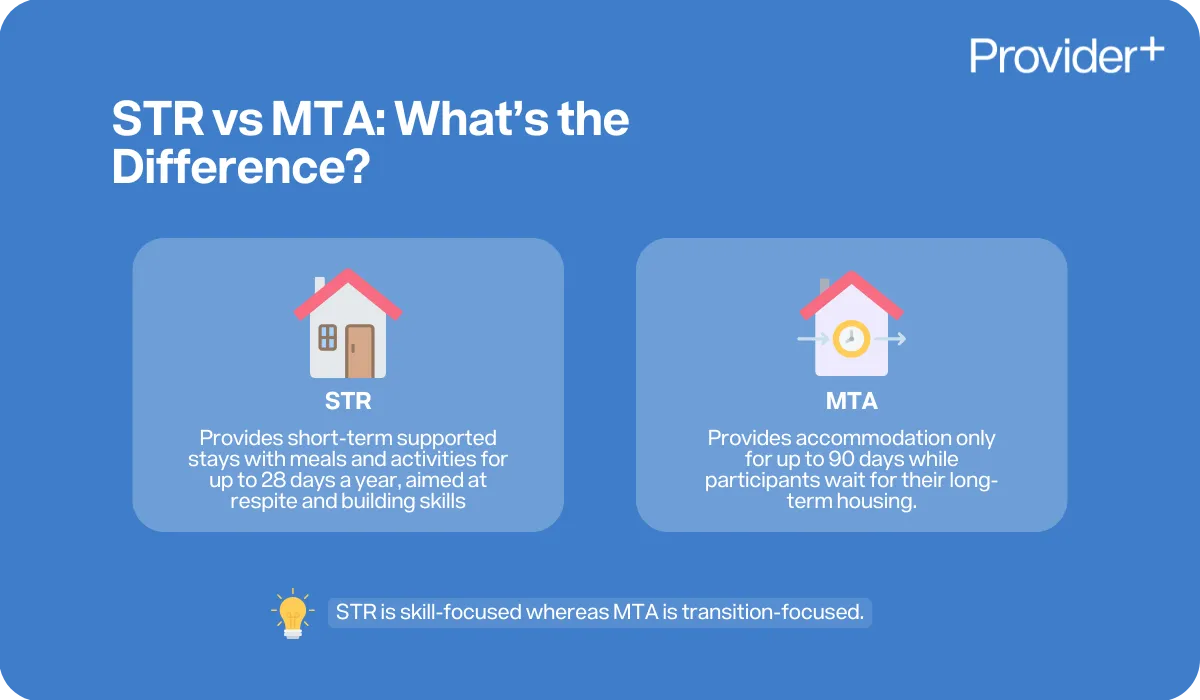
STR provides short-term respite and accommodation, usually up to 28 days per year, and includes meals and activities.
MTA (Medium Term Accommodation) provides temporary housing only, usually for up to 90 days, while a participant waits for their long-term housing solution (such as SDA or home modifications).
STR is skill-focused whereas MTA is transition-focused.
What should providers document during STR?
Providers must maintain detailed documentation, including:
- Participant goals for the stay
- Support activities provided
- Any incidents or changes in support needs
- Progress notes
- Evidence of skill development or participation
- Updates for support coordinators and families (with consent)
How can participants get the most out of STR?
Participants can benefit most from STR by:
- Setting clear goals for each stay
- Communicating preferences and support needs
- Choosing a provider that aligns with their interests
- Keeping track of progress or improvements
- Reviewing each stay with their support coordinator
STR becomes most effective when it is part of a larger plan for independence and wellbeing.
Participants, families, providers and support coordinators can find more information in the NDIS short term respite guideline.
Need help with the NDIS?
Fill in the form below to get started.

Understand exactly why registration takes 6–12+ months



.webp)