How To Get NDIS Participants and Retain Them in 2026
A Practical Growth Guide for New and Established Providers
In 2025, successful NDIS providers combined digital visibility, trusted partnerships and strong participant relationships to grow their businesses. Whether you are a new provider building credibility or an established organisation expanding reach, sustainable growth depends on three pillars, which include understanding the NDIS market and adapting to its evolving landscape.
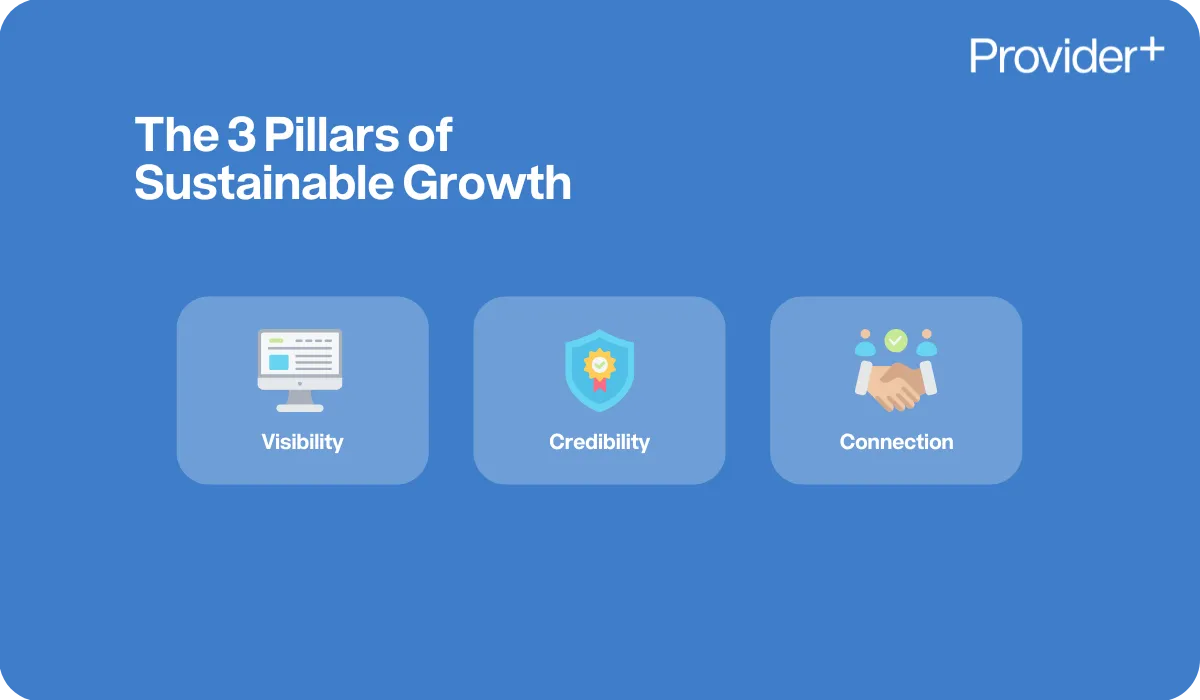
- Visibility – maintaining a professional, accessible online presence through websites, Google Business Profiles and verified directories.
- Credibility – demonstrating compliance, positive testimonials and active community involvement to earn participant trust.
- Connection – building genuine relationships with support coordinators, plan managers and participants who become ongoing referral sources.
This guide explains how new and existing NDIS providers can attract participants, strengthen their reputation and maintain long-term engagement using proven online and offline strategies aligned with 2024 and 2025 trends to sustain growth throughout 2026.
For New NDIS Providers
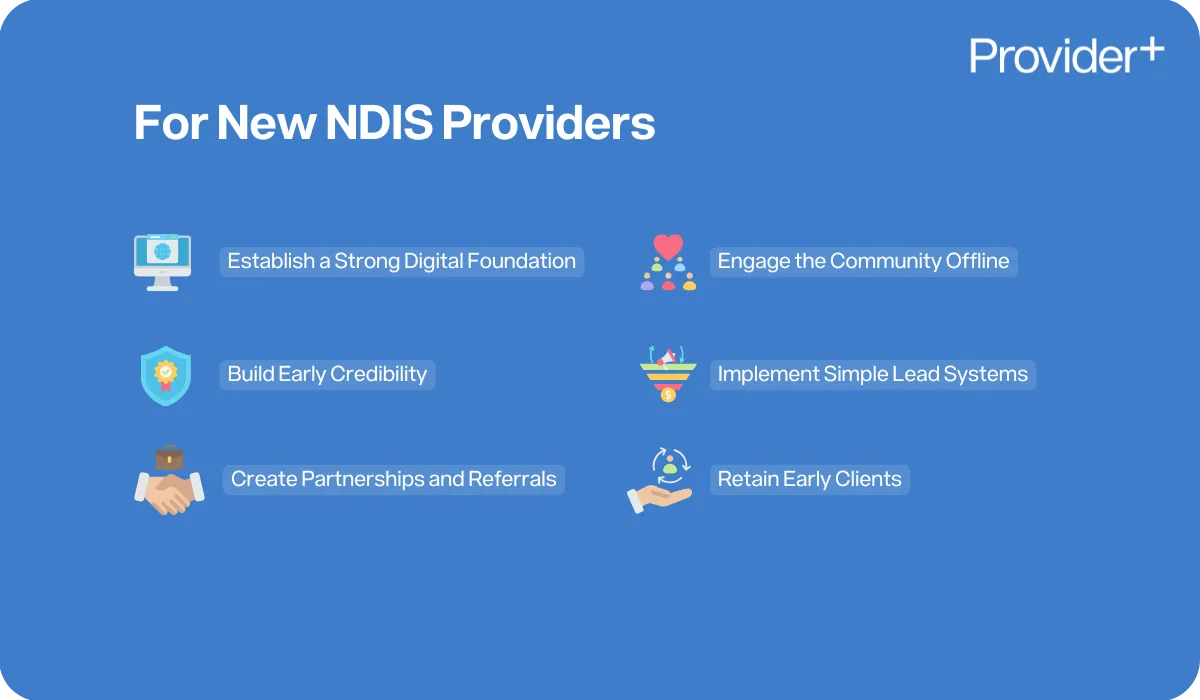
1. Establish a Strong Digital Foundation
Most participants and families begin their search online. A clear, mobile-friendly website signals professionalism and trustworthiness. New providers should complete the online application form as the first step in the NDIS registration process. Include your NDIS registration details, service descriptions, staff photos, testimonials and easy-to-use contact forms. When setting up your website and contact forms, ensure the application form for NDIS registration is filled out accurately to avoid delays.
You can build an affordable, accessible website through platforms like Squarespace, Webflow or Canva Websites. Set up a Google Business Profile so participants can find you on Google Maps and Search. Add photos, contact details and respond to reviews.
Your business will also be visible to participants on verified NDIS directories such as the NDIS Provider Finder and this will greatly improve discoverability and signal legitimacy. Listing your NDIS business in online directories enhances your digital presence, helps clients compare providers, and supports reputation management through client reviews.
2. Build Early Credibility
Participants value trust and accountability. Work towards becoming a registered NDIS provider through the NDIS Quality and Safeguards Commission. The registration process involves meeting registration requirements, completing a self assessment, and providing supporting evidence to demonstrate compliance. Providers must select the appropriate registration group(s) based on their services and understand the relevant and applicable NDIS Practice Standards. The NDIS Commission will issue an initial scope of audit document outlining audit requirements, and providers must engage an approved quality auditor to conduct audits. Only registered NDIS providers can access agency managed participants, and ongoing audits are required to maintain compliance. The application outcome may result in successful applicants being granted registration, while unsuccessful applicants can seek further review or appeal to the administrative appeals tribunal.
If you are not yet registered, highlight other credibility markers such as worker screening checks, qualifications, professional memberships and digital credentials. Where possible, collect early testimonials from satisfied clients and publish them on Google or Facebook. Authentic reviews will contribute to influencing participant decisions when it comes to choosing a provider.
3. Create Partnerships and Referrals
Referrals are vital for growth, and building a strong referral network with healthcare professionals and local support coordinators is essential. Introduce yourself to plan managers, allied health professionals, and local support coordinators. Collaborate with healthcare professionals to expand your client base and find potential clients. Attend local NDIS expos, council networking events or community forums to meet potential referrers. Engaging with local communities helps build trust and can increase referrals. Partnerships with Support Coordinators will help new providers reach large participant networks quickly.
4. Engage the Community Offline
Community engagement builds familiarity and trust, which can be built on by attending disability expos, volunteering with local organisations, or hosting small information sessions on NDIS-related topics. These activities are also valuable opportunities to promote disability services and supports and services at local area events. Most successful NDIS businesses found that participating in expos remains one of the most effective ways for participants to meet providers in person and learn about available disability supports. Simple actions such as distributing flyers in clinics and community centres still work when paired with a strong digital presence, especially when connecting with providers of disability supports in the local area.
5. Implement Simple Lead Systems
Use a basic spreadsheet or CRM to track inquiries, manage and respond to participant requests efficiently, and integrate a booking tool like Calendly for ease of scheduling those inquiries. By also promptly providing responses, this shows professionalism of your organisation and builds relationships with participants who gain confidence with your operations. Many NDIS participants contact several providers before deciding and often choose the one who replies first, but will also take into consideration the communication approach before making a decision. NDIS businesses who manage requests promptly are more likely to convert inquiries into clients.
6. Retain Early Clients
Retention begins with a transparent onboarding procedure and clear service delivery expectations. Communicate clearly about what services you provide, your cancellation terms, the documents provided as well as communication methods, highlighting the role of key personnel in ensuring effective onboarding and ongoing support. Check in regularly with your participants or their guardians and ask for feedback. Early and regular communication helps prevent dissatisfaction and creates loyal clients who refer others to your organisation.
For Established NDIS Providers
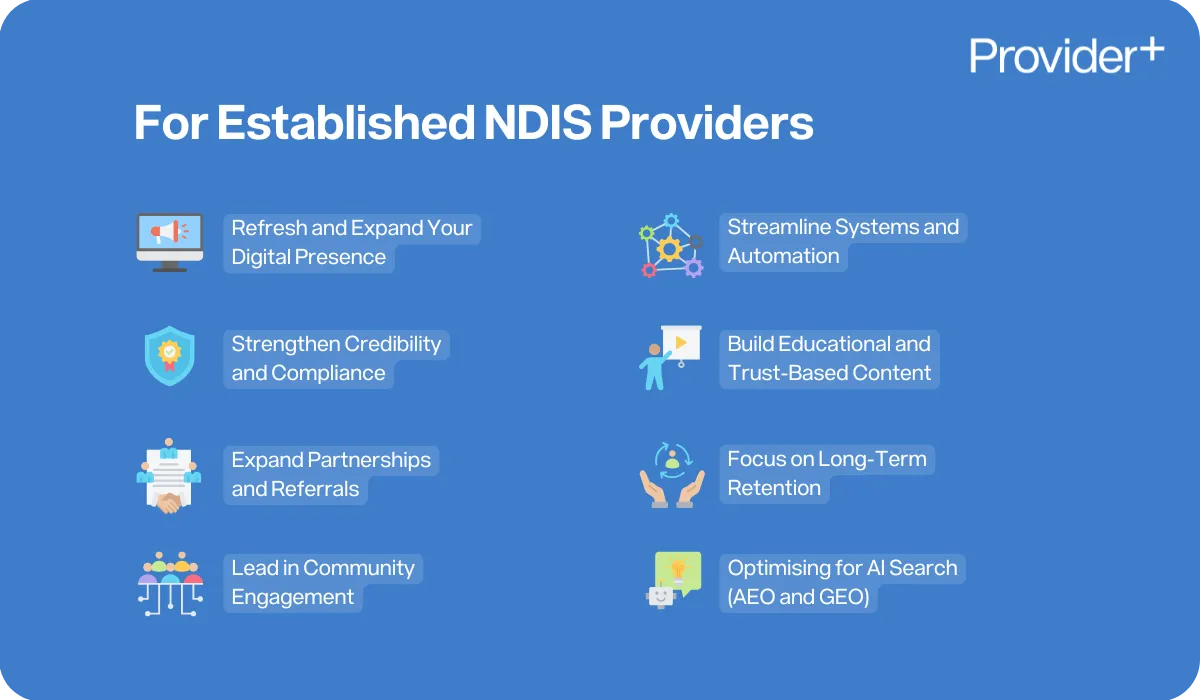
1. Refresh and Expand Your Digital Presence
Organisations with outdated websites or social media profiles tend to have reduced credibility. It’s important to audit all digital channels quarterly to ensure contact details and service information remains accurate.
In addition to maintaining your website and social media, use digital marketing strategies such as content marketing and online advertising to build brand awareness and improve your position in search results. These proactive marketing efforts help increase your online visibility and attract more clients.
Improve search visibility through local SEO (Search Engine Optimisation) by targeting terms such as “NDIS support in [City]” or “registered NDIS provider near me”. Optimise your Google Business Profile and list your NDIS business in relevant online directories as part of your marketing strategy. Ensure your profiles include recent photos, posts and verified reviews, as positive feedback improves visibility and conversion in search results.
On social media, post regularly by creating stories, providing team updates and sector news to maintain engagement with your target audience.
2. Strengthen Credibility and Compliance
To strengthen your credibility as an NDIS provider business or registered provider, highlight your years of service, audit history, and participant outcomes. Sharing information about quality standards, staff training, NDIS Worker Screening Check procedures, and professional memberships demonstrates not only compliance but also transparency of your organisation. As NDIS registered providers, it is essential to meet the relevant NDIS Practice standards required of NDIS service providers, including ongoing audits, proper documentation, and maintaining required insurances. Transparency reassures participants and families of the NDIS service provider that they are engaging with, whilst also maintaining a positive relationship with them.
Encourage your participants or their advocates and guardians to leave reviews on Google and Facebook and ensure to respond to all feedback in a polite and professional tone.
3. Expand Partnerships and Referrals
The NDIS space is all about building and maintaining strong connections with plan managers, support coordinators, and allied health professionals to expand your client base and find potential clients through partnerships. Provide service updates and thank them for any referrals that they provide. You may want to seek new partnerships with schools, clinics, and hospitals that support NDIS participants, as these efforts help you find clients and grow your client base. Additionally, encourage satisfied participants to share your contact details with friends and family.
4. Lead in Community Engagement
Your local community and local area communities will present several opportunities for further growth. Therefore move from attending events to hosting them. Offer free workshops, information sessions or inclusive social activities to get participants, guardians and other providers involved, while building relationships within specific communities. Sponsor local disability programs or awareness events to demonstrate social responsibility and gain visibility. Participation in advisory forums or consultation panels also builds thought leadership to promote community engagement.
5. Streamline Systems and Automation
As your organisation grows, upgrade to a CRM platform to assist with the automation of reminders, follow-ups and reporting, improving operational efficiency through streamlined processes. Review and use analytics to see where leads come from and focus on the most effective channels. Automation helps scale your business while keeping processes personal and responsive.
6. Build Educational and Trust-Based Content
Publishing case studies and videos that show real outcomes achieved with participants (with consent) brings not only a personal but an educational approach to build trust with participants. Offer downloadable guides or blogs that explain common NDIS questions in plain English that is easily understood by all. In addition, provide expert advice to help participants and providers navigate the NDIS process with confidence. Providing these useful and accessible resources builds authority and supports participants to make informed choices.
All materials should meet accessibility standards using captions, alt-text and plain language.
7. Focus on Long-Term Retention
Service quality and staff wellbeing directly affect participant satisfaction. Conduct annual satisfaction surveys or Net Promoter Score assessments and act on the findings and feedback received. Recognise loyal clients and communicate openly about any service changes.
When mistakes happen, respond quickly and respectfully. A well-handled issue often improves trust rather than damages it.
8. Optimising for AI Search (AEO and GEO)
Search behaviour is evolving. In today’s world, people are increasingly finding NDIS providers through AI-generated answers in tools like Google’s AI Overviews, Perplexity and ChatGPT. These systems summarise information from credible websites rather than relying only on traditional rankings.
To appear in AI results, providers should apply Answer Engine Optimisation (AEO) and Generative Engine Optimisation (GEO) alongside normal SEO practices.
Key actions include:
- Use natural, question-based headings such as “How do I register as an NDIS provider” or “What is the difference between SIL and SDA”.
- Write concise, direct answers in the first few lines of each section.
- Add structured data such as FAQ and local business schema to your website.
- Link to authoritative government and training sources like the NDIS Commission and Provider Plus.
- Keep language conversational and clear to suit a natural voice search.
- Maintain consistent business information across all listings so AI systems can confirm accuracy.
AEO and GEO focus on visibility in AI-generated answers rather than traditional keyword ranking. By prioritising clarity, trust and structure, providers can future-proof their online presence.
Need help with the NDIS?
Fill in the form below to get started.
FAQs
Combine local online visibility through Google and directories with strong referral relationships among support coordinators and other providers.
No. Unregistered providers can work with self-managed or plan-managed participants, but registration increases trust and access to NDIA-managed clients.
Reviews are one of the most influential factors in participant choice. Positive Google and Facebook feedback improves both trust and visibility.
Community expos, workshops and partnerships with local councils and advocacy groups continue to drive genuine connections.
Offer reliable, person-centred support, communicate often and resolve concerns quickly. Providers who maintain strong relationships achieve higher retention.
Publish clear, structured content that directly answers participant questions, use schema markup and keep your digital listings consistent across Google, directories and social channels.

Understand exactly why registration takes 6–12+ months