



How to Transition From an Unregistered to a Registered NDIS Provider
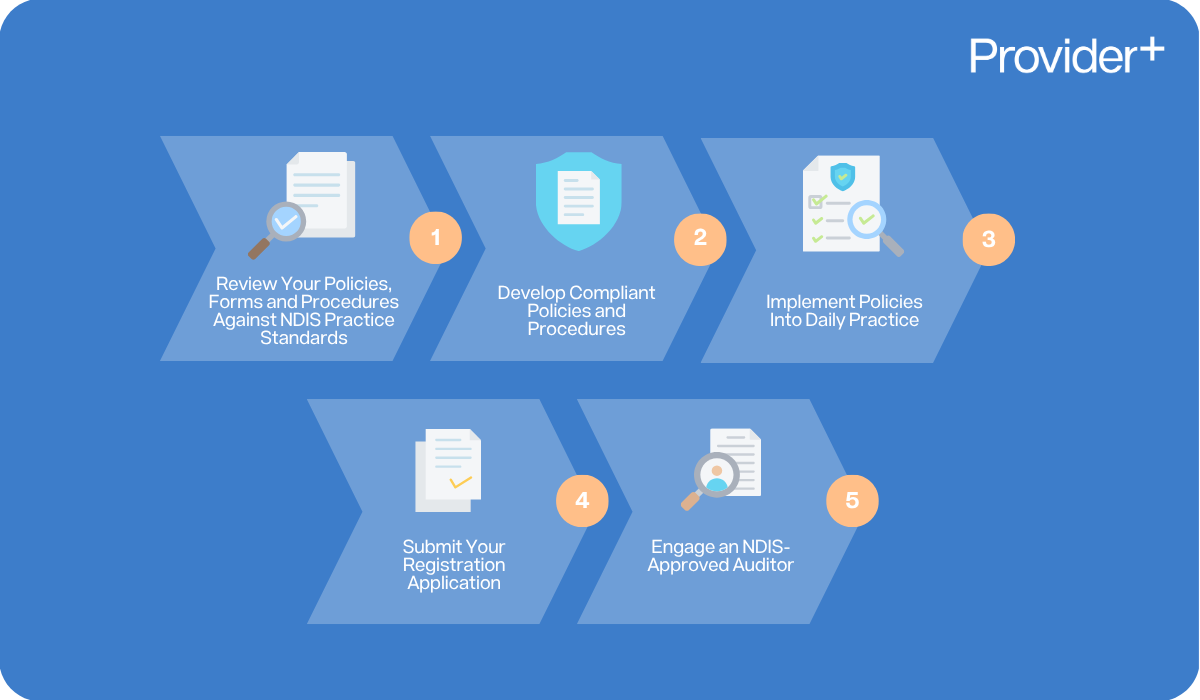
Transitioning from an unregistered to a registered NDIS provider involves five key steps: reviewing your policies, forms and procedures against the NDIS Practice Standards, developing compliant policies and procedures, implementing those policies into daily practice, submitting your registration application to the NDIS Quality and Safeguards Commission, and engaging an NDIS-approved auditor for certification.
The process typically takes three to six months when started early. However, with the 1 July 2026 transition date for mandatory SIL and platform provider registration approaching, providers who delay risk missing the deadline due to auditor bottlenecks and extended processing times.
This guide breaks down each step of the transition process and explains how to move from an unregulated operation to a fully registered NDIS provider.
Step 1: Review Your Policies, Forms and Procedures Against NDIS Practice Standards
A readiness review compares your current policies, procedures, and practices against the requirements of the NDIS Practice Standards. This is the essential first step because it tells you exactly what work needs to be done before you can pass an audit.
What the NDIS Practice Standards Cover
The Practice Standards are organised into modules. All registered providers must meet the Core Module, and additional modules apply depending on your service types.
Core Module (All Providers):
- Rights and responsibilities
- Governance and operational management
- Provision of supports
- Support provision environment
- Feedback and complaints
- Incident management
- Human resource management
- Information management
Additional Modules (Service-Specific):
- High Intensity Daily Personal Activities (for SIL, complex health supports)
- Specialist Behaviour Support
- Implementing Behaviour Support Plans
- Early Childhood Supports
- Specialist Support Coordination
How to Review Your Readiness
Review each requirement in the applicable Practice Standards modules and assess your current state:
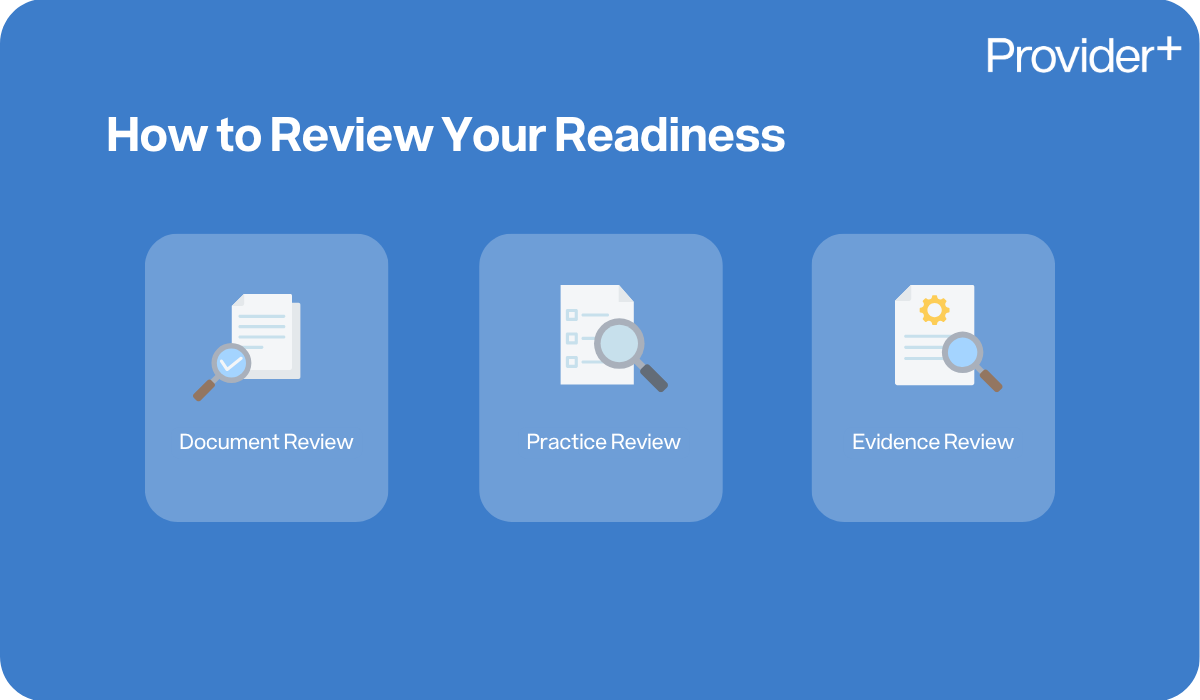
Document Review. Do you have written policies and procedures for each area? Are they current, comprehensive, and aligned with NDIS requirements?
Practice Review. Are your policies actually being followed? Can staff demonstrate they understand and apply the requirements? Is there evidence of implementation?
Evidence Review. What records and documentation do you maintain? Can you demonstrate compliance if asked by an auditor?
For each requirement, identify whether you are compliant, partially compliant, or not yet in place. This creates your roadmap for the work ahead.
Common Gaps for Previously Unregistered Providers
Providers transitioning from unregistered operations typically find gaps in:
- Formal incident management and reporting systems
- Documented complaints handling processes
- Worker screening verification and records
- Governance frameworks and quality management systems
- Participant service agreements meeting NDIS requirements
- Evidence of staff training and competency
Step 2: Develop Compliant Policies and Procedures
Once you know where your gaps are, you need to develop or update your policies and procedures to meet the Practice Standards.
What Good NDIS Policies Look Like
Specific to your organisation. Generic templates often fail audits because they do not reflect how your organisation actually operates. Policies must describe your systems, your processes, and your context.
Aligned to Practice Standards language. Auditors assess against the Practice Standards. Your policies should use consistent terminology and clearly address each requirement.
Practical and implementable. A policy that staff cannot follow is worthless. Procedures should be clear, step-by-step, and realistic for your team to implement.
Supported by forms and tools. Policies need accompanying documents: incident report forms, complaints registers, service agreement templates, training records, and similar tools.
Essential Policies for Registration
At minimum, you will need documented policies and procedures for:
- Incident management (including reportable incidents to the Commission)
- Complaints and feedback handling
- Human resources (recruitment, screening, induction, training, supervision)
- Work health and safety
- Participant rights and advocacy
- Service agreements and support planning
- Privacy and information management
- Risk management
- Governance and continuous improvement
Step 3: Implement Policies Into Daily Practice
Having policies on paper is not enough. Auditors will verify that your policies are implemented and that staff understand and follow them. This is where many providers struggle.
The Policy to Practice Gap
A common audit failure occurs when providers have well-written policies but cannot demonstrate they are being used. Auditors will:
- Interview staff about procedures and check if responses match your policies
- Ask for evidence of policy implementation (completed forms, records, registers)
- Speak with participants about their experience of your services
- Review documentation for consistency with stated procedures
The Auditor Will:
- Review your policies and procedures
- Conduct site visits
- Conduct interviews with staff and participants
- Review records and evidence of implementation
- Identify conformances and non-conformances
How to Close the Policy to Practice Gap
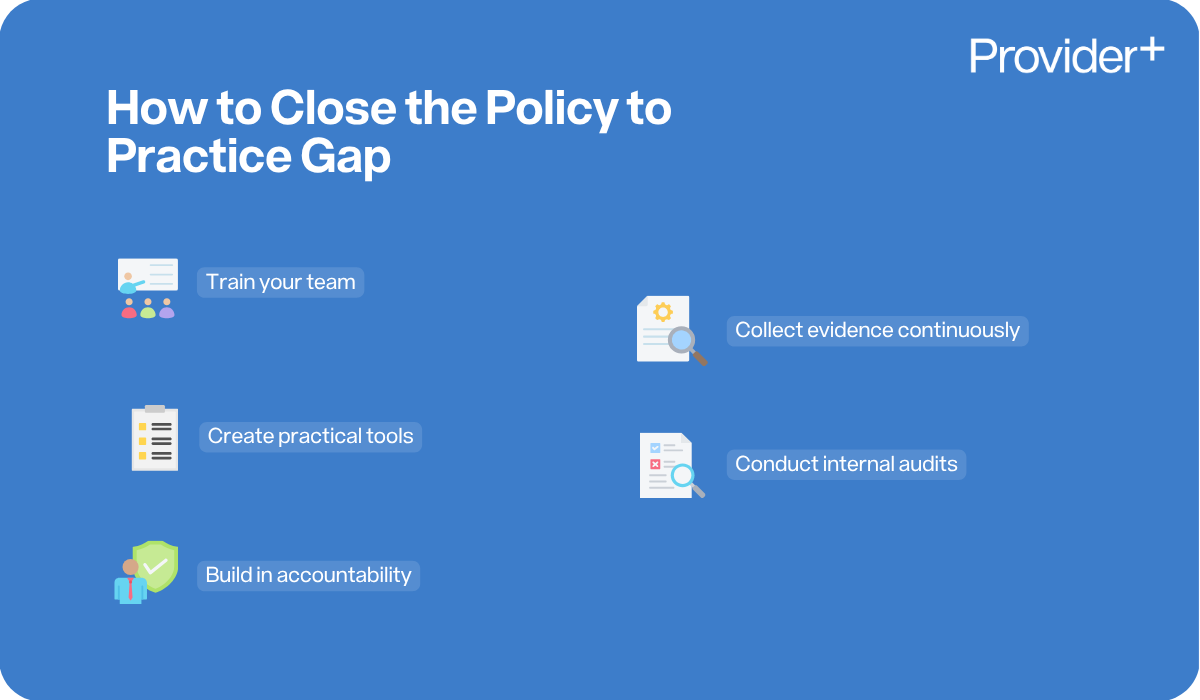
Train your team. Every staff member should receive training on your policies and procedures. Document this training with attendance records and competency assessments.
Create practical tools. Make it easy for staff to follow procedures. Provide checklists, templates, and quick reference guides alongside detailed policies.
Build in accountability. Establish supervision and review processes that check whether policies are being followed. Address non-compliance promptly.
Collect evidence continuously. Do not wait until audit time to gather evidence. Maintain ongoing records of incidents, complaints, training, meetings, and quality activities.
Conduct internal audits. Before your external audit, conduct internal reviews to test your own compliance. Identify and fix issues before the auditor arrives.
Step 4: Submit Your Registration Application
Once your system is ready, you can submit your registration application to the NDIS Quality and Safeguards Commission. Your application will need to include a completed application form including self-assessment responses, and key personnel declarations.
Step 5: Engage an NDIS-Approved Auditor
Registration requires certification from an NDIS-approved quality auditor. This is an independent assessment of your compliance with the Practice Standards.
What Is an NDIS-Approved Auditor?
NDIS-approved auditors are organisations accredited by JAS-ANZ (Joint Accreditation System of Australia and New Zealand) to conduct audits against the NDIS Practice Standards. The NDIS Quality and Safeguards Commission maintains a list of approved auditors on their website. You must use an auditor from this approved list. Audits conducted by non-approved auditors will not be accepted for registration.
Types of Audits
Verification Audit. A lighter-touch audit for lower-risk registration groups. Involves desktop review of policies and documentation, with limited or no site visits.
Certification Audit. A comprehensive audit for higher-risk registration groups, including SIL providers. Involves document review, site visits, staff interviews, and participant interviews. This is a two-stage process:
- Stage 1: Review of policies, procedures, and systems
- Stage 2: On-site assessment of implementation and practice
Verification vs Certification Audits
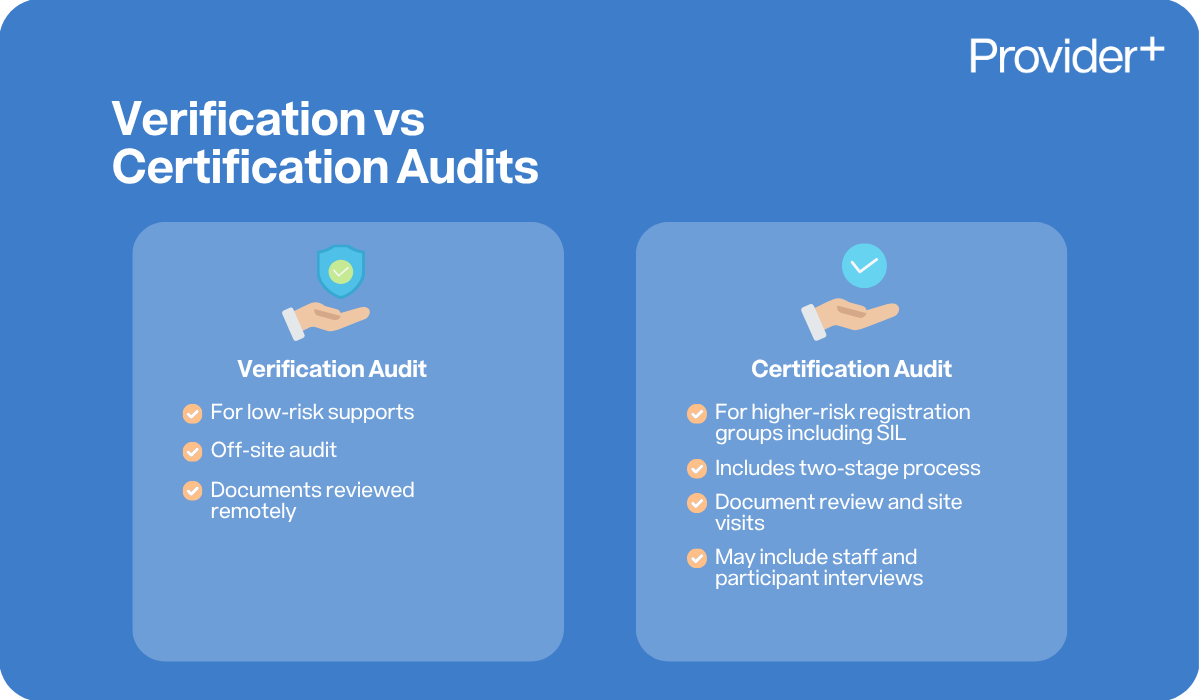
Verification Audit:
- For low-risk supports
- Off-site audit
- Documents reviewed remotely
Certification Audit:
- For higher-risk registration groups including SIL
- Includes two-stage process
- Document review and site visits
- May include staff and participant interviews
When to Engage an Auditor
Once you have submitted your application for registration and received your initial scope of audit document, you can contact auditors to understand their availability and book your audit. As the 1 July 2026 transition date approaches, auditor calendars will fill quickly.
Allow time for:
- Initial enquiry and quote (one to two weeks)
- Audit scheduling (may be weeks to months in advance)
- Stage 1 audit and addressing any issues (two to four weeks)
- Stage 2 audit (one to three months)
- Final report and certification (two to four weeks)
- Addressing non-conformances if required (variable)
What Happens During the Audit
The auditor will review your policies and procedures against Practice Standards requirements, visit your service locations, interview management, staff, and participants, review records and evidence of implementation, and identify conformances and non-conformances. After the audit, you will receive a report detailing findings. Non-conformances must be addressed before certification is granted.
Registration Application Processing Times
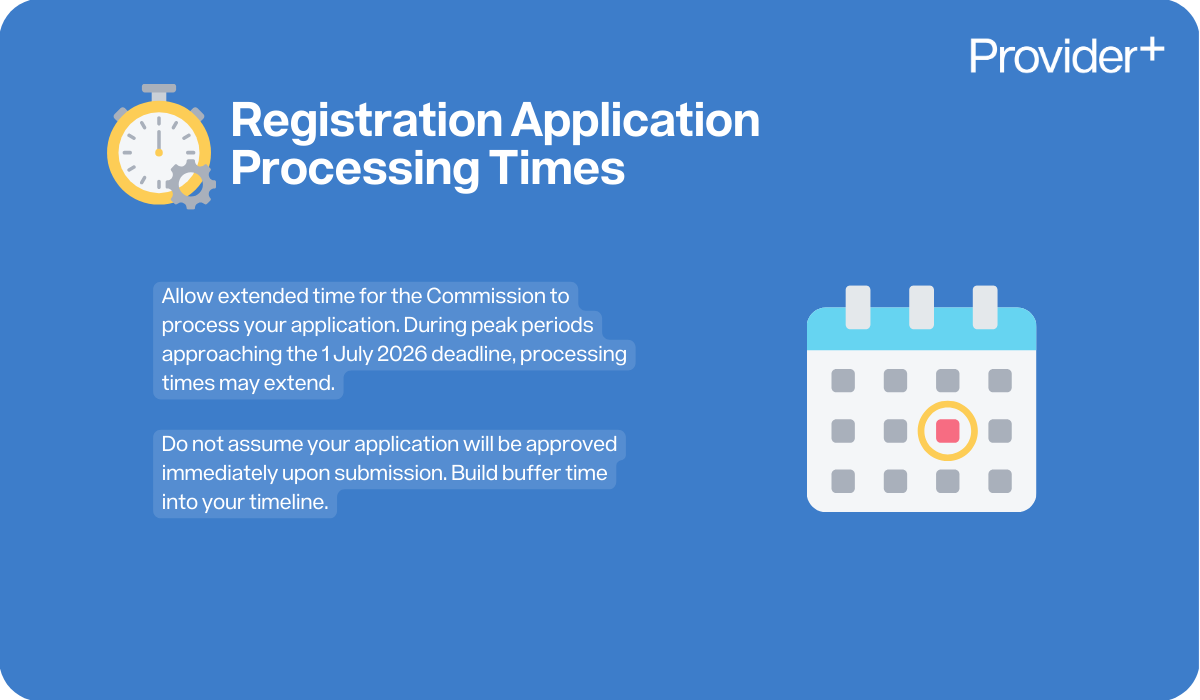
Allow extended time for the Commission to process your application. During peak periods approaching the 1 July 2026 deadline, processing times may extend. Do not assume your application will be approved immediately upon submission. Build buffer time into your timeline.
How Provider+ Simplifies the Policy to Practice Workflow
Provider+ works with NDIS providers to streamline the transition from unregistered to registered status. The approach focuses on closing the gap between having policies on paper and demonstrating them in practice.
Policy Development. Provider+ provides all the policies, forms and procedures required for your registration. These are designed to align with Practice Standards language while remaining practical for your team to implement.
Implementation Support. Provider+ supports the critical step most providers struggle with: turning policies into practice. Your dedicated consultant works with you to understand your documentation and how to talk about it and use it on your audit day.
Audit Preparation. Through our Personal Audit Coach program, your consultant works 1:1 with you in a structured 6-step program, tackling each audit area in sequence from required documents to the questions auditors will ask. This reduces the risk of non-conformances and failed audits that delay registration.
Auditor Introduction. Provider+ connects you directly with appropriate independent certifiers who understand our systems and standards.
PQM Pro. Our Quality Management System keeps your documentation centralised, version-controlled, and always audit ready so your evidence is organised and accessible when the auditor arrives.
Book a free 30-minute call with our team to clarify the process, confirm you have everything in place, and map out your pathway to registration.
This article was published on 28/04/2026. We strive to keep our content accurate and up to date; however, NDIS Commission rules and requirements can change. For the latest information, visit the NDIS Quality and Safeguards Commission website or contact our team.
Need help with the NDIS?
Fill in the form below to get started.

Understand exactly why registration takes 6–12+ months



.webp)
