


STR vs MTA: Understanding the Difference & Choosing the Right Option
Under the NDIS, participants have access to several accommodation options designed to support independence, safety, and wellbeing. Two of the most commonly referenced supports are Short Term Respite (STR) - previously Short Term Accommodation, and Medium Term Accommodation (MTA). Although these two services sound similar, they are in fact quite different in purpose, funding, and eligibility.
Understanding the distinction between STR and MTA helps participants, families, support coordinators, and providers make informed decisions about the type of accommodation support that best meets a participant’s needs.
This guide provides a clear and expanded explanation of what STR and MTA are, how they work within the NDIS, who is eligible, how they are funded, and how providers can support participants in accessing them.
What Is Short Term Respite (STR)?
.webp)
Short Term Respite (STR) is a temporary support designed to help participants stay away from their usual home for a short period of time and to maintain the primary caring relationship. Short Term Respite is the new term advised by the NDIS in replacement of Short Term Accommodation (STA).
STR focuses on the support being provided rather than the accommodation itself, and is available to provide respite from your usual care arrangements.
Short Term Respite is designed to:
- Sustain the participant’s informal care arrangements so they can continue living at home.
- Prevent carer burnout by providing planned or occasional relief.
- Support participant wellbeing through a change in routine, environment, or support workers when beneficial.
- Maintain stable home and family situations by reducing stress on caregivers.
Eligibility for Short Term Respite (STR)
Short Term Respite is available to NDIS participants who rely heavily on primary informal supports who tend to be family or unpaid carers.
You may be eligible if you:
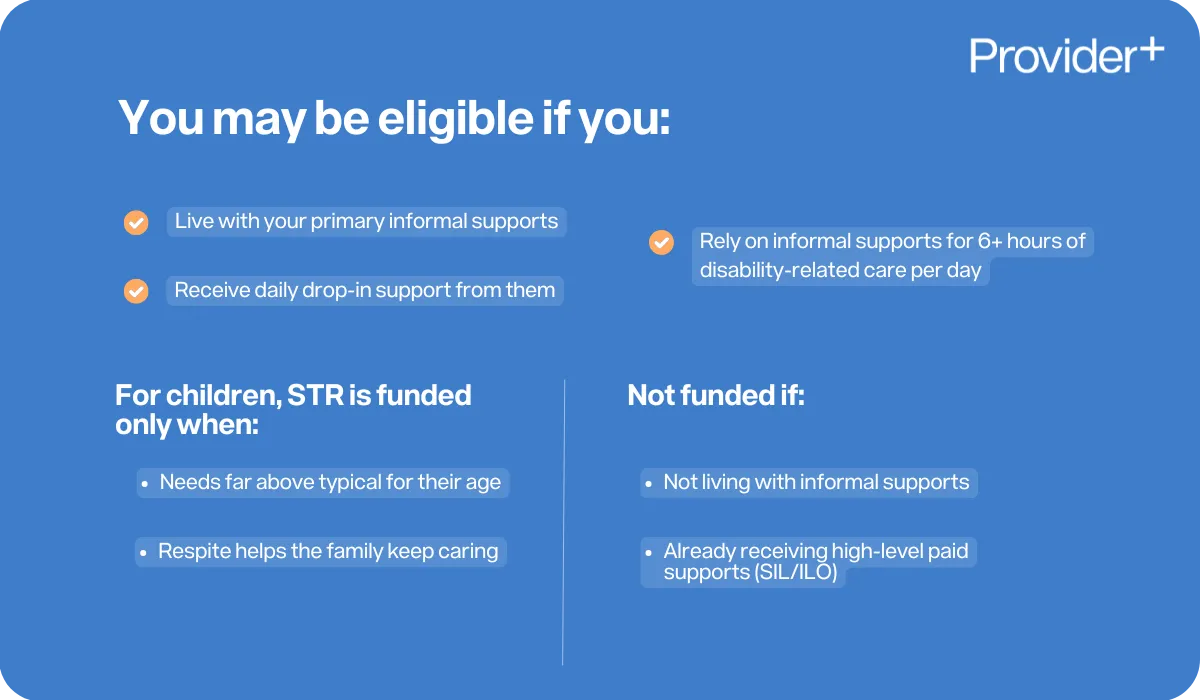
- Live with your primary informal supports, or
- Receive daily drop-in support from them, and
- Rely on those informal supports for more than 6 hours of disability-related care per day.
For children, STR is funded only when:
- The child’s disability support needs are significantly greater than typical for their age, and
- Respite helps the family sustain their caring role.
Short Term Respite is not funded if you:
- Do not live with family or other informal supports, or
- Already receive extensive paid supports such as Supported Independent Living (SIL) or Individualised Living Options (ILO).
How STR Funding Works
The NDIS generally funds STR for up to 28 days per year, with a maximum of 14 days per stay. These days are flexible and can be used in various ways:
- One or two longer continuous stays
- A series of weekend stays throughout the year
- Short breaks that fit within the participant’s lifestyle
Funding is typically allocated under the Core Supports – Assistance with Daily Living budget. The amount funded depends on the participant’s goals, needs, and overall plan.
What STR Includes
STR is an all-inclusive support that typically covers:
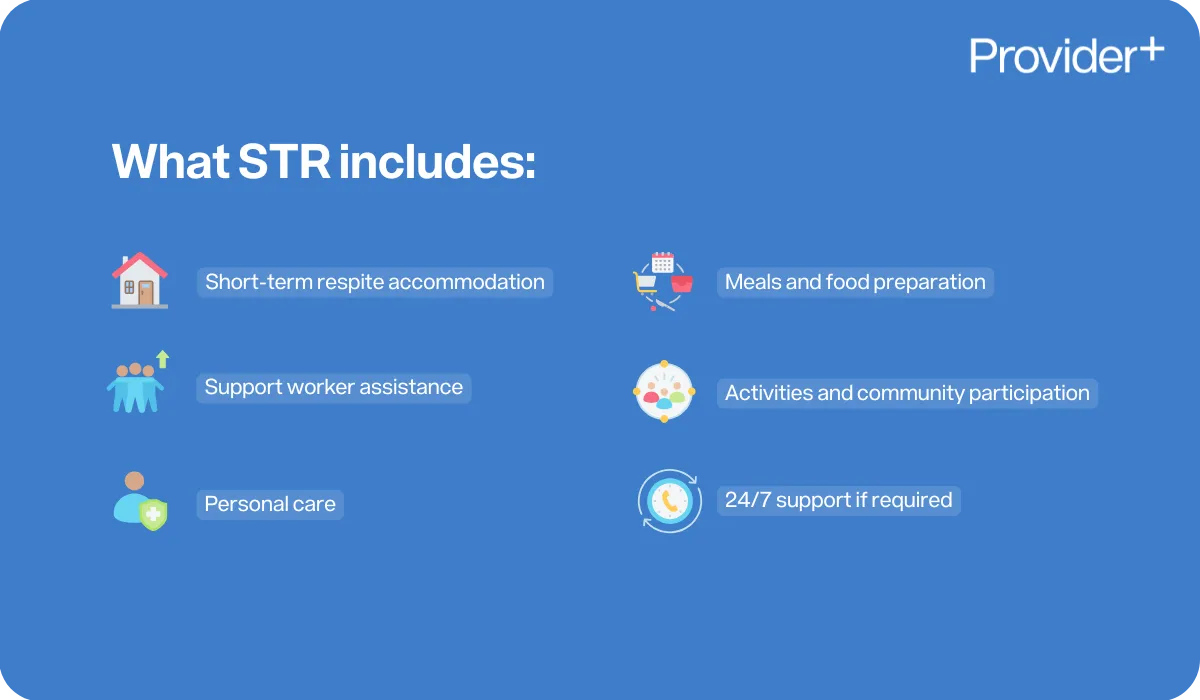
- Short-term respite accommodation
- Support worker assistance
- Personal care
- Meals and food preparation
- Activities and community participation
- 24/7 support if required
As STR includes meals, support, and activities, it provides a holistic and safe environment for participants to experience independence while still receiving the care they need.
STR Suitability
STR is ideal for:
- Participants wanting to try living independently or in a new environment
- Families or carers seeking respite
- Participants who need temporary support due to changes in routine or circumstances
- Participants wanting to build confidence, capability, and life skills
- People transitioning into Supported Independent Living (SIL) or Specialist Disability Accommodation (SDA) and wanting to experience structured support first
What Is Medium Term Accommodation (MTA)?
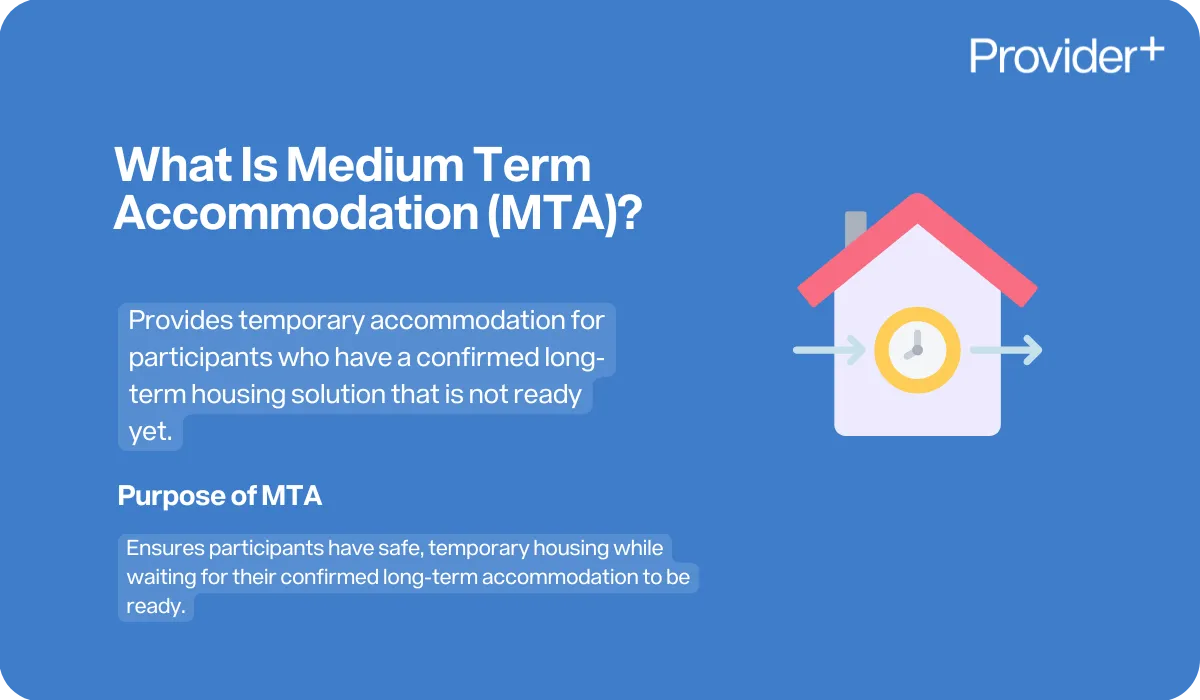
Medium Term Accommodation (MTA) provides temporary accommodation for participants who have a confirmed long-term housing solution but cannot move into that accommodation yet. It is not designed for respite, skill development, or long-term living, but rather serves as an essential transition support.
Purpose of MTA
MTA ensures participants are not left without safe housing while they wait for their intended permanent accommodation to become available. This allows participants to avoid hospital stays, inappropriate housing, homelessness, or transitioning to options that do not meet their disability-related needs.
MTA is commonly used when a participant is:
- Waiting for SDA (Specialist Disability Accommodation) to be completed or approved
- Waiting for home modifications to be finalised
- Transitioning out of hospital or aged care
- Waiting for long-term SIL or ILO support arrangements to begin
- At risk of homelessness or unsafe living circumstances while their permanent housing plan is pending
How Long MTA Last
MTA is funded for up to 90 days (three months) in most cases. In exceptional situations, it may be extended, but it is always temporary and tied to a clear housing plan which must be approved by the NDIA.
What MTA Includes
MTA covers accommodation only. It does not include:
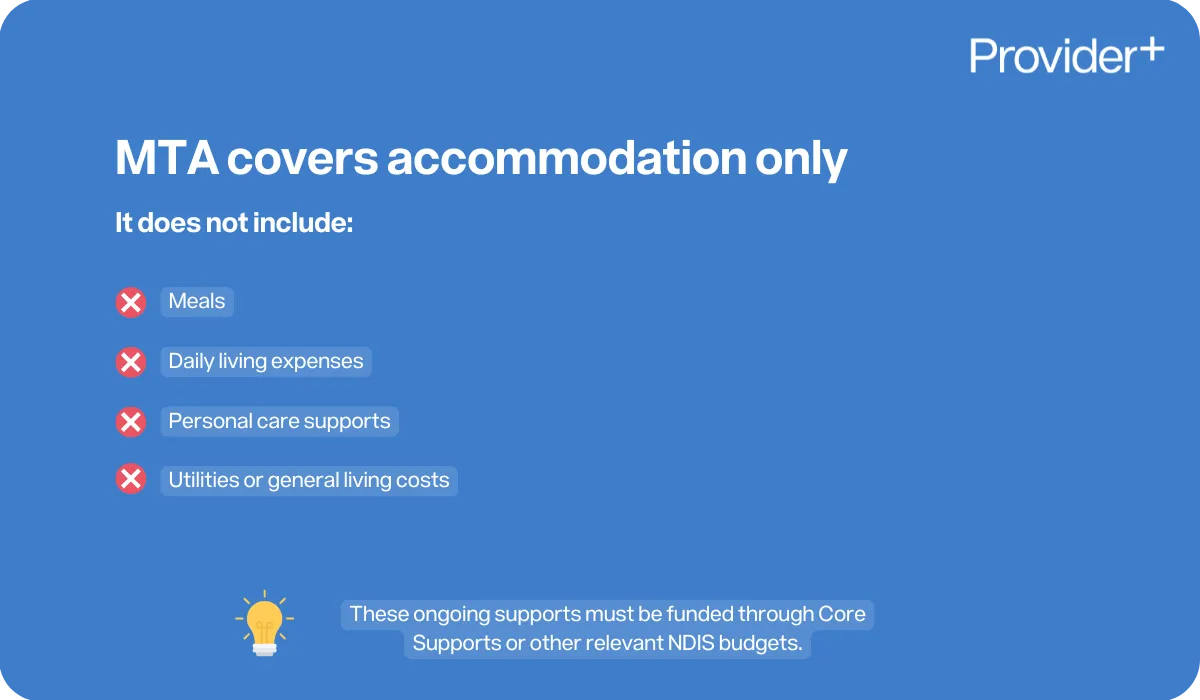
- Meals
- Daily living expenses
- Personal care supports
- Utilities or general living costs
These ongoing supports must be funded through the participant’s Core Supports or separate NDIS funding categories.
MTA Eligibility Requirements
To be eligible for MTA, the participant must have a confirmed long-term housing solution that is not yet ready. Examples include:
- An approved SDA dwelling awaiting completion
- Approved minor or complex home modifications
- A confirmed SIL or ILO arrangement that cannot commence immediately
- A discharge plan from hospital stating MTA is necessary
Participants who do not have a confirmed long-term plan are unlikely to receive MTA funding.
How to Determine Whether STR or MTA Is the Right Fit
Choosing between STR and MTA depends on the participant’s immediate needs and long-term goals.
STR Is Right If the Participant:
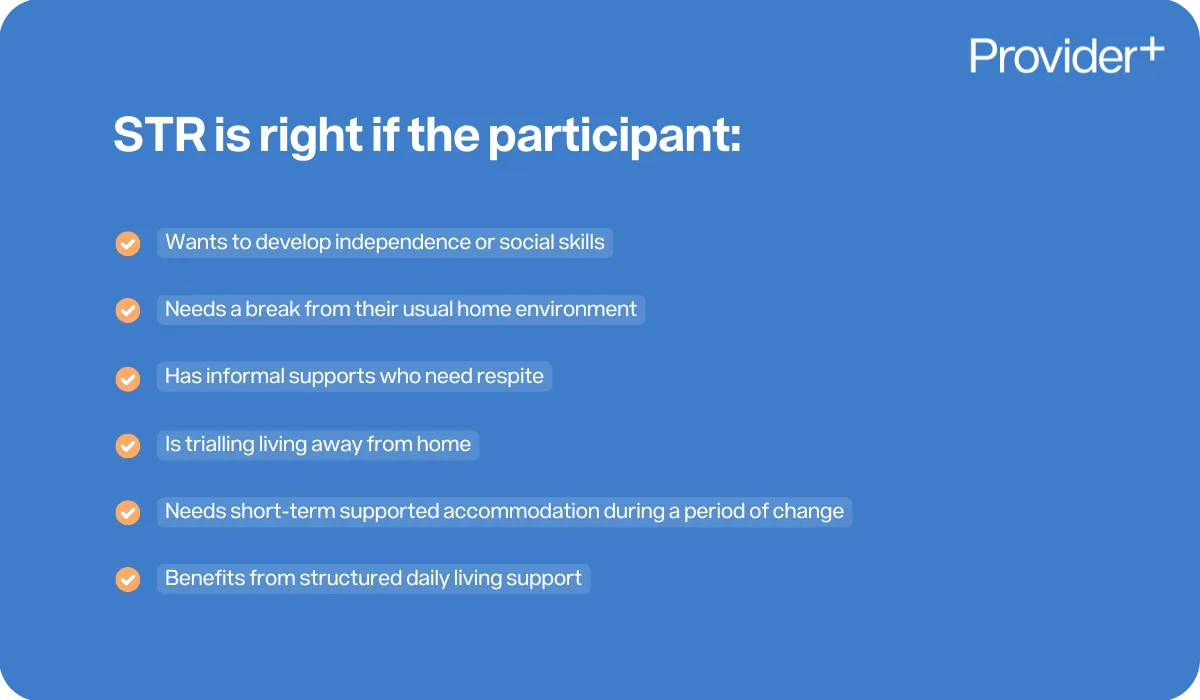
- Wants to develop independence or social skills
- Needs a break from their usual home environment
- Has informal supports who require respite
- Is trialling living away from home
- Needs short-term supported accommodation during a period of change
- Benefits from structured daily living support
MTA Is Right If the Participant:
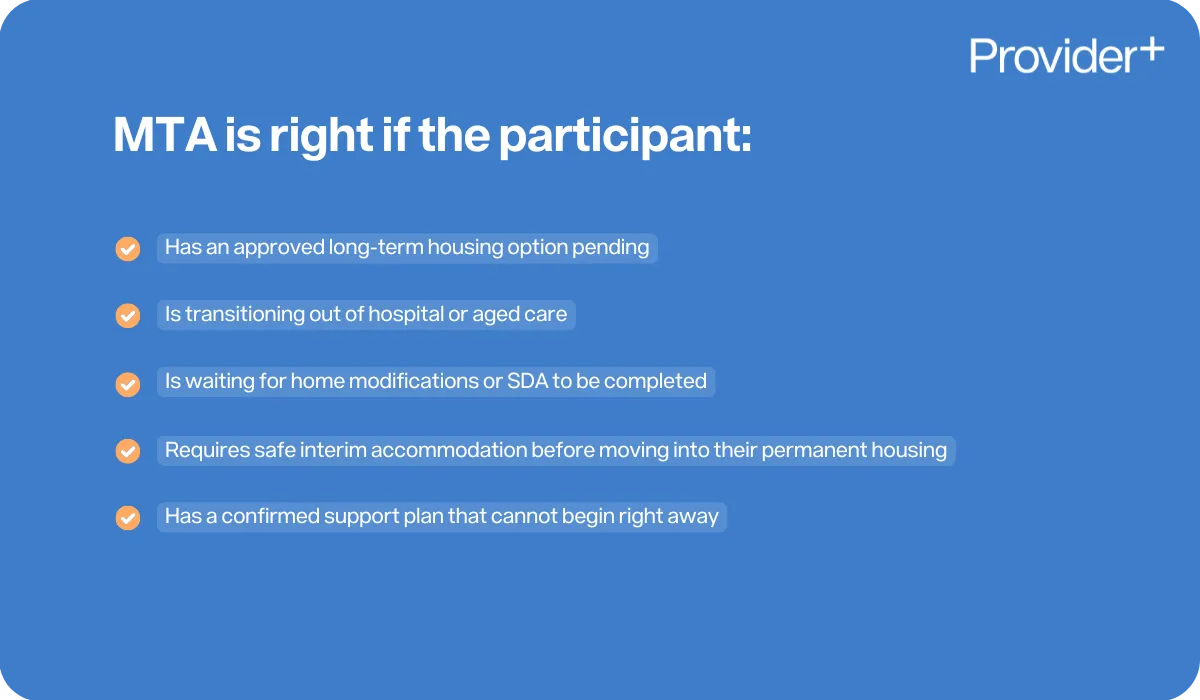
- Has an approved long-term housing option pending
- Is transitioning out of hospital or aged care
- Is waiting for home modifications or SDA to be completed
- Requires safe, interim accommodation before moving into their permanent housing
- Has a confirmed support plan that cannot begin right away
Tips for Participants, Support Coordinators, and Providers
For Participants and Families
- Reflect on your goals when applying for STR or MTA.
- Keep documentation to support your request (e.g., discharge summaries, SDA approval letters).
- Communicate openly with your support coordinator or provider.
For Support Coordinators
- Provide clear evidence to justify the participant’s need.
- Document how STR or MTA aligns with the participant’s NDIS goals.
- Ensure requests meet the reasonable and necessary criteria.
For Providers
- Deliver STR in a goal-oriented way, keeping detailed progress notes.
- Ensure participants understand what MTA does and does not cover.
- Offer clear communication about expectations, costs, and responsibilities.
STR and MTA are both valuable NDIS supports, but they serve very different roles. STR provides short-term support, skill-building, and respite, while MTA is strictly temporary accommodation designed for transition periods.
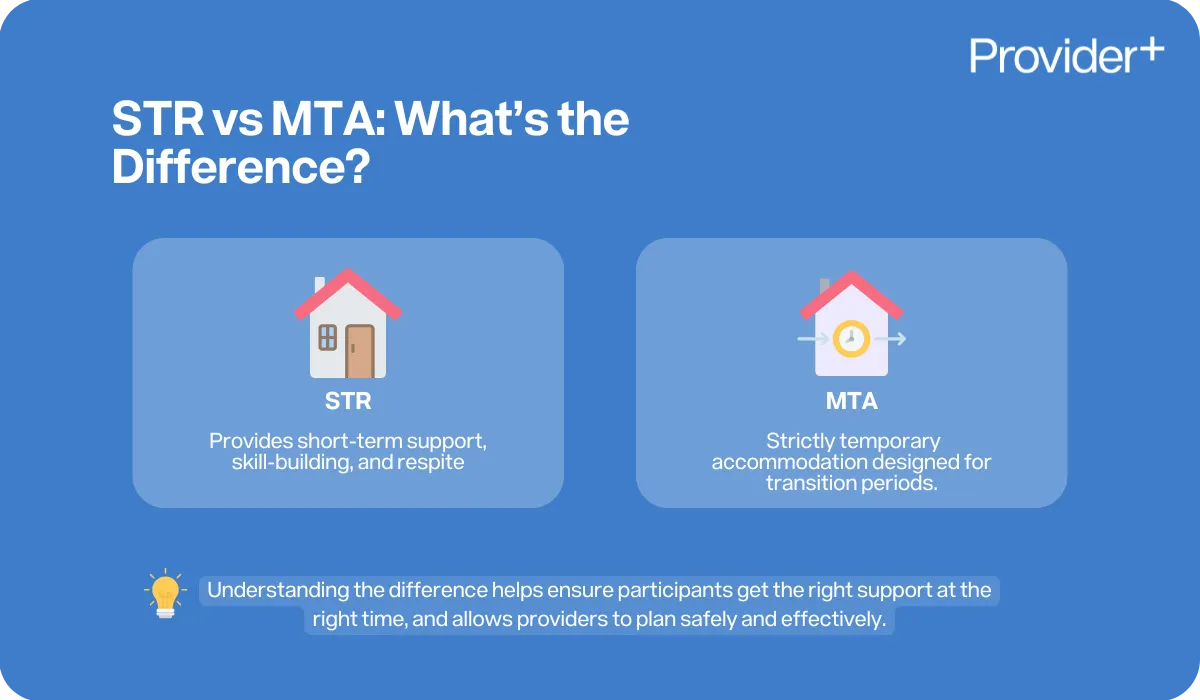
Understanding the difference helps ensure participants receive the right support at the right time, and supports coordinators and providers can plan appropriately for safe, effective, and compliant service delivery.
Need help with the NDIS?
Fill in the form below to get started.

Understand exactly why registration takes 6–12+ months


.webp)
