
How Much Does NDIS Provider Registration Cost in 2026?
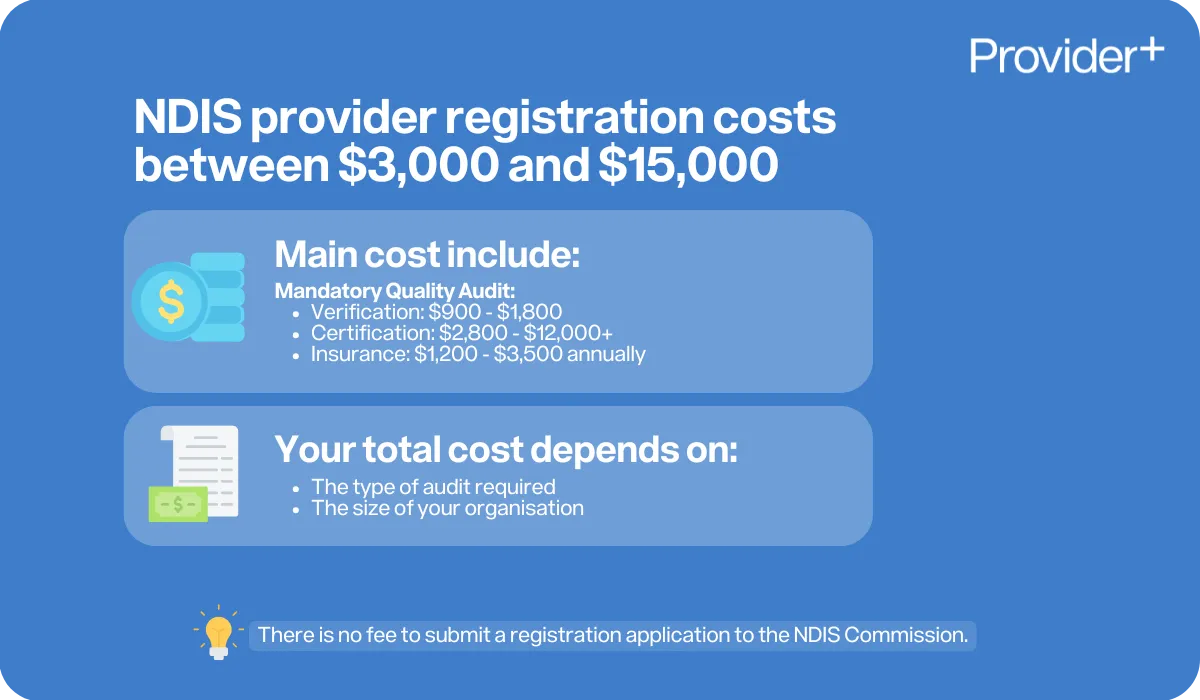
NDIS provider registration costs between $3,000 and $15,000 for most providers in 2025. The main expenses are the mandatory quality audit ($900 to $1,800 for verification, $2,800 to $12,000+ for certification) and insurance ($1,200 to $3,500 annually). There is however no fee to submit the registration application to the NDIS Commission.
Your total cost depends on two factors: the type of audit you need (based on the services you want to provide) and the size of your organisation.
Is There an NDIS Registration Fee?
No. The NDIS Quality and Safeguards Commission does not charge a fee to submit your registration application. However, you must pay for a mandatory audit before your registration can be approved.
Some providers confuse "registration fees" with audit costs. The audit is where the real expense lies, not the application itself.
NDIS Audit Costs: Verification vs Certification
The type of audit you need depends on the services you plan to deliver. Low-risk services require a verification audit. Higher-risk or more complex services require a certification audit.
Verification audits are desktop-based reviews of your policies and documentation. They cost $900 to $1,800 and apply to providers offering lower-risk services such as household tasks, transport assistance, or home maintenance.
Certification audits are more comprehensive. They include document review, site visits, and interviews with staff and participants. Certification audits cost $2,800 to $12,000 or more, depending on organisation size and the number of registration groups.
If you deliver multiple services and even one falls into a high-risk registration group, you will need a certification audit for your entire registration.
Certified providers must also complete a mid-term audit 18 months into their registration period. Mid-term audits typically cost $1,000 to $6,000.
NDIS Worker Screening Costs by State
All workers in a risk assessed role must hold a valid NDIS Worker Screening Check. The check is valid for five years but must be applied for through your state or territory NDIS Worker Screening Unit. Costs vary by jurisdiction.
These fees are per worker and can be paid by either the worker or the employer.
Insurance Requirements and Costs
Registered and unregistered NDIS providers must hold appropriate insurance before delivering services. Most providers need:
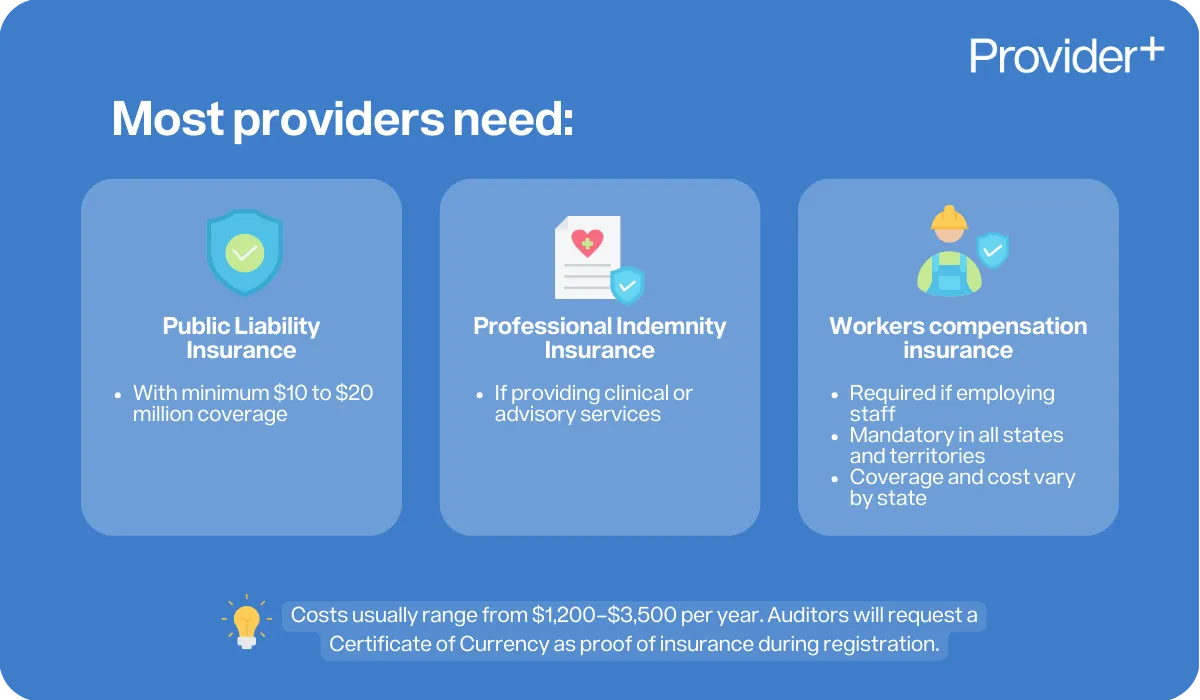
- Public liability insurance with minimum $10 to $20 million coverage
- Professional indemnity insurance if providing clinical or advisory services
- Workers compensation insurance if employing staff. This is a legal requirement in all states and territories where wages are paid to employees. Policy costs vary based on factors like industry classification, wages paid, and claims history, so contact your state or territory's relevant insurer or regulatory body for specific pricing.
Insurance costs range from $1,200 to $3,500 annually for most small to medium providers. Costs are higher for providers delivering clinical services, supported independent living (SIL), or services involving higher-risk activities.
Your auditor will request proof of insurance via a Certificate of Currency as part of the registration process.
Policy Pack and Consultant Costs
You are not required to hire a consultant to register as an NDIS provider. However, many providers, especially those new to the NDIS, find professional support saves time and reduces the risk of audit non-conformities.
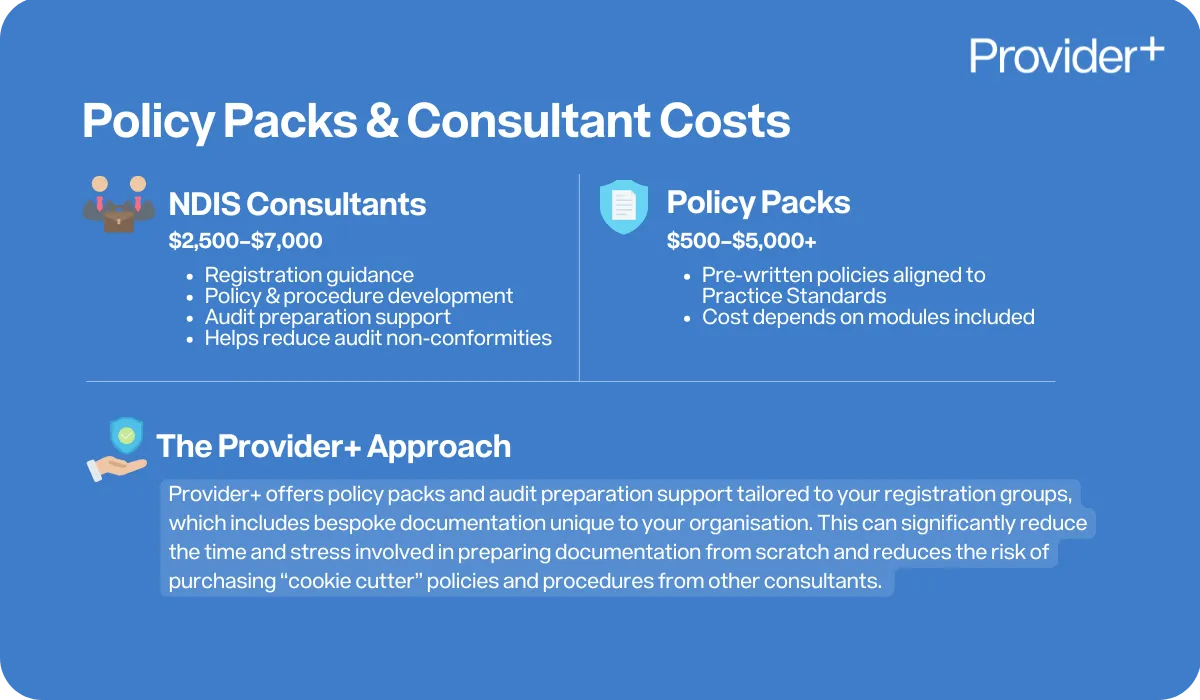
NDIS consultants typically charge $2,500 to $7,000 to guide you through registration, develop your policies and procedures, and prepare you for audit.
Policy packs (pre-written policies and procedures aligned to NDIS Practice Standards) can vary from $500 to $5,000+, depending on the modules included.
Provider+ offers policy packs and audit preparation support tailored to your registration groups, which includes bespoke documentation unique to your organisation. This can significantly reduce the time and stress involved in preparing documentation from scratch and reduces the risk of purchasing “cookie cutter” policies and procedures from other consultants.
Total NDIS Registration Cost Summary
Your total registration cost depends on your provider type and the complexity of services you offer.
These figures do not include general business setup costs (ABN registration, office equipment, software) which vary significantly based on your circumstances.
Next Steps
Ready to start your NDIS registration? Provider+ helps new and renewing providers with registration, policy packs, audit preparation, and ongoing compliance support. Contact us for a free initial consultation.
*Last reviewed: January 2026. Costs are indicative and may vary based on auditor, location, and provider circumstances.
Need help with the NDIS?
Fill in the form below to get started.
FAQs
Submitting a registration application is free. However, you must pay for a mandatory audit, insurance, and worker screening checks before registration is approved. Total costs start around $3,000 for sole traders.
Verification audits cost $900 to $1,800. Certification audits cost $2,800 to $12,000 or more, depending on organisation size and service complexity.
Verification is for low-risk services (household tasks, transport). Certification is for higher-risk services (personal care, behaviour support, SIL, early intervention). If any of your services require certification, your entire registration requires a certification audit.
Registration is valid for three years. Verification providers are required to undertake an audit at each 3 year registration renewal cycle period. Certification providers are required to undertake a mid-term audit 18 months post registration, and a full registration renewal audit at each 3 year registration renewal cycle period.
Yes. Registration, audit, and insurance costs are generally tax-deductible business expenses. Consult your accountant for specific advice.

Understand exactly why registration takes 6–12+ months
.webp)