How to Get NDIS Certification: A Step-by-Step Guide for Providers
- NDIS certification is the audit pathway used for providers delivering supports that require a certification audit.
- Certification confirms that a provider meets the relevant NDIS Practice Standards and Quality Indicators.
- The NDIS Commission determines whether a provider needs verification or certification based on the registration groups or classes of support included in the application.
- Providers must complete the required audit with an approved quality auditor before the NDIS Commission can make a registration decision.
- NDIS certification is different from NDIS registration. Registration allows a provider to deliver approved supports, while certification is part of the audit process for certain registration groups.
What Is NDIS Certification?
NDIS certification is the audit process used to assess whether an NDIS provider meets the NDIS Practice Standards and Quality Indicators for registration groups that require certification.
An NDIS certified provider is a registered NDIS provider that has successfully completed the required certification audit for the registration groups they deliver. Certification shows that the provider has systems and processes in place to meet the relevant NDIS Practice Standards.
Registered providers must meet the quality and safety requirements that apply to their approved registration groups. The type of audit required depends on the supports and services a provider wants to deliver.
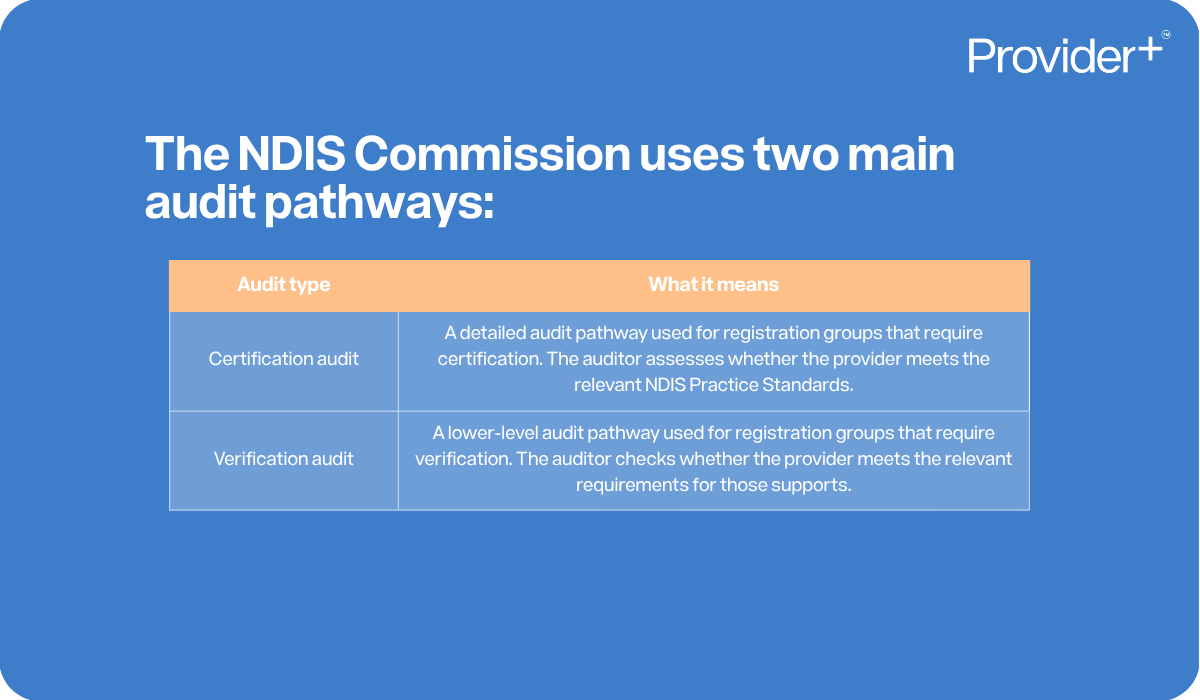
The NDIS Commission uses two main audit pathways:
Why Do Providers Need NDIS Certification?
Providers need NDIS certification when they want to deliver supports linked to registration groups that require a certification audit.
Certification helps the NDIS Commission assess whether a provider has suitable systems, processes and safeguards in place to deliver supports safely.
Registered providers must demonstrate that they can support participant rights, safety and quality outcomes.
A certification audit reviews areas such as:
- governance and operational systems
- risk management processes
- participant safety practices
- service delivery processes
- policies and procedures that support compliance
The exact requirements depend on the registration groups selected by the provider.
Which NDIS Providers Need Certification?
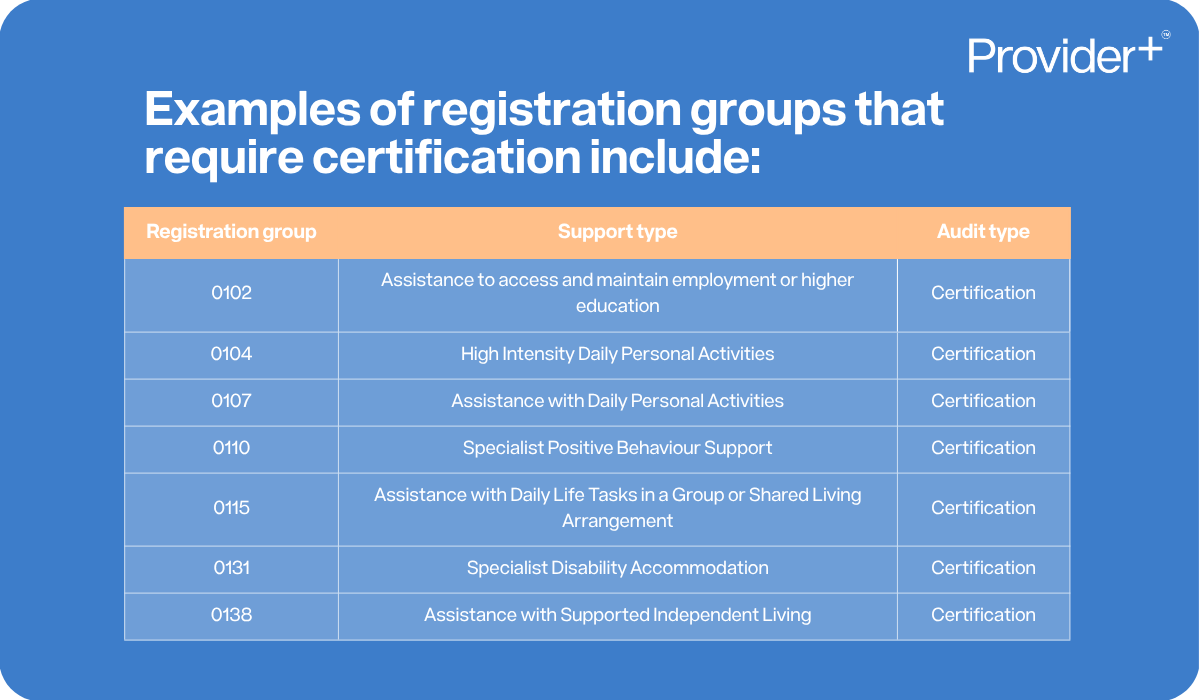
Providers need certification when their selected registration groups require a certification audit.
The NDIS Commission uses registration groups or classes of support to identify the types of supports a provider is registered to deliver. Each registration group has an assigned audit requirement.
Registration groups determine whether a provider requires a verification audit, certification audit, or both.
If a provider applies for multiple registration groups and those groups have different audit requirements, the NDIS Commission applies the requirements linked to the provider’s selected supports.
For example, if an application includes both verification and certification registration groups, the provider must complete a certification audit.
Providers should review the current NDIS Commission registration groups table before applying because the registration groups selected determine the audit pathway.
Not sure whether your registration groups point you toward certification or verification? Our guide, NDIS Certification vs Verification: Which Path Is Right for You?, walks through how the NDIS Commission decides.
How Do You Get NDIS Certification and Become an NDIS Certified Provider?
Certification can look intimidating from the outside: two audit stages, a table of registration group codes, multiple sets of Practice Standards. Broken into the five steps below, though, it's a process you can work through steadily, and you don't have to figure out every requirement alone.
To become an NDIS certified provider, organisations must select the correct registration groups, apply for NDIS registration, complete a certification audit with an approved quality auditor, and demonstrate that they meet the relevant NDIS Practice Standards.
The certification process involves several key steps.
1. How Do You Choose the Right NDIS Registration Groups?
You must first identify the supports and services your organisation plans to deliver.
The NDIS Commission uses registration groups or classes of support to describe the supports a provider is registered to deliver.
Your selected registration groups determine:
- what supports you can provide
- what NDIS Practice Standards apply
- whether you need verification or certification
- what type of audit is required
Providers should choose registration groups that accurately match their services.
The NDIS Commission’s registration groups and classes of support guidance provides the current audit requirements for each support type.
2. How Do You Apply for NDIS Registration?
After selecting your registration groups, you submit an application through the NDIS Commission.
The application requires information about your organisation, the supports you want to deliver and your ability to meet the requirements of the NDIS Practice Standards.
The NDIS Commission reviews this information to determine the provider’s registration requirements, including the required audit pathway.
3. What Happens During an NDIS Certification Audit?
An NDIS certification audit assesses whether a provider meets the relevant NDIS Practice Standards and Quality Indicators.
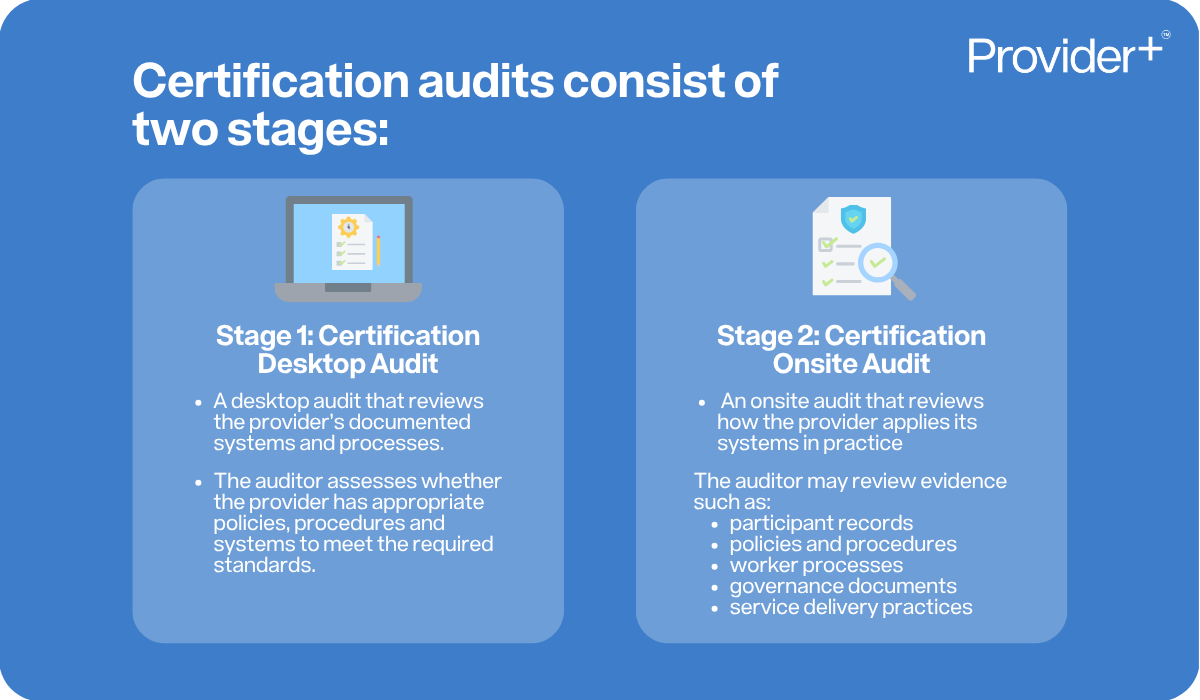
Certification audits involve two stages.
Stage 1: What Happens During a Certification Desktop Audit?
Stage 1 is a desktop audit that reviews the provider’s documented systems and processes.
The auditor assesses whether the provider has appropriate policies, procedures and systems to meet the required standards.
Stage 2: What Happens During a Certification Onsite Audit?
Stage 2 is an onsite audit that reviews how the provider applies its systems in practice.
The auditor may review evidence such as:
- participant records
- policies and procedures
- worker processes
- governance documents
- service delivery practices
Stage 2 should occur within three months of the Stage 1 audit.
4. What Happens After an NDIS Certification Audit?
After the audit, the approved quality auditor provides an audit outcome to the NDIS Commission.
If issues are identified, the provider may need to address findings before meeting certification requirements.
Providers should use audit feedback to improve their systems and ensure ongoing compliance with the NDIS Practice Standards.
5. How Do You Receive NDIS Certification Approval?
After reviewing the application and audit outcome, the NDIS Commission decides whether to approve registration.
If approved, the provider can deliver the supports included in their approved registration groups.
Registered providers must continue meeting the NDIS Practice Standards and Quality Indicators after registration.
How Long Does NDIS Certification Take?
The time required to complete NDIS certification depends on factors such as provider preparation, audit availability, the registration groups selected and whether issues are identified during the audit process.
Providers can reduce delays by preparing their policies, procedures and compliance evidence before the audit begins.
How Can You Prepare for an NDIS Certification Audit?
Providers can prepare for certification by understanding the standards that apply to their registration groups and ensuring their systems match their day-to-day operations.
Preparation steps include:
- Review the relevant NDIS Practice Standards and Quality Indicators.
- Check that policies reflect actual business practices.
- Train workers on their responsibilities.
- Organise evidence that shows how participant safety is managed.
- Identify and fix compliance gaps before the audit.
The NDIS Commission’s Practice Standards framework provides the requirements auditors use when assessing registered providers.
Need help to your NDIS certification? At Provider+, we've guided providers through certification audits since 2018. Our team includes former NDIS auditors who know exactly what assessors are looking for at both Stage 1 and Stage 2. Book a free call with one of our consultants today.
What Happens After You Get NDIS Certification?
NDIS certification is not the end of a provider’s compliance responsibilities.
Registered providers must continue meeting the NDIS Practice Standards and maintaining quality and safety systems.
The NDIS Commission monitors registered providers through its quality and safeguards framework. Providers may be subject to future audits or compliance activities depending on their registration requirements.
We strive to keep our content accurate and up to date; however, NDIS Commission rules and requirements can change. For the latest information, visit the NDIS Quality and Safeguards Commission website or contact our team.
Need help with the NDIS?
Fill in the form below to get started.
FAQs
An NDIS certified provider is a registered NDIS provider that has completed a certification audit and demonstrated that it meets the relevant NDIS Practice Standards and Quality Indicators for its approved registration groups.
No. NDIS registration is the process of becoming an approved NDIS provider. Certification is the audit process used for registration groups that require a certification audit.
No. The required audit type depends on the registration groups selected. Some providers require verification, while others require certification.
An approved quality auditor completes the certification audit and assesses whether the provider meets the relevant NDIS Practice Standards and Quality Indicators.
Certification audits use the NDIS Practice Standards and Quality Indicators published by the NDIS Commission.
No. The required audit type is determined by the registration groups or classes of support included in the provider’s application.
If issues are identified during the audit, the provider may need to address those issues before meeting the certification requirements.

Understand exactly why registration takes 6–12+ months


.webp)