SDA vs SIL: Which NDIS Registration Do You Need as a Provider?
- Specialist Disability Accommodation (SDA - 0131) - fund the specialist housing the participant lives in, it is purpose-built, NDIS-compliant housing for participants with very high support needs.
- Supported Independent Living (SIL - 0138) is about human support —daily hands-on assistance with personal care, cooking, and skill-building.
- SDA and SIL are separate NDIS supports and registrations - with separate funding, provider obligations and compliance requirements.
- A participant may receive SDA without SIL, SIL without SDA, or both, depending on their individual support needs.
- Where a provider delivers SIL within an SDA dwelling, they must ensure housing and support arrangements remain clearly separated and participants' tenancy rights are protected.
- Together, SDA + SIL create a complete living solution — the right home and the right support.
Understanding the Difference Between SDA and SIL
Although Specialist Disability Accommodation (SDA) and Supported Independent Living (SIL) are frequently delivered together, they are funded separately under the NDIS and serve very different purposes.
The NDIS Commission expects providers to clearly distinguish between:
- the home (SDA); and
- the supports delivered within that home (SIL).
This distinction is a significant focus of the SIL Practice Standards.

Specialist Disability Accommodation (SDA)
SDA is funding for specialist housing designed for participants with extreme functional impairment or very high support needs.
It relates only to the physical dwelling—not the supports delivered inside it.
SDA dwellings are designed to maximise accessibility, safety and independence and must comply with the SDA Design Standard and NDIS SDA Rules.
SDA may include:
- Improved Liveability housing
- Fully Accessible housing
- High Physical Support housing
- Robust housing
Typical features include:
- wider doorways
- ceiling hoists
- accessible bathrooms
- reinforced construction
- assistive technology
- environmental controls
.png)
Responsibilities of an SDA Provider
An SDA provider is responsible for the accommodation itself, including:
- maintaining the dwelling
- repairs and maintenance
- compliance with SDA Design Standards
- building safety
- tenancy management (where applicable)
- collaboration with SIL providers
- ensuring participants understand their housing rights
Importantly,
SDA providers do not provide SIL simply because they own or manage the property.

Supported Independent Living (SIL)
SIL is funding for the daily supports participants receive to live as independently as possible.
Unlike SDA, SIL is not about the building—it is about the support workers and the services they provide.
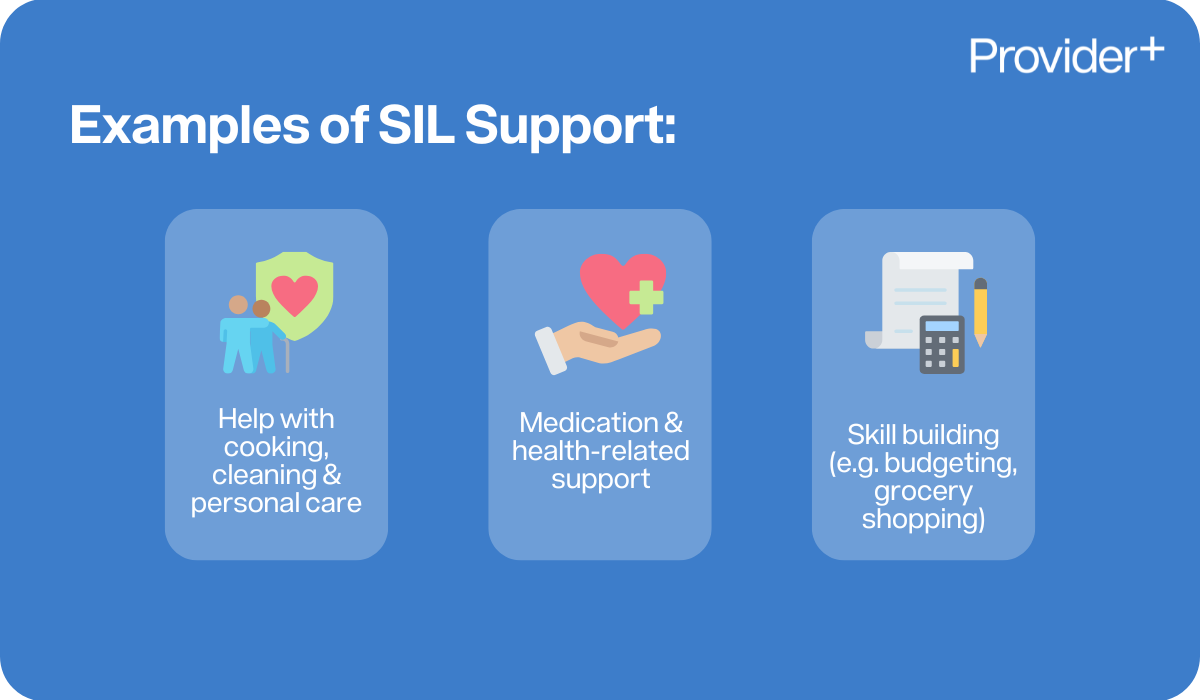
Examples include:
- personal care
- medication support
- meal preparation
- household management
- community participation
- skill development
- behaviour support implementation
- overnight supports
- active support
The amount of SIL funded depends on each participant's assessed support needs.
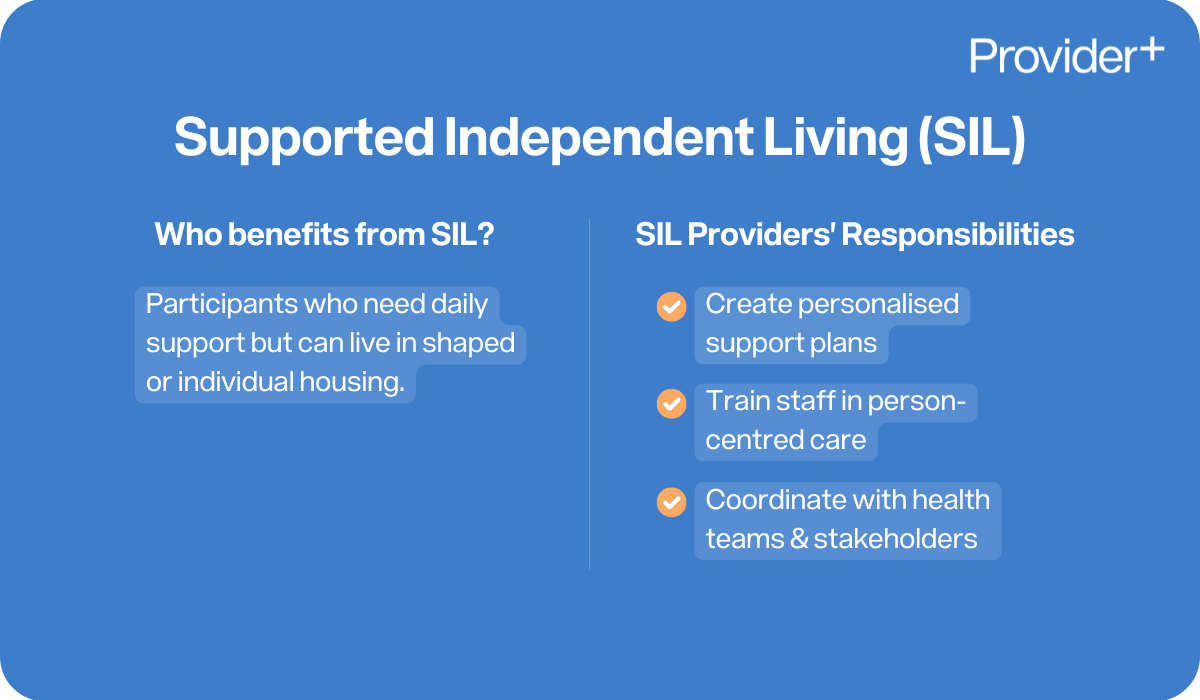
Who Benefits from SIL?
- Participants who need ongoing, hands-on support in daily living activities but can thrive in shared or individual living arrangements.
SIL is More Than Personal Care
Under the SIL Practice Standards, providers are expected to demonstrate that SIL actively promotes:
- participant choice and control
- supported decision-making
- independence
- dignity of risk
- capacity building
- community participation
- safeguarding
- participant rights
SIL should never become simply "doing tasks" for participants.
Workers should support participants to build skills and increase independence wherever possible.
SIL Providers' Responsibilities:
- Develop and implement personalised support plans.
- Train staff to deliver person-centered care.
- Coordinate with allied health professionals and other stakeholders to address participant needs holistically.
Explore our SIL operational guidelines for NDIS providers.
How SDA and SIL Work Together for NDIS Participants
For NDIS participants who qualify for both SDA and SIL, the two supports combine to create a comprehensive living arrangement. SDA provides the physical environment, while SIL ensures the necessary support services are in place.
- Example: A participant may live in an SDA-compliant home with accessible features while receiving SIL services to help with daily activities like meal preparation, personal care, and social engagement.
Where participants are receiving both SDA and SIL supports, providers must recognise that housing and support remain separate services, even if delivered by the same organisation.
The NDIS Commission expects providers to clearly separate:
- tenancy arrangements
- accommodation responsibilities
- support delivery
- participant rights
Participants must not feel that accepting housing means they are required to receive supports from the same provider where choice exists.
Read our mandatory SIL registration: complete guide for unregistered providers.
Can the Same Provider Deliver Both SDA and SIL?

Yes.
A provider may be registered to deliver both SDA and SIL.
However, the organisation must maintain clear separation between:
- housing agreements
- tenancy responsibilities
- SIL Service Agreements
- Rosters of Care
- participant rights
- complaints relating to housing
- complaints relating to supports
The provider must avoid any real or perceived conflict of interest and ensure participants are supported to exercise genuine choice and control.
New Expectations Under the SIL Practice Standards
The SIL Practice Standards introduce several new areas of focus for providers delivering SIL, particularly within SDA settings.
These include:
Supported Decision-Making
Participants are supported to make decisions about:
- their home
- daily routines
- meals
- visitors
- relationships
- household activities
- community participation
Workers support decisions—they do not make them.
Shared Living and Household Management
Participants should be actively involved in:
- household meetings
- meal planning
- household responsibilities
- use of shared spaces
- house agreements
- conflict resolution
The home should reflect participant preferences rather than organisational routines.
Compatibility and Vacancy Management
Providers are expected to demonstrate how they:
- assess compatibility before new placements
- consult existing residents
- consider participant preferences
- assess behavioural and safeguarding risks
- support successful transitions
This is becoming a major audit focus.
Housing, Tenancy and Support
Where SIL is delivered within SDA, providers should ensure participants understand:
- their tenancy rights
- who is responsible for housing
- who provides supports
- how to raise housing concerns
- how to change support providers (where applicable)
The participant's home remains their home, regardless of who provides supports.
Participant Safeguarding
Providers must demonstrate systems that prevent, identify and respond to:
- abuse
- neglect
- exploitation
- coercion
- participant-to-participant harm
- bullying
- restrictive practices
Safeguarding is now one of the key themes of the SIL Practice Standards.
Why are SDA and SIL Important for Individuals with Very High Support Needs?
Together, Specialist Disability Accommodation (SDA) and Supported Independent Living (SIL) help participants with very high support needs live safely, independently, and with greater choice and control. While SDA provides the specialist housing, SIL provides the day-to-day supports participants need to build skills, achieve their goals, and participate in everyday life.
Although SDA and SIL often work together, they are separate NDIS supports with distinct funding arrangements, provider responsibilities, and compliance requirements. Providers delivering both services must clearly distinguish between housing and support while working collaboratively to achieve positive participant outcomes.
By understanding the different roles of SDA and SIL, providers can deliver person-centred services that promote independence, uphold participant rights, and meet the expectations of the NDIS Practice Standards and Draft SIL Practice Standards.
Read essential guide to SIL registration.
Specialist Disability Accommodation (SDA) providers have specific responsibilities to ensure participants are provided with safe, accessible and appropriate housing.
Key requirements include:
- Compliance with the NDIS Practice Standards and SDA Rules to ensure safe, high-quality accommodation and services.
- Compliance with the SDA Design Standards, ensuring dwellings meet approved accessibility, safety and design requirements.
- Suitability of Accommodation, providing housing that meets participants' functional needs and approved SDA design category.
- Safety and Emergency Planning, including property safety, emergency preparedness and appropriate maintenance.
- Participant Rights and Engagement, ensuring participants are involved in decisions about their accommodation and their privacy, dignity and tenancy rights are respected.
- Collaboration with SIL Providers and Other Stakeholders, ensuring housing and support services are coordinated while maintaining clear separation between tenancy and support responsibilities.
- Quality Assurance and Continuous Improvement, including regular property reviews, participant feedback and ongoing compliance monitoring.
- Maintenance and Repairs, ensuring the dwelling remains safe, functional and fit for purpose.
- Compliance with Building and Regulatory Requirements, including relevant building codes, fire safety requirements and State or Territory legislation.
By meeting these requirements, SDA providers help ensure participants live in safe, accessible homes that support independence, wellbeing and quality of life while working collaboratively with SIL providers to achieve positive participant outcomes.
Which Registration Do You Need?
If your organisation provides:

Providers should carefully review the NDIS registration groups and ensure they are registered for the supports they intend to deliver.
Conclusion
SDA and SIL are complementary but fundamentally different supports.
SDA provides the participant with a purpose-designed home.
SIL provides the supports that enable the participant to live safely, independently and achieve their goals within that home.
Under the SIL Practice Standards, providers delivering SIL—particularly within SDA dwellings—must demonstrate much more than quality support delivery. They must also evidence supported decision-making, participant safeguarding, shared living governance, compatibility assessments, tenancy and housing rights, independent living skill development, and robust governance systems that place the participant's rights, choice and quality of life at the centre of service delivery.
We strive to keep our content accurate and up to date; however, NDIS Commission rules and requirements can change. For the latest information, visit the NDIS Quality and Safeguards Commission website or contact our team.
Need help with the NDIS?
Fill in the form below to get started.
FAQs
Yes. SDA and SIL are separate NDIS supports with different registration requirements. A provider must ensure they are registered for the specific NDIS registration groups and supports they intend to deliver.
Yes. SDA funding only relates to the specialist housing. A participant may receive SDA without SIL if they do not require SIL supports, or they may use other support arrangements that meet their needs.
Yes. SIL does not require a participant to live in an SDA property. SIL can be delivered in different living arrangements, including a participant’s own home, rental property, or other shared living environments.
The provider must demonstrate strong governance systems to separate accommodation responsibilities from support delivery. This includes clear agreements, transparent processes, and ensuring participants can exercise choice and control.
SIL providers should be able to demonstrate evidence of person-centred supports, participant involvement in decisions, safeguarding processes, staff capability, support planning, and systems that promote independence.
SDA and SIL providers should collaborate while maintaining separate responsibilities. SDA providers manage the dwelling, while SIL providers coordinate the supports required for the participant’s daily living needs.
Yes. Participants have the right to choice and control over their supports and living arrangements. Providers must ensure participants are not pressured to use linked services where alternatives are available.
SDA funding pays for the specialised features of the participant’s home, while SIL funding pays for the support services that help the participant manage daily life, build skills, and work towards their goals.
Understand exactly why registration takes 6–12+ months