



Essential Guide to SIL Registration for Providers and Coordinators
Essential Guide to SIL Registration for Providers and Coordinators
Supported Independent Living (SIL) is a crucial support option provided under the NDIS for participants who require assistance with daily living tasks while living in shared or individual housing. SIL funding is tailored to each participant's needs, ensuring they receive the necessary support to live as independently as possible.
The NDIS Commission has announced the transition to mandatory registration for all Supported Independent Living (SIL) providers, following recommendations from the NDIS Provider and Workforce Registration Taskforce, which identified SIL as a higher-risk support area—particularly where services have been delivered by unregistered providers. From 1 July 2026, all providers delivering SIL supports will be required to commence the registration process in line with the NDIS Commission’s transition requirements. This applies to all providers, including those who have previously operated as unregistered providers under plan-managed or self-managed arrangements. This marks a significant shift for the sector, as SIL has historically been accessible through both registered and unregistered providers. Under the new framework, SIL will be formally recognised as a high-risk support, requiring mandatory registration, certification audits, and compliance with specific Practice Standards.
"The risk inherent in these types of services due to the isolation of people with disability is unacceptable."
"The opportunity for violence, abuse, neglect and exploitation in Group Homes is significant."
The following is a concise guide on what is considered Best Practice in being a SIL provider under the National Disability Insurance Scheme (NDIS):
Key Features of SIL Supports
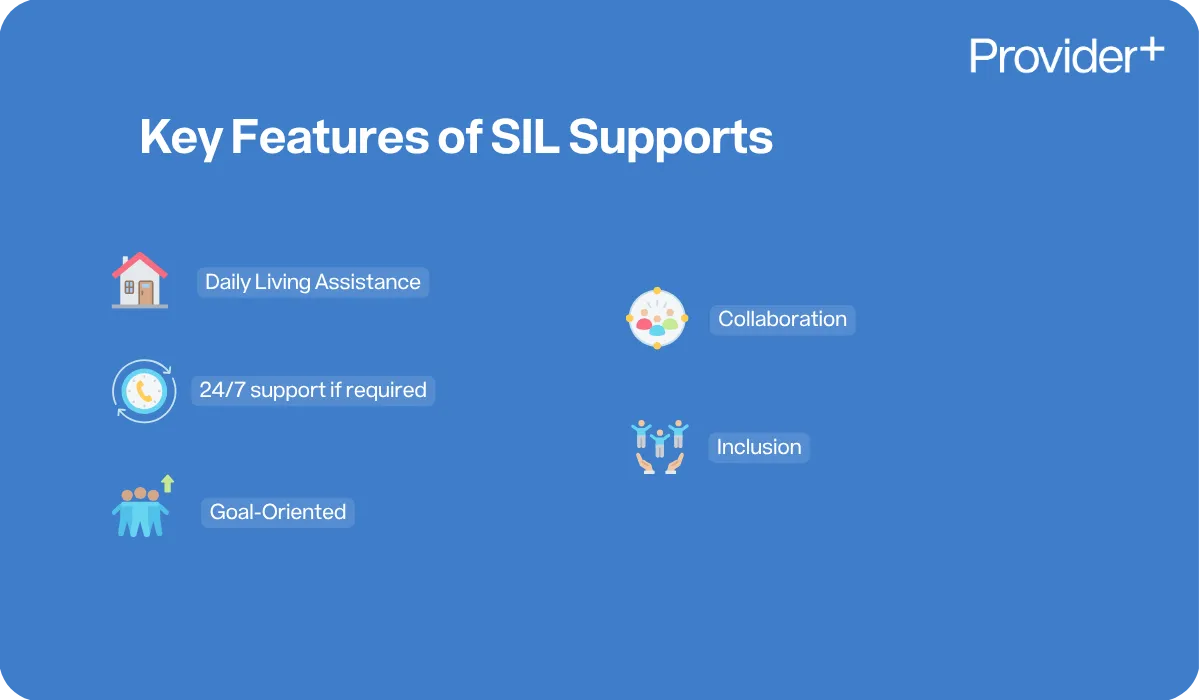
- Daily Living Assistance: Help with personal care, medication support, cooking, cleaning, managing appointments and other household tasks.
- 24/7 Support: Depending on individual needs, participants may receive continuous or scheduled support throughout the day and night.
- Goal-Oriented: SIL supports are designed to build participants' skills and independence while achieving personal goals, to enable participants to live as independently as possible while ensuring their needs are met.
- Collaboration: Support workers coordinate with participants, families, and other providers to ensure holistic care.
- Inclusion: SIL fosters independence, enhances quality of life, and allows participants to engage with their community in a safe, supportive environment.
Eligibility Requirements of being a SIL Provider
To register as a SIL provider, you must:
- Have appropriate qualifications or experience in disability services.
- Meet the Suitability Criteria for all Key Personnel.
- Develop and implement policies, procedures and processes aligned with the NDIS Practice Standards.
- Comply with relevant state and local regulations for housing and disability support services.
- Have qualified support staff to work with each participant.
Which Practice Standards Apply to SIL Providers?
SIL providers must demonstrate compliance with multiple NDIS Practice Standards modules. The specific modules depend on your service model, but most SIL providers are assessed against the following:
Core Module (all registered providers)
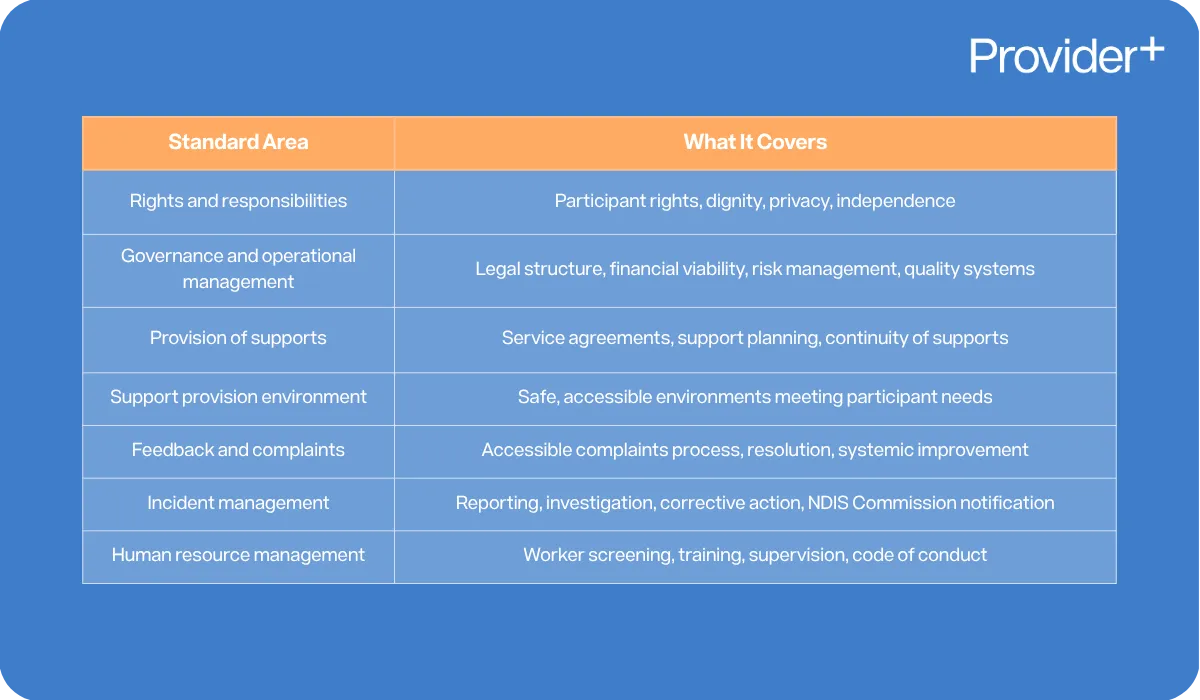
SIL Practice Standards (all registered providers)
The SIL Practice Standards introduce requirements specifically for Supported Independent Living services. These standards place greater emphasis on the quality of shared living arrangements, participant choice, independence, and oversight of SIL service delivery.
Key focus areas include:
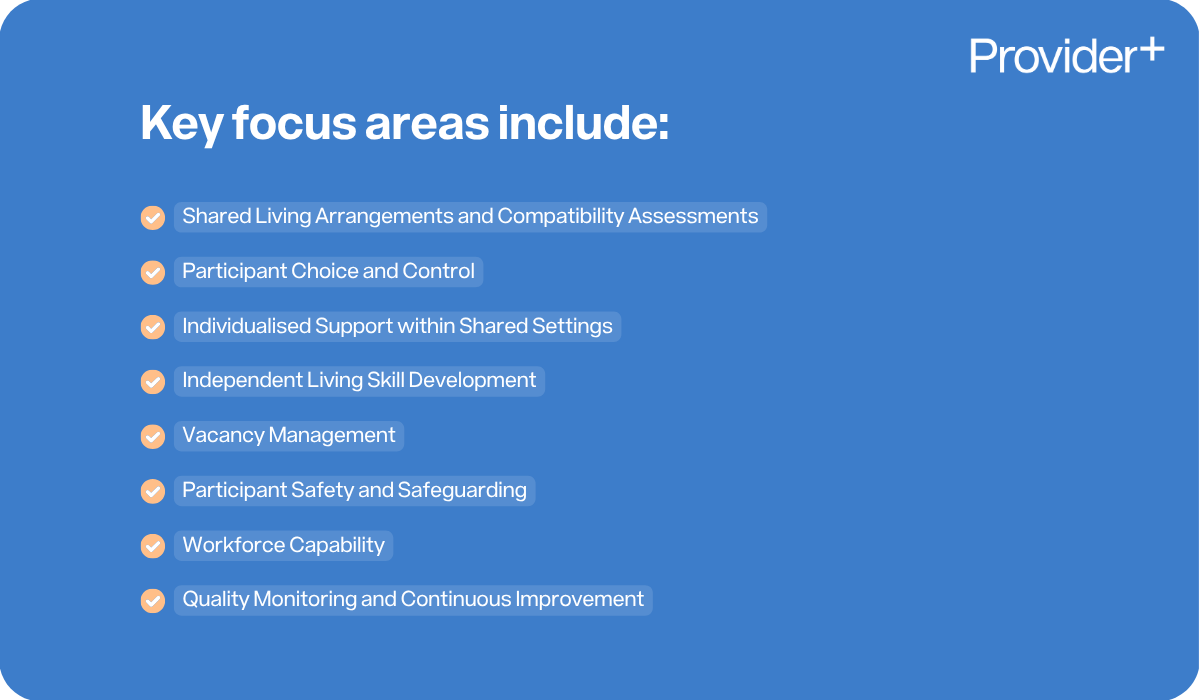
- Shared Living Arrangements and Compatibility Assessments – ensuring participants are involved in decisions about who they live with and that compatibility assessments are undertaken and reviewed.
- Participant Choice and Control – supporting participants to make decisions about their home environment, daily routines, visitors, activities, and household arrangements.
- Individualised Support within Shared Settings – ensuring participants receive supports tailored to their goals, preferences, communication needs, and support requirements rather than adopting a "one size fits all" approach.
- Independent Living Skill Development – actively supporting participants to develop, maintain, and increase their independence in daily living activities and community participation.
- Vacancy Management – ensuring participant needs, preferences, compatibility, and wellbeing are prioritised when filling vacancies within shared accommodation.
- Participant Safety and Safeguarding – strengthening oversight of participant wellbeing, risk management, and support delivery within shared living environments.
- Workforce Capability – ensuring workers have the skills, knowledge, supervision, and training necessary to support participants in SIL settings.
- Quality Monitoring and Continuous Improvement – demonstrating how participant feedback, incidents, complaints, audits, and quality activities are used to improve SIL service delivery.
Module 1: High Intensity Daily Personal Activities
Most SIL providers deliver high-intensity supports and must comply with this module:
- Assessment and planning for high-intensity personal care
- Safe delivery of personal care respecting dignity
- Mealtime management and nutrition supports (where required)
- Responsive support that adapts to changing needs
- Incident escalation for high-intensity supports
- Worker competency for complex care tasks
Module 2a: Implementing Behaviour Support Plans
If your SIL services involve implementing behaviour support plans or using restrictive practices, you must also comply with this module:
- Understanding and correctly implementing Behaviour Support Plans
- Authorisation processes for restrictive practices
- Working to reduce and eliminate restrictive practices
- Person-centred, trauma-informed support
- Collaboration with Behaviour Support Practitioners
- Worker training for behaviour support implementation
- Monitoring and reporting on behaviour support outcomes and restrictive practices
Best Practice in SIL
Policies and Procedures
Comprehensive policies, procedures and operational systems are essential to demonstrate compliance with the NDIS Practice Standards, SIL Practice Standards, and organisational governance requirements.
Documentation should address areas including participant rights, participant choice and control, support planning, risk management, incident management, complaints management, workforce management, participant safeguarding, emergency management, information management, and continuous improvement.
Importantly, SIL policies and procedures should be specific to the provider's SIL service model and clearly demonstrate how the organisation manages:
- Shared living arrangements.
- Compatibility assessments.
- Participant involvement in household decision-making.
- Vacancy management.
- Independent living skill development.
- Participant safety and safeguarding.
- Participant transitions and continuity of supports.
- Workforce capability and supervision within SIL environments.
Forms, Registers and Operational Records
SIL providers should maintain comprehensive operational records that demonstrate implementation of systems and processes. Examples include:
- Risk registers.
- Incident, feedback and complaints registers.
- Continuous improvement registers.
- Participant compatibility assessments.
- Household meeting records.
- Support plans and associated care plans.
- Participant consent records.
- Transition and exit plans.
- Emergency drill records.
- Worker competency assessments.
- Participant consultation and decision-making records.
- Vacancy management records.
Key Business and Governance Documentation
SIL providers are expected to maintain a mature governance framework demonstrating organisational oversight, accountability, quality management, and operational control.
Documentation should include:
- Strategic and business plans.
- Governance frameworks.
- Organisational charts.
- Position descriptions.
- Delegations of authority.
- Risk management frameworks.
- Conflict of interest registers.
- Internal audit programs.
- Management review meeting minutes.
- Business continuity plans.
- Emergency and disaster management plans.
- Workforce planning strategies.
- Insurance records.
- Key personnel records.
Particular consideration should be given to governance arrangements supporting 24/7 service delivery, participant safeguarding, incident oversight, quality monitoring, and decision-making within shared accommodation environments.
Participant Documentation
Robust and consistent participant documentation is critical to demonstrating safe, person-centred, and compliant service delivery.
This includes:
- SIL-specific Service Agreements.
- Support Plans.
- Participant Risk Assessments.
- Personal Emergency Evacuation Plans (PEEPs).
- Independent Living Skill Development Plans.
- Behaviour Support Plans.
- Restrictive Practice authorisations.
- Medication Management Plans.
- Mealtime Management Plans.
- Participant compatibility assessments.
- Transition and exit plans.
- Consent documentation.
- Easy Read and accessible information.
- Intake and onboarding records.
Documentation should be current, individualised, and clearly demonstrate the relationship between participant goals, identified risks, support strategies, and desired outcomes.
Participant Choice, Control and Shared Living
The SIL Practice Standards place significant emphasis on participant choice and control within shared living environments.
Best practice SIL providers demonstrate:
- Active participant involvement in decisions about where and with whom they live.
- Compatibility assessments before participants move into shared accommodation.
- Ongoing review of shared living arrangements.
- Participant involvement in household decisions.
- Respect for privacy, dignity, culture, relationships and personal preferences.
- Accessible information and supported decision-making approaches.
Participants should have genuine opportunities to influence decisions affecting their home environment and daily lives.
Participant-Centred and Individualised Supports
Successful SIL providers place participants at the centre of all decision-making and service delivery.
Supports should:
- Reflect individual goals, strengths and aspirations.
- Promote independence and autonomy.
- Encourage community participation and inclusion.
- Support skill development and capacity building.
- Be regularly reviewed and adjusted as participant needs change.
Support delivery within shared environments should remain individualised and not be driven solely by household routines or operational convenience.
Independent Living Skill Development
A key expectation of the SIL Practice Standards is that participants are actively supported to develop and maintain independent living skills.
Providers should demonstrate how they support participants to build skills in areas such as:
- Personal care.
- Meal preparation.
- Household management.
- Budgeting and money management.
- Decision-making.
- Community participation.
- Social and relationship skills.
- Health and wellbeing.
Documentation should clearly identify participant goals, skill development strategies, and progress toward greater independence.
Building a Skilled and Capable Workforce
The quality of SIL services is heavily dependent on workforce capability.
Workers should receive training and competency assessment relevant to the participants they support, including:
- Supported decision-making.
- Active Support.
- Trauma-informed practice.
- Positive Behaviour Support.
- Restrictive Practices.
- Medication management.
- Mealtime management.
- Emergency response.
- Participant rights and safeguarding.
Providers should demonstrate regular supervision, performance management, competency assessments, and ongoing professional development.
Flexibility and Adaptability
SIL services must remain responsive to changing participant needs, risks and goals.
Providers should regularly review:
- Support arrangements.
- Staffing models.
- Risk management strategies.
- Participant outcomes.
- Shared living arrangements.
This helps ensure supports continue to meet participant needs while promoting independence and quality of life.
Collaboration with Other Providers
Effective SIL services rely on strong collaboration with:
- Support Coordinators.
- Behaviour Support Practitioners.
- Allied Health Professionals.
- General Practitioners.
- Guardians and nominees.
- Families and informal supports.
Collaboration should support holistic care, risk management, continuity of supports, and achievement of participant goals.
Incident Management and Participant Safeguarding
Given SIL operates on a 24/7 basis, providers are expected to demonstrate mature incident management systems and participant safeguarding arrangements.
This includes:
- Incident reporting and investigation.
- Root cause analysis.
- Corrective action management.
- Reportable incident reporting.
- Trend analysis.
- Risk management integration.
- Continuous improvement activities.
Providers should be able to demonstrate how incidents are used to improve participant safety and service quality.
Workforce Governance
Strong workforce governance is critical within SIL environments.
Auditors will expect evidence of:
- Current NDIS Worker Screening clearances.
- Workforce planning.
- Competency assessments.
- Training compliance.
- Regular supervision.
- Overnight and active night support oversight.
- Agency worker management processes.
- Continuity of support arrangements.
Vacancy Management
The SIL Practice Standards introduce greater focus on vacancy management within shared accommodation.
Providers should demonstrate processes for:
- Assessing compatibility before filling vacancies.
- Consulting with existing participants.
- Considering participant preferences and support needs.
- Managing transitions into shared accommodation.
- Monitoring outcomes following placement decisions.
Commitment to Continuous Improvement
Best practice SIL providers actively monitor and improve service quality through:
- Internal audits.
- Participant feedback.
- Complaints analysis.
- Incident reviews.
- Management reviews.
- Quality indicators.
- Participant outcome monitoring.
Continuous improvement activities should demonstrate how participant experiences, safety, independence, and quality of life are enhanced over time.
Best practice for implementing restrictive practices within the SIL home
Key things to remember to be compliant with the NDIS (Restrictive Practices and Behaviour Support) Rules 2018 when supporting participants in SIL homes who currently have or may have in the future restrictive practices.
Restrictive practices:
- Need to be use only when necessary to prevent risk, harm to self and others and to gain control over situations.
- Should only be used when a Specialist Behaviour Practitioner has recommended the use of a restrictive practice.
- Be a part of an interim or comprehensive behaviour support plan.
- Is authorised by the respective state.
- Have consent in place.
- Training of support staff completed on the correct way to use the restrictive practice by the Specialist Behaviour Practitioner.
- Have proactive strategies in place for staff to implement.
If a restrictive practice has been used and there are no approvals in place. This then becomes a reportable incident and must be reported to the NDIS Commission within 5 days. As a registered provider you must report each occasion of use until either authorised or no longer in use. A Specialist Behaviour Support Practitioner must be engaged to work with the participant and has 1 month to complete an interim behaviour support plan if the ongoing use has been recommended.
Note - a provider needs to be registered to implement restrictive practices and be audited against module 2a by an Approved Quality Auditor (AQA).
Suitable Accommodation
As a Supported Independent Living (SIL) provider, offering suitable accommodation is key to ensuring participants feel safe, supported, and empowered in their daily lives. Suitable housing must meet the unique needs of each participant, considering accessibility, safety, and comfort. By creating a home-like environment tailored to individual preferences and support requirements, SIL providers can foster independence, enhance quality of life, and promote a sense of community for NDIS participants.
To find properties you can reach out to Real Estate Agents and advise of the property you are looking for. When choosing a property things to consider are:
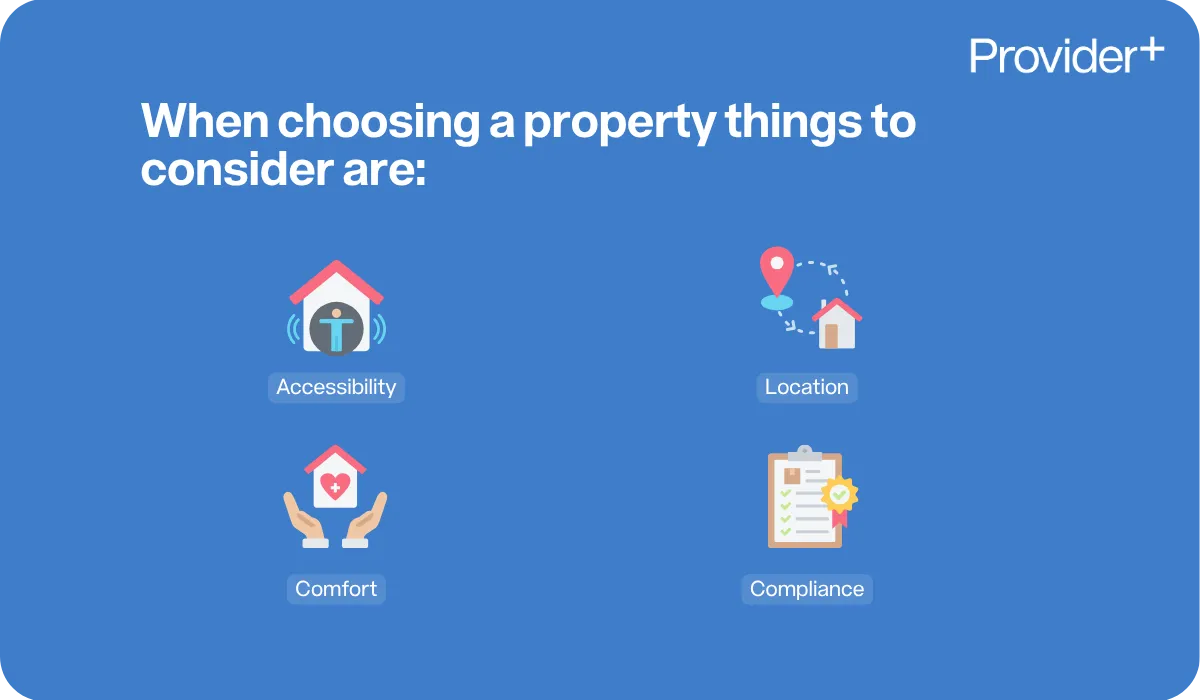
- Accessibility: Even if you are not also registering for Specialist Disability Accommodation you want to find a home that has suitable bathrooms, no stairs or obvious hazards.
- Location: Choose a location close to public transport, healthcare services, and community facilities.
- Compliance: Meet local council and state regulations for shared housing and disability accommodations, for example fire safety regulations around fire extinguishers, evacuation plans etc.
- Comfort: Create a homely, welcoming environment with private bedrooms and shared spaces for participants. Usually, a SIL home includes all furniture and appliances, and the participant provides their own bedroom furniture.
Market Your SIL Home
To find participants for your SIL home, it’s crucial to build awareness and establish trust. Strategies include:
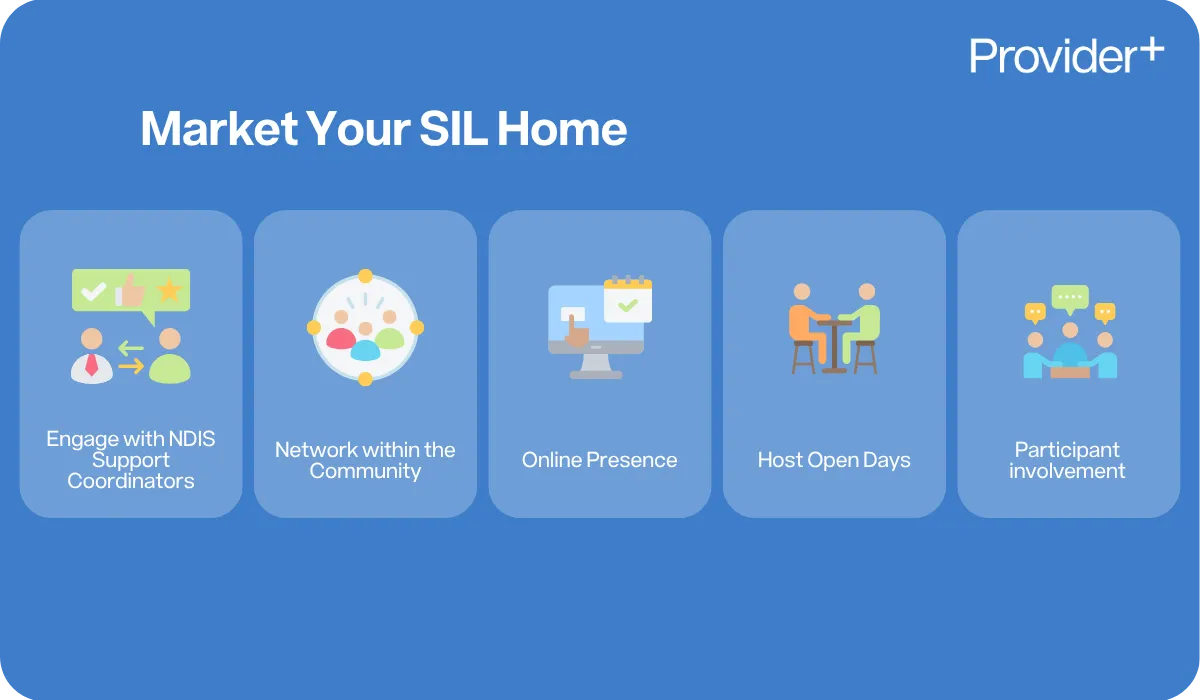
- Engage with NDIS Support Coordinators: Build relationships with local support coordinators who can assist in connecting you with potential participants.
- Network within the Community: Partner with disability organisations, advocacy groups, and local community services to reach potential clients.
- Online Presence: Create a professional website and advertise any vacancies that you may have. Profile the vacancy on the website. Maintain an active presence on social media to showcase your organisation, facilities, and success stories.
- Host Open Days: Invite participants and their families to tour the SIL home and learn about your services in person.
- Participant involvement: Involve current participants in the SIL home with profiling the SIL home, have the participant involved in meeting the potential participants and ensure that there is compatibility.
Build Strong Relationships with Participants and Families
Building strong relationships with participants and their families is crucial for providing effective Supported Independent Living (SIL) services. Trust and open communication form the foundation of these relationships, enabling collaborative care and meaningful support. Here's how you can strengthen these connections:
- Providing clear information about your services, costs, and policies.
- Maintaining open communication with participants and their families.
- Include person-centred planning to ensure services meet each participant’s unique needs and preferences.
- Collaboration with participants, families and other support providers.
- Seeking regular feedback and demonstrating a commitment to continuous improvement.
Ensure Ongoing Compliance and Quality
To maintain compliance:
- Inspect the home monthly to ensure the home is free from hazards and maintained appropriately.
- Test evacuation and emergency procedures regularly so workers and participants know what to do in case of an emergency.
- Conduct regular internal audits and update policies, procedures and processes as required.
- Ensure continuous training for staff.
- Keep up to date industry standards.
- Actively seek feedback from workers and participants and address any issues promptly.
- Refer to the below links for Supported Independent Living Provider Guidance:
How to support participants to explore home and living options
Supported independent living funding decisions process
Pricing arrangements and price limits
SIL service bookings
Provider compliance
Conclusion
Setting up a Supported Independent Living home is a rewarding endeavour that requires thorough planning, dedication to quality care, and effective participant outreach.
The pathway to excellence as a registered SIL provider is built on a foundation of trust, integrity, and dedication to supporting people with disabilities. By following the principles of best practice you can create a safe, supportive environment that empowers individuals with disabilities to live independently and achieve their lifelong goals
Want us alongside you through this? We work with SIL providers through the full registration process. Book a free, no-obligation call and we'll map out exactly what yours looks like.
Book a call.
This article was last updated on 11/06/2026. We strive to keep our content accurate and up to date; however, NDIS Commission rules and requirements can change. For the latest information, visit the NDIS Quality and Safeguards Commission website or contact our team.

Understand exactly why registration takes 6–12+ months


.webp)
