



What Are the NDIS Practice Standards and Why Do They Matter?
- The NDIS Practice Standards set the quality and safety requirements for registered NDIS providers. They outline the participant outcomes providers must achieve and the quality indicators used to assess compliance.
- Not all providers are assessed against the same standards. The requirements that apply depend on your registration groups, support categories and audit pathway.
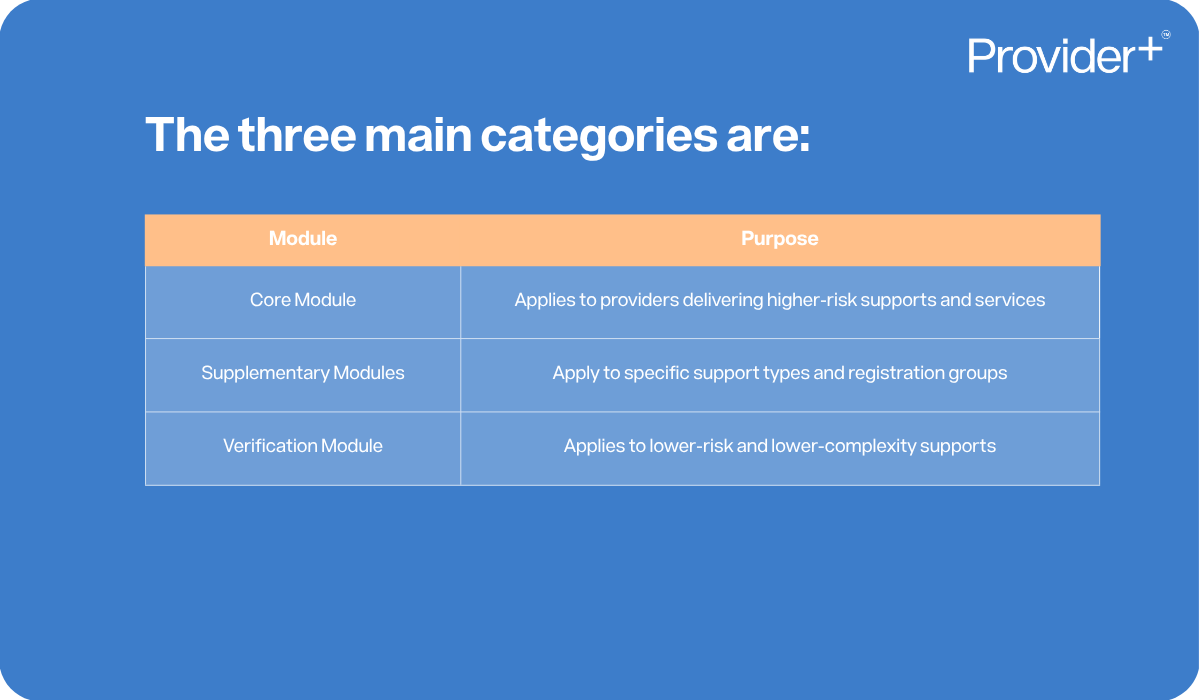
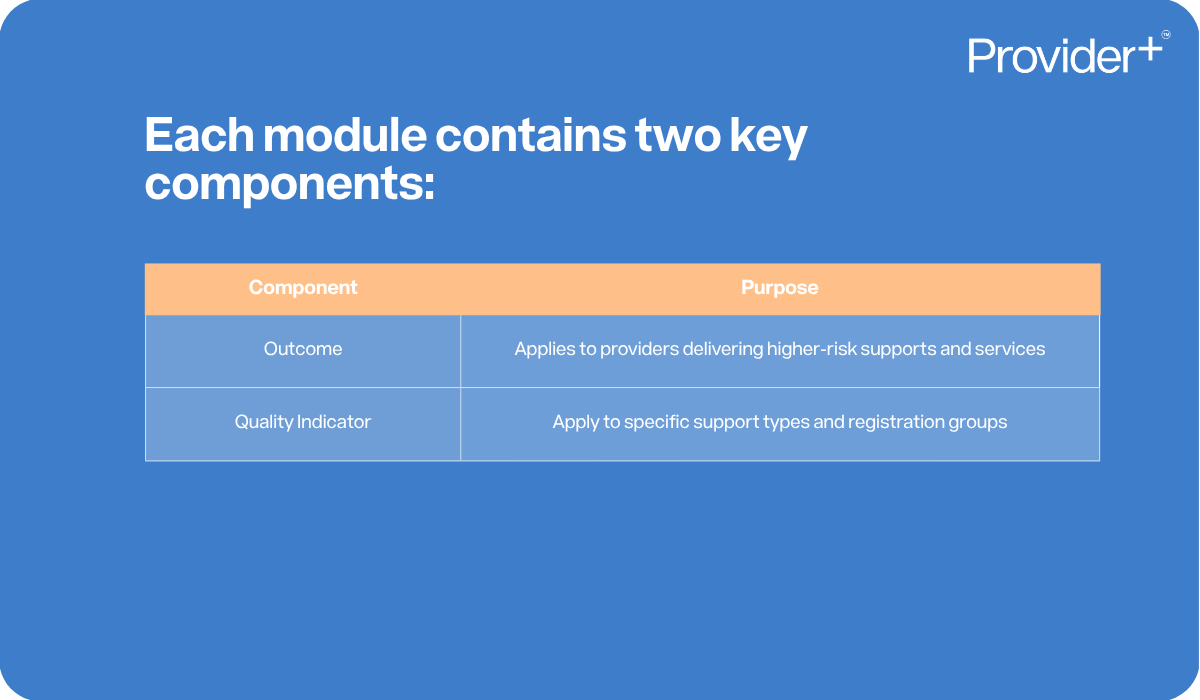
- The Practice Standards are divided into Core, Supplementary and Verification Modules. Each module contains specific outcomes and quality indicators that auditors assess during registration and renewal audits.
- Understanding the relevant Practice Standards is essential for NDIS registration and audit preparation. Providers should identify which modules apply to their services and ensure their systems, policies and practices align with the NDIS Commission's requirements.
What Are the NDIS Practice Standards?
With Core, Supplementary and Verification Modules the NDIS Practice Standards can look more complicated than they need to be. You don't need to memorise every module to get this right; you just need to know which ones apply to your registration groups, and that's exactly what this guide (and our NDIS consultant team) can help you map out.
The NDIS Practice Standards are the standards that registered NDIS providers must meet to deliver safe, quality supports and services to participants. According to the NDIS Quality and Safeguards Commission, the standards describe the participant outcomes providers are expected to achieve and the quality indicators used to assess compliance.
If you are applying for NDIS registration, renewing your registration, or expanding into new registration groups, understanding the NDIS Practice Standards is essential. They influence everything from your policies and procedures to your audit requirements, workforce management and participant safeguards.
In simple terms, the NDIS Practice Standards explain what good service delivery looks like under the NDIS and how registered providers are expected to demonstrate it.
Why Do the NDIS Practice Standards Matter?
The NDIS Practice Standards matter because they help protect participants and create a consistent benchmark for quality across the NDIS sector.
The standards focus on participant outcomes rather than simply requiring providers to have policies in place. Providers must be able to demonstrate that their systems, processes and practices support safe, effective and person-centred service delivery.
The Practice Standards are also a key part of the NDIS registration process. Approved quality auditors assess providers against the relevant standards during registration and renewal audits.
For providers, this means the standards influence:
- Governance and management systems
- Participant rights and safeguards
- Risk management processes
- Incident management systems
- Complaints handling procedures
- Workforce recruitment and training
- Service delivery practices
Who Must Comply With the NDIS Practice Standards?
Registered NDIS providers must comply with the Practice Standards relevant to the supports and services they deliver.
The exact standards that apply depend on several factors, including:
- Your registration groups
- The types of supports you provide
- Whether your registration pathway requires certification or verification
- Whether you deliver specialised supports such as Supported Independent Living (SIL), Specialist Disability Accommodation (SDA) or Specialist Behaviour Support
The NDIS Commission applies different Practice Standard modules depending on the provider's registration scope. Not every provider is assessed against every standard.
How Are the NDIS Practice Standards Structured?
The Practice Standards are organised into modules. These modules allow providers to be assessed against the requirements relevant to their services.
What Is the Core Module?
The Core Module forms the foundation of the NDIS Practice Standards for providers delivering higher-risk supports and services.
The Core Module focuses on four broad areas:
- Rights and Responsibilities
- Governance and Operational Management
- Provision of Supports
- Support Provision Environment
The NDIS Commission has updated the Practice Standards over time to address emerging risks and participant safeguards. This includes additional requirements relating to Emergency and Disaster Management, and Mealtime Management for applicable providers. Providers should ensure they are reviewing the current version of the Practice Standards and Quality Indicators relevant to their registration groups.
What Does Rights and Responsibilities Cover?
The Rights and Responsibilities section focuses on protecting and promoting participant rights.
Providers should support participants to exercise choice and control while respecting their dignity, privacy, culture, values and beliefs.
This section includes areas such as:
- Human and legal rights
- Choice and decision-making
- Privacy and confidentiality
- Independence and inclusion
- Freedom from violence, abuse, neglect, exploitation and discrimination
The Practice Standards require providers to communicate information in ways participants can understand and to support participants to engage with their communities and support networks where appropriate.
What Does Governance and Operational Management Cover?
Governance and Operational Management focuses on how a provider is managed and how quality and safety are maintained.
The NDIS Commission states that governance systems should be appropriate to the size and complexity of the organisation.
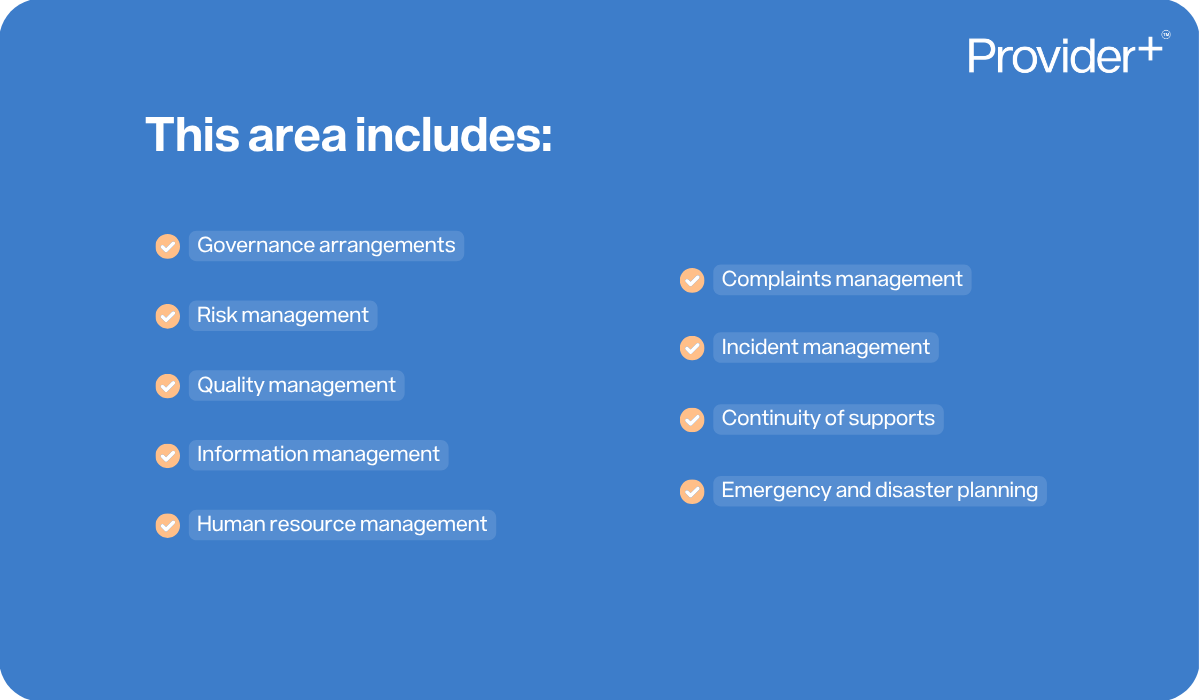
Strong governance systems help providers identify risks, improve service quality and meet their regulatory obligations.
What Does Provision of Supports Cover?
The Provision of Supports section focuses on how supports are planned, delivered and reviewed.
According to the Practice Standards, providers should ensure participants have access to supports that align with their needs, goals and preferences.
This includes:
- Access to services
- Service agreements
- Participant planning
- Support delivery
- Review processes
The focus is on ensuring supports are person-centred and responsive to participant needs.
What Does the Support Provision Environment Cover?
The Support Provision Environment section focuses on participant health, safety and wellbeing within service settings.
Providers should ensure support environments are safe and suitable for participants.
Areas covered include:
- Safe environments
- Participant money and property
- Medication management
- Mealtime management
- Waste management
The exact requirements depend on the services delivered and the environments in which supports are provided.
What Are the Supplementary Modules?
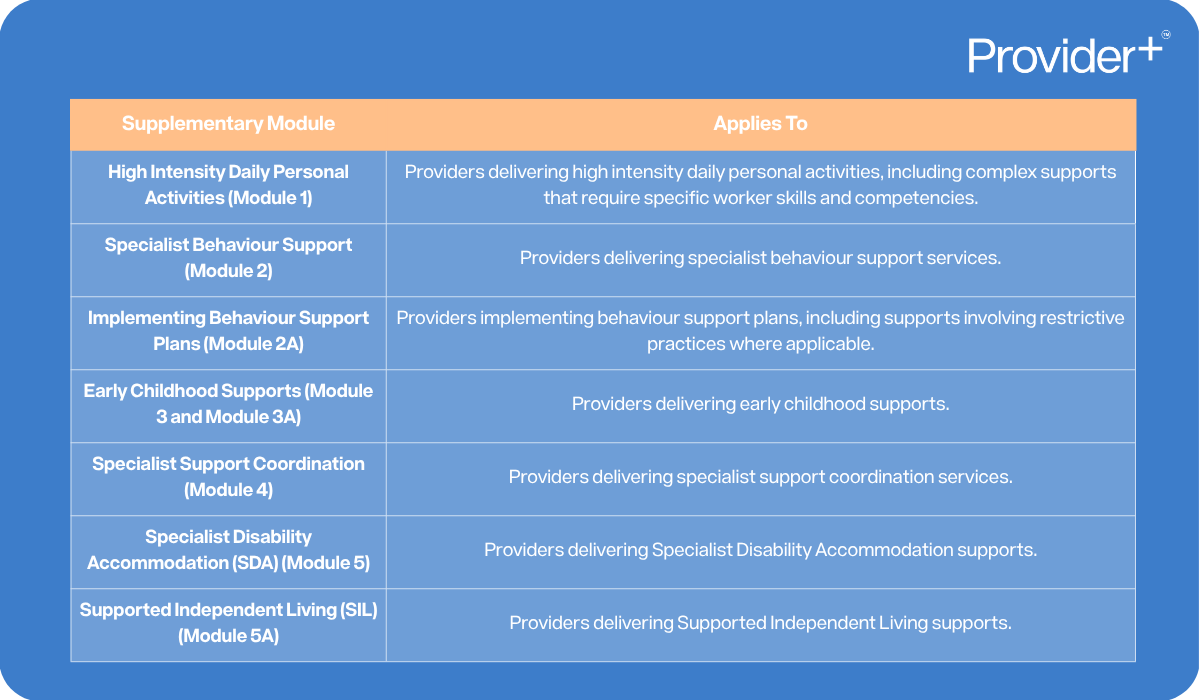
Supplementary modules apply to providers delivering specific types of supports and services that require additional safeguards or specialised requirements. Providers are only assessed against supplementary modules that relate to their registration groups and the supports they deliver.
Supplementary modules sit alongside the relevant Core Module requirements and address the additional risks, responsibilities and quality requirements associated with specialised supports.
High Intensity Daily Personal Activities (Module 1)
The High Intensity Daily Personal Activities supplementary module applies to providers delivering supports involving complex health-related needs. Providers delivering these supports must demonstrate that workers have the appropriate skills, knowledge and training required for the participant's individual needs.
Examples of high intensity supports may include:
- Complex bowel care
- Enteral feeding and management
- Severe dysphagia management
- Tracheostomy management
- Ventilator management
- Urinary catheter management
- Complex wound management
Specialist Behaviour Support (Module 2)
This supplementary module applies to providers developing behaviour support plans.
They focus on ensuring providers have appropriate systems, safeguards and workforce capability to deliver behaviour supports safely and in accordance with NDIS requirements.
Implementing Behaviour Support Plans (Module 2A)
This supplementary module applies to providers implementing behaviour support plans with restrictive practices.
They focus on ensuring providers have appropriate systems, safeguards and workforce capability to deliver behaviour supports safely and in accordance with NDIS requirements.
Early Childhood Supports (Module 3 and 3A)
This module applies to providers delivering early intervention supports to children younger than 9 years of age.
Module 3 applies to organisations delivering these supports, while Module 3A provides an alternative assessment pathway for providers operating as a sole trader or partnership entity who are seeking registration to deliver early childhood supports.
Both modules focus on ensuring children and their families receive safe, high-quality, evidence-informed supports that promote development, participation and wellbeing.
Specialist Support Coordination (Module 4)
The Specialist Support Coordination supplementary module applies to providers delivering specialist support coordination.
It focuses on ensuring providers have appropriate systems to support participants with complex needs, including coordination of multiple services and supports.
Specialist Disability Accommodation (Module 5)
The Specialist Disability Accommodation (SDA) supplementary module applies to providers delivering SDA supports.
It includes additional requirements relating to safe, appropriate and participant-focused accommodation services.
Supported Independent Living (Module 5A)
The Supported Independent Living (SIL) supplementary module applies to providers delivering SIL supports.
Module 5A introduces SIL-specific Practice Standards covering:
- Supported decision-making
- Safeguarding
- Practice governance
- Agreements about tenancy, housing and support arrangements
Providers delivering SIL must meet these requirements alongside the relevant Core Module requirements.
What Is the Verification Module?
The Verification Module applies to registered providers delivering lower-risk and lower-complexity supports and services.
According to the NDIS Commission, the Verification Module focuses on four key areas:
- Human resource management
- Risk management
- Incident management
- Complaints management and resolution
Compared with certification audits, verification audits generally assess a narrower range of requirements.
The Verification Module is designed to ensure providers have appropriate systems and controls in place while reflecting the lower-risk nature of the supports delivered.
What Are Quality Indicators?
Quality indicators are the measures auditors use to assess whether a provider is meeting the required participant outcomes.
Each Practice Standard includes one or more quality indicators that describe what compliance looks like in practice.
A simple way to think about them is:
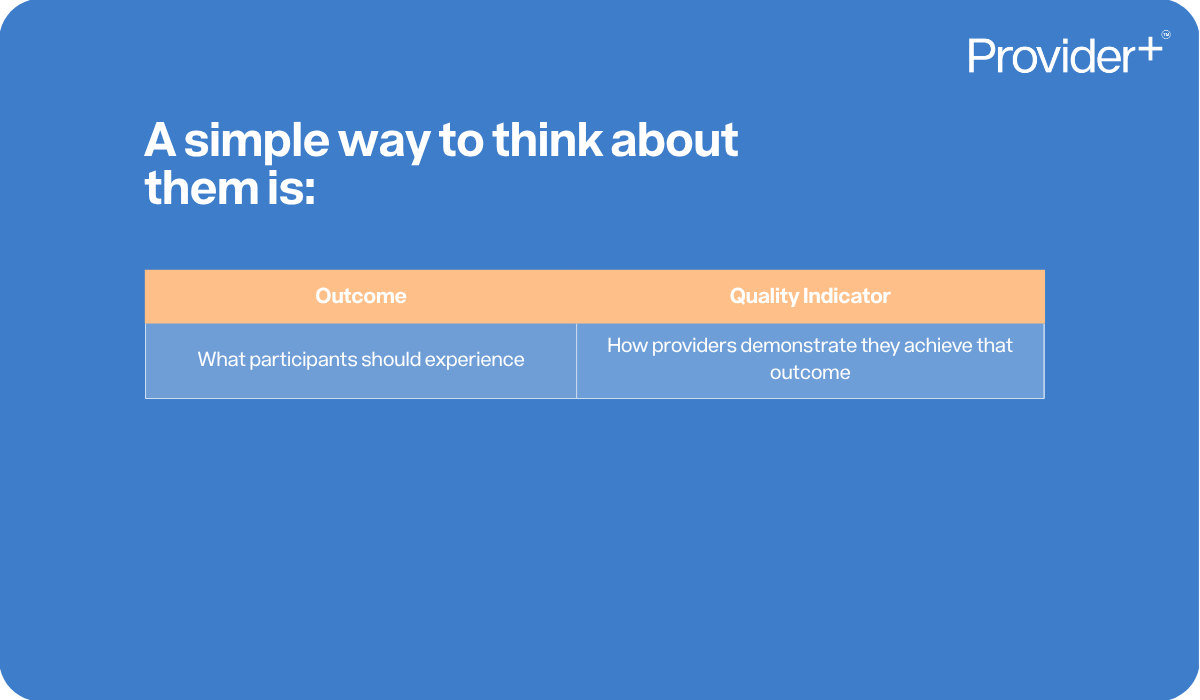
For example, a participant outcome may focus on choice and control. The associated quality indicators help auditors determine whether the provider's systems, practices and evidence support that outcome.
The quality indicators are important because they provide a practical framework for audit assessments.
How Do Auditors Assess the NDIS Practice Standards?
Approved quality auditors assess providers against the relevant Practice Standards and quality indicators during registration and renewal audits.
Auditors examine whether providers can demonstrate compliance with the applicable requirements.
This assessment may include:
- Policy and procedure reviews
- Staff interviews
- Participant evidence
- Record and document reviews
- Governance assessments
- Risk management reviews
- Observation of operational practices
The specific audit requirements depend on the provider's registration scope and audit pathway.
Providers should remember that auditors assess both documented systems and how those systems operate in practice. This can become time-consuming and tedious. Our PQMPro updates your policies automatically, helps you organise documents and keeps you fully prepared for every audit.
What Is Module 5A for Supported Independent Living Providers?
Providers delivering Supported Independent Living (SIL) services must comply with additional SIL-specific Practice Standards.
This is particularly important following the NDIS Commission's mandatory registration reforms, which introduced Module 5A. Providers delivering SIL supports under Registration Group 0138 must demonstrate compliance with both the applicable Core Module requirements and the SIL-specific standards.
Module 5A focuses on four key areas:
These standards recognise the unique risks and responsibilities involved in delivering SIL services and strengthen participant protections within shared living and supported accommodation settings.
Providers seeking SIL registration should review the relevant Module 5A requirements alongside the Core Module and any other applicable Practice Standards.
For a deeper look at Module 5A, including what changed for SIL providers from 1 July 2026, see our dedicated guide: What Are the New NDIS SIL Practice Standards Under Module 5A?
What Should Providers Do First?
If you are preparing for NDIS registration or renewal, the best place to start is identifying which Practice Standard modules apply to your organisation.
According to the NDIS Commission, providers should understand their registration scope before preparing for audit.
A practical starting checklist includes:
1. Identify Your Registration Groups
Determine which registration groups apply to the supports and services you provide.
2. Determine Which Modules Apply
Review whether you will be assessed against:
- Core Module requirements
- Supplementary modules
- Verification Module requirements
3. Review Your Policies and Procedures
Ensure your documentation aligns with the relevant Practice Standards and quality indicators.
4. Map Evidence Against Quality Indicators
Identify the records, processes and examples that demonstrate compliance.
5. Prepare for Audit
Review your systems, train your workforce and address any compliance gaps before the audit begins.
Providers who start this process early are generally in a stronger position when preparing for registration or renewal.
Whether you're preparing for your first registration audit or adding a new supplementary module to your scope, our team is here to help you get it right the first time. Book a call so we can explain the process and map out your next step forward.
We strive to keep our content accurate and up to date; however, NDIS Commission rules and requirements can change. For the latest information, visit the NDIS Quality and Safeguards Commission website or contact our team.
Need help with the NDIS?
Fill in the form below to get started.
FAQs
According to the NDIS Practice Standards and Quality Indicators framework, quality indicators are the measures auditors use to assess whether providers are achieving the required participant outcomes.
Yes. Registered NDIS providers must comply with the Practice Standards relevant to their registration scope and services.
No. The standards that apply depend on the provider's registration groups, services and audit pathway. Some providers are assessed against supplementary modules while others are assessed under the Verification Module.
The Core Module applies to providers delivering higher-risk supports and services. The Verification Module applies to lower-risk and lower-complexity supports and focuses on a smaller set of compliance requirements.
Module 5A contains the Practice Standards and Quality Indicators that apply specifically to Supported Independent Living (SIL) providers. It includes requirements relating to supported decision-making, safeguarding, practice governance, and agreements about housing and support arrangements.
Yes, SIL providers are assessed against SIL-specific Practice Standards and Quality Indicators in addition to relevant core requirements.
Approved quality auditors assess registered providers against the relevant NDIS Practice Standards and quality indicators as part of the registration and renewal process.

Understand exactly why registration takes 6–12+ months

.webp)