



Do Registered SIL Providers Need to Re-Register Under the New NDIS Module 5A Standards?
- Existing registered SIL providers do not need to apply for registration again.
- From 1 July 2026, the NDIS Commission will add Registration Group 0138 – Supported Independent Living (SIL) to eligible providers' registrations automatically.
- Providers delivering SIL must meet the new Module 5A SIL Practice Standards from 1 July 2026.
- Providers must complete a Module 5A certification audit as part of their mid-term audit. This audit must commence no later than 18 months after the beginning of the current registration period.
- Your next audit will focus on how your organisation applies the SIL Practice Standards in everyday work, not just whether you have policies.
Update
The 1 October 2026 date was the transition deadline for certain existing SIL providers to apply for registration. For providers reading this guide after that date, the transition deadline has passed. The relevant question is whether the provider is registered and meeting the requirements that apply to its circumstances.
No. Existing registered SIL providers do not need to re-register.
If your organisation is currently registered under Registration Group 0115 – Assistance with Daily Life Tasks in a Group or Shared Living Arrangement (SIL), the NDIS Quality and Safeguards Commission will automatically transition your registration to Registration Group 0138 – Assistance with Supported Independent Living.
You do not need to submit a new registration application. Instead, the NDIS Commission will update your existing registration by adding Registration Group 0138 – Supported Independent Living (SIL). If you continue delivering SIL, you must also meet a new registration condition that requires your organisation to complete a Module 5A certification audit during your mid-term audit.
What does change is how your SIL services will be assessed.
From 1 July 2026, registered SIL providers must demonstrate compliance with Module 5A: Assistance with Supported Independent Living, a dedicated set of SIL Practice Standards that applies in addition to the existing NDIS Practice Standards Core Module.
Your next audit or registration renewal will assess your organisation against these requirements.
What Actually Changes for Existing Registered Providers?
The automatic transition to Registration Group 0138 is relatively straightforward.
Preparing for Module 5A is not.
While many providers already have well-developed governance systems, Module 5A introduces SIL-specific expectations that reflect the realities of supporting participants in their homes every day.
Rather than relying primarily on organisation-wide governance requirements, auditors will increasingly assess what happens inside each supported living environment.
This means providers need to demonstrate that policies, procedures and leadership produce consistent outcomes across every SIL home—not simply that documentation exists.
For example, auditors may ask questions such as:
- How do workers support participants to make everyday decisions?
- How is conflict between co-tenants managed?
- How do supervisors know staff consistently apply safeguarding procedures?
- What evidence shows participant feedback influences service delivery?
- How are tenancy rights protected when the provider also delivers housing?
These questions require practical evidence rather than policy statements alone.
Why the NDIS Commission Introduced Module 5A
Supported Independent Living differs from many other NDIS supports.
Workers often provide support every day, sometimes around the clock, within a participant's home.
Participants may also share their home with other people receiving supports, creating additional responsibilities around safeguarding, communication, privacy, household decision-making and tenancy rights.
The introduction of Module 5A recognises that quality SIL involves more than organisational governance.
It requires providers to demonstrate that participants:
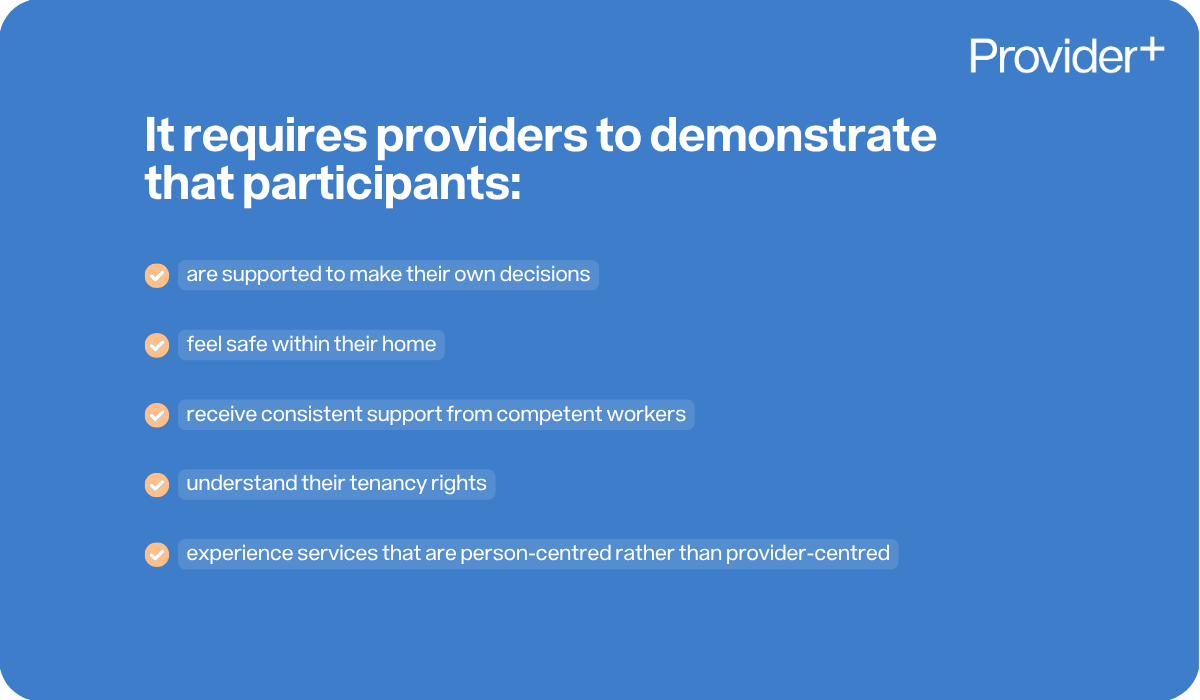
- are supported to make their own decisions
- feel safe within their home
- receive consistent support from competent workers
- understand their tenancy rights
- experience services that are person-centred rather than provider-centred.
This represents a greater focus on participant experience and lived outcomes throughout the audit process.
What Doesn't Change?
Although Module 5A introduces additional obligations, several important aspects of your registration remain unchanged.
You can continue delivering SIL while these changes are introduced. The NDIS Commission will send you an updated Certificate of Registration, and your provider details will be updated on the NDIS Provider Register.
You are still expected to comply with the NDIS Practice Standards Core Module, with Module 5A becoming an additional requirement for SIL providers rather than a replacement.
The transition therefore focuses on strengthening compliance rather than restarting registration.
Your Next Audit Will Be Different
For many organisations, the first practical impact of Module 5A will be seen during their next audit.
Historically, providers often concentrated on ensuring policies, procedures and governance documents addressed the Practice Standards.
Those documents remain important.
However, auditors are now expected to place greater emphasis on whether governance systems produce consistent practice throughout the organisation.
Instead of asking only whether a Supported Decision-Making Policy exists, auditors may review:
- participant files
- worker observations
- supervision records
- competency assessments
- meeting minutes
- quality improvement records
- participant interviews
- staff interviews.
This allows auditors to understand whether documented systems are consistently implemented across every SIL home.
For many providers, this represents one of the biggest shifts introduced through Module 5A.
From Policy Compliance to Practice Evidence
Many providers already have comprehensive policy manuals.
Module 5A does not reduce the importance of documented policies.
Instead, it raises expectations regarding implementation.
Auditors increasingly want evidence showing policies influence everyday support.
For example, if your organisation has a Supported Decision-Making Policy, auditors may expect evidence such as:
- participant communication profiles
- documented examples of participant choice
- supervision discussions relating to supported decision-making
- competency assessments
- worker observations
- participant feedback confirming choices are respected.
Similarly, safeguarding policies should be supported by evidence including:
- proactive risk reviews
- incident trend analysis
- conflict management records
- emergency planning
- supervision discussions
- workforce training records.
Good governance is demonstrated through consistent practice rather than documentation alone.
Common Misunderstandings About the Transition
During the transition to Registration Group 0138, several misconceptions have emerged.
"We have to submit another registration application."
No.
Existing registered SIL providers are automatically transitioned to the new registration group.
The change does not require a completely new application.
"Our current policies already meet the requirements."
Possibly, but policies alone are unlikely to satisfy future audits.
Providers should review existing documentation against Module 5A to determine whether additional SIL-specific guidance or stronger implementation evidence is needed.
"We only need to prepare before renewal."
Preparing only when your audit is approaching significantly limits the opportunity to improve systems.
Building evidence over several months is generally easier than attempting to create documentation shortly before an audit.
"Training records are enough."
Attendance records demonstrate staff completed training.
They do not necessarily demonstrate competence.
Module 5A places greater emphasis on whether workers consistently apply knowledge within everyday practice.
What Should Existing Providers Review Now?
Rather than waiting until your next audit is scheduled, begin reviewing your organisation against the practical expectations of Module 5A.
An internal readiness review should consider whether governance systems operate consistently across every SIL home.
Key areas include:
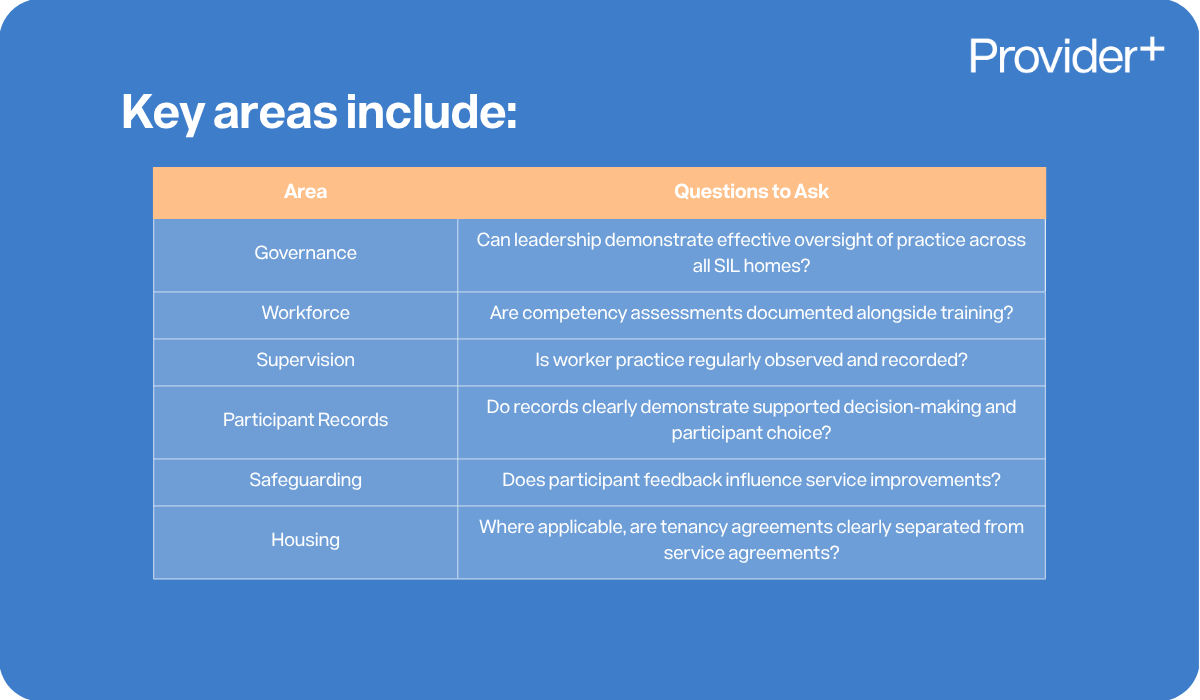
Identifying gaps early provides time to strengthen systems before external auditors assess your organisation.
Preparing for Module 5A Is About Building Evidence
Many providers assume preparation begins when policies are reviewed.
In practice, preparation begins much earlier.
Evidence should develop naturally through everyday operations.
This includes documenting supervision, observing worker practice, reviewing participant outcomes, recording continuous improvement activities and ensuring governance discussions lead to measurable improvements.
Organisations that embed evidence collection into routine operations often find audits considerably less stressful than those attempting to assemble documentation shortly beforehand.
How Does Module 5A Change Supported Decision-Making?
One of the most significant changes for existing SIL providers is the increased emphasis on supported decision-making.
While participant choice has always been a core principle of the NDIS, Module 5A expects providers to demonstrate how participants are supported to make decisions throughout everyday life—not only during formal planning meetings.
This includes decisions about:
- daily routines
- meals and activities
- visitors
- household responsibilities
- relationships
- appointments
- community participation
- personal goals.
Workers should understand that their role is to support participants to make informed decisions rather than making decisions on their behalf.
For existing providers, this may involve reviewing whether current systems adequately document:
- participant communication preferences
- decision-making support strategies
- accessible information
- examples where participant preferences influenced support delivery
- staff training in supported decision-making.
Auditors are unlikely to rely solely on policies.
Instead, they may interview staff and participants to determine whether supported decision-making is consistently embedded across the organisation.
What Changes Under the Safeguarding Standard?
Module 5A strengthens safeguarding expectations within Supported Independent Living environments.
Unlike many other NDIS supports, SIL often involves participants sharing homes and receiving daily support from multiple workers.
These living arrangements create additional safeguarding responsibilities.
Providers should demonstrate systems that identify and manage risks before incidents occur.
Areas commonly reviewed include:
- conflict between co-tenants
- abuse, neglect and exploitation
- bullying and intimidation
- privacy within shared homes
- restrictive practices (where relevant)
- emergency preparedness
- community safety
- visitor management where appropriate.
Importantly, safeguarding should not remove participant autonomy.
Workers need to balance participant safety with dignity of risk, supporting informed choices while reducing avoidable harm.
Evidence may include:
- safeguarding frameworks
- risk assessments
- incident trend analysis
- emergency plans
- supervision records
- participant consultation
- quality improvement activities following incidents.
What Does Practice Governance Mean for Existing Providers?
Many providers already have governance systems in place.
Module 5A focuses on whether those systems consistently produce high-quality SIL supports.
Practice Governance extends beyond organisational management.
It examines how leaders support workforce capability across every SIL home.
Providers should be able to demonstrate:
- competency-based recruitment
- structured induction
- ongoing supervision
- mentoring
- practice observation
- refresher training
- leadership oversight
- continuous quality improvement.
A common audit question is:
How do you know your workers consistently deliver safe, person-centred support?
The answer should be supported by documented evidence rather than assumptions.
Examples include:
- competency assessments
- supervision notes
- observation checklists
- coaching records
- quality reviews
- participant feedback.
Do Housing and Support Arrangements Need to Be Separate?
Yes.
Where an organisation provides both housing and Supported Independent Living supports, Module 5A expects tenancy arrangements and support arrangements to remain clearly separate.
Participants should understand:
- their tenancy agreement is different from their service agreement
- they have legal tenancy rights
- changing SIL providers does not automatically end their tenancy
- advocacy and legal assistance are available if required.
Providers should also review conflict of interest processes where housing and support are delivered by the same organisation.
This area is expected to receive increased audit attention because clear separation helps protect participant choice and independence.
Evidence Auditors Are Likely to Request
Although every audit is different, providers should expect requests for practical evidence demonstrating how Module 5A operates throughout the organisation.
Examples include:
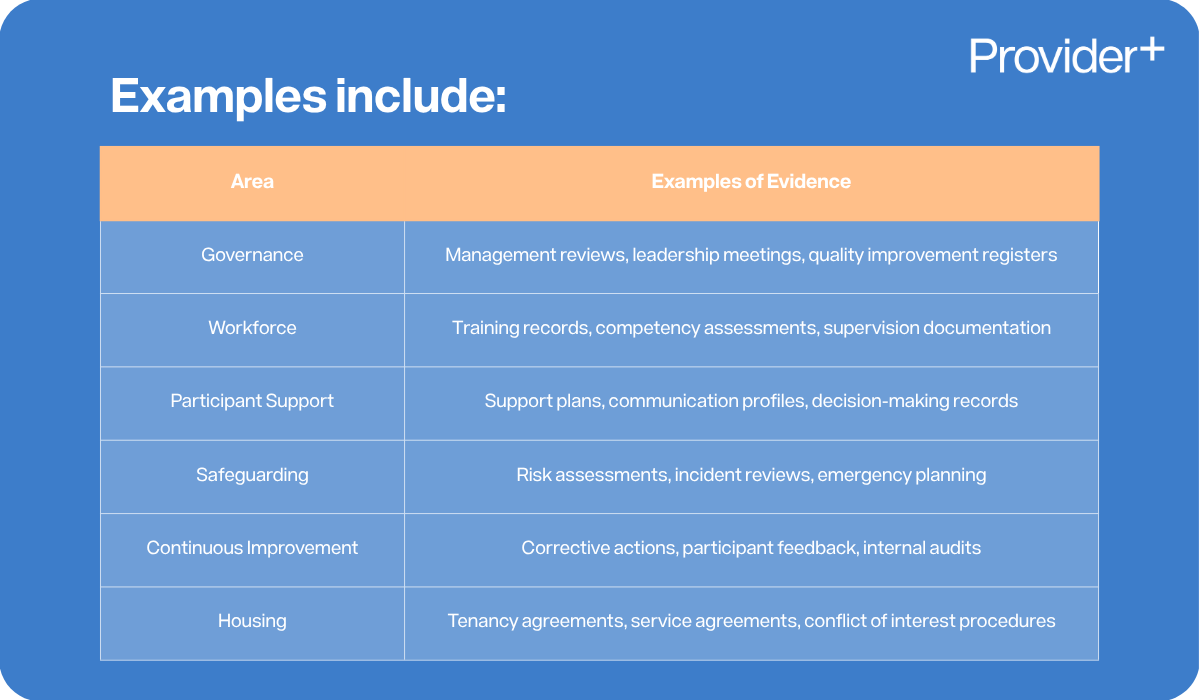
Preparing these documents gradually throughout the year is generally more effective than collecting them immediately before an audit.
Common Gaps Existing Providers Should Address
Even organisations with mature quality systems may identify opportunities to strengthen compliance before their next audit.
Common gaps include:
Policies exist but implementation is inconsistent.
Workers may interpret policies differently across different homes.
Regular supervision and observation help improve consistency.
Training is documented but competence is not assessed.
Attendance records show staff completed training.
Competency assessments demonstrate workers can apply that knowledge safely.
Supervision is informal.
Good supervision should include documented discussion, observation, coaching and follow-up actions.
Participant records focus on activities rather than outcomes.
Documentation should demonstrate how participant preferences influence everyday support.
Continuous improvement is reactive.
Quality improvement should occur throughout the year rather than only following incidents or complaints.
Practical Audit Readiness Checklist
Before your next audit, consider whether your organisation can answer "yes" to the following questions.
✓ Do our policies align with Module 5A?
✓ Can workers explain supported decision-making?
✓ Are safeguarding risks regularly reviewed?
✓ Do supervisors observe staff practice?
✓ Are competency assessments documented?
✓ Does participant feedback influence service improvements?
✓ Are governance meetings recorded?
✓ Are tenancy and support agreements clearly separated where applicable?
✓ Can we demonstrate continuous improvement across every SIL home?
If any answer is "no", the transition period provides an opportunity to strengthen those systems before your next audit.
How Provider+ Can Help
Preparing for Module 5A? Provider+ provides the policies and expert support to help registered SIL providers prepare for their next audit and meet the new SIL Practice Standards.
Conclusion
For existing registered SIL providers, the transition to Registration Group 0138 is administratively straightforward.
The real work lies in preparing for Module 5A.
Rather than viewing the new standards as an additional compliance exercise, organisations should use the transition period to strengthen governance, workforce capability and participant-centred practice.
Providers that embed these systems into everyday operations—not simply their policy manuals—will be better positioned for future audits and, more importantly, better equipped to deliver high-quality Supported Independent Living services.
We strive to keep our content accurate and up to date; however, NDIS Commission rules and requirements can change. For the latest information, visit the NDIS Quality and Safeguards Commission website or contact our team.
FAQs
No. Existing registered SIL providers will automatically transition from Registration Group 0115 to Registration Group 0138.
Module 5A applies from 1 July 2026 for providers delivering Supported Independent Living under Registration Group 0138.
Yes. Your next audit is expected to include assessment against Module 5A alongside the Core Module.
No. Providers delivering SIL must comply with both the Core Module and Module 5A.
Not necessarily. Many organisations already have strong policies. The priority is reviewing existing documents against Module 5A and ensuring they are consistently implemented.
Yes. Module 5A applies to all registered SIL providers regardless of whether housing is also provided. Providers delivering housing have additional responsibilities relating to tenancy arrangements.

Understand exactly why registration takes 6–12+ months


.webp)