New to the NDIS and Planning to Deliver SIL? How to Register
Starting a new NDIS provider business is a real undertaking, and choosing SIL as your support means starting with one of the scheme's more demanding ones. That is not a warning to put you off. It is the honest context that helps you plan well. Plenty of providers begin exactly where you are, and the ones who do it smoothly are simply the ones who understand the road ahead before they set out.
This guide is that road, laid out in order: what you need in place to begin, why registration comes before delivery, what you apply for depending on your timing, and what to expect along the way.
Does this pathway apply to me?
This guide is for you if you are not currently an NDIS provider and you are planning to enter the scheme by delivering SIL. If you are already an unregistered provider delivering other supports, the unregistered-provider guide fits your starting point better, though the registration route is much the same. And if you are already registered for other supports, you want the lighter variation pathway.
Starting from scratch: what you are taking on
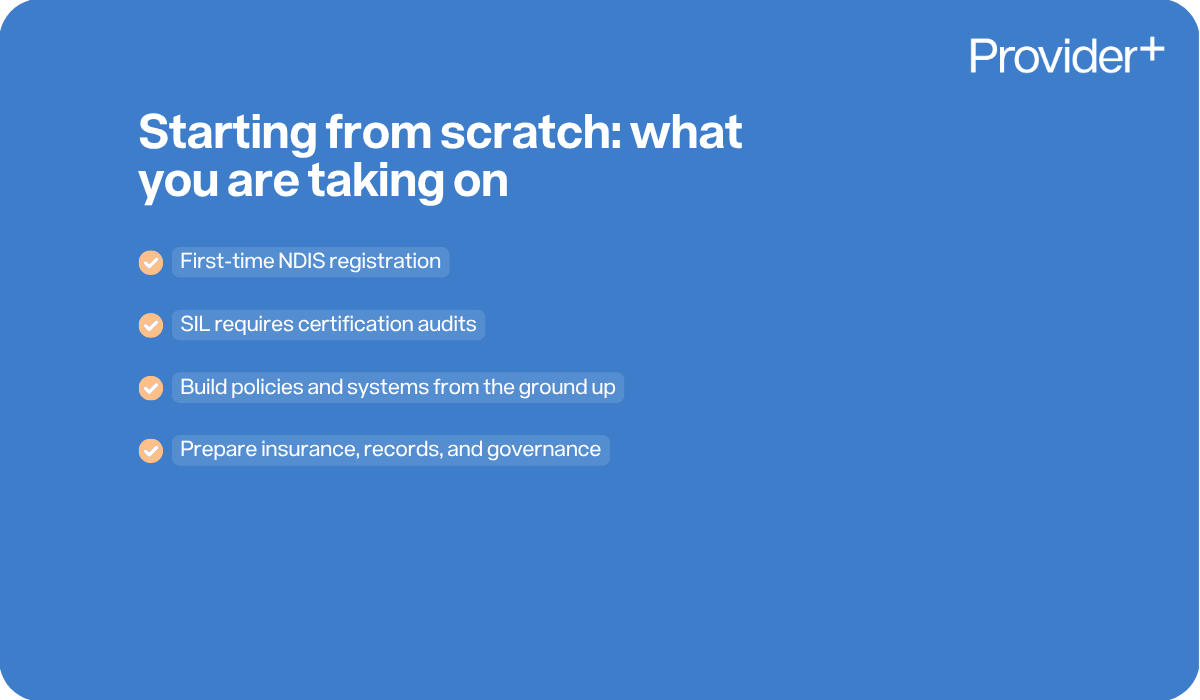
It helps to name the two things happening at once. First, you are becoming a registered NDIS provider for the first time, which brings its own setup. Second, you are doing so with SIL, which the Commission treats as higher-risk and which therefore requires the more thorough certification pathway rather than the lighter verification one.
Before registration, there are foundations worth having in place: an appropriate business structure and an ABN, suitable insurance, and the beginnings of the policies, procedures and record-keeping systems that registration will expect. You do not need every detail finished before you start the conversation, but you do need to know these are part of the picture, because as a new entrant you are building them from the ground up rather than adjusting what already exists.
Why must I register before I deliver SIL?
A short look under the hood explains the order of everything below. SIL is delivered in people's homes, often overnight, for people who rely on it. So the Commission's approach is to confirm a provider can deliver it safely before they begin, not after. For a new provider, that means registration comes first and your first shift comes second. It is the same logic that puts a licence before driving. Seen that way, the sequence is not a barrier so much as the natural order of doing this properly.
What do I apply for, before or after 1 July?
You submit a new NDIS registration application for Registration Group 0138 (Assistance with Supported Independent Living) together with any other applicable registration groups for the supports you intend to deliver. After lodging your application, the NDIS Commission issues a Scope of Audit, and you engage an Approved Quality Auditor to complete a certification audit.
Can I deliver SIL while I wait?
No. Because you are not yet delivering anything in the NDIS, there is nothing to continue, and there is no transitional allowance to begin before approval. The 1 October 2026 date does not apply to you either, since it exists to protect providers already delivering SIL who need to keep going while they register. Your situation is straightforward: you cannot deliver SIL until your registration is approved, so plan your launch and your first participants for after that point.
What will I be audited against?
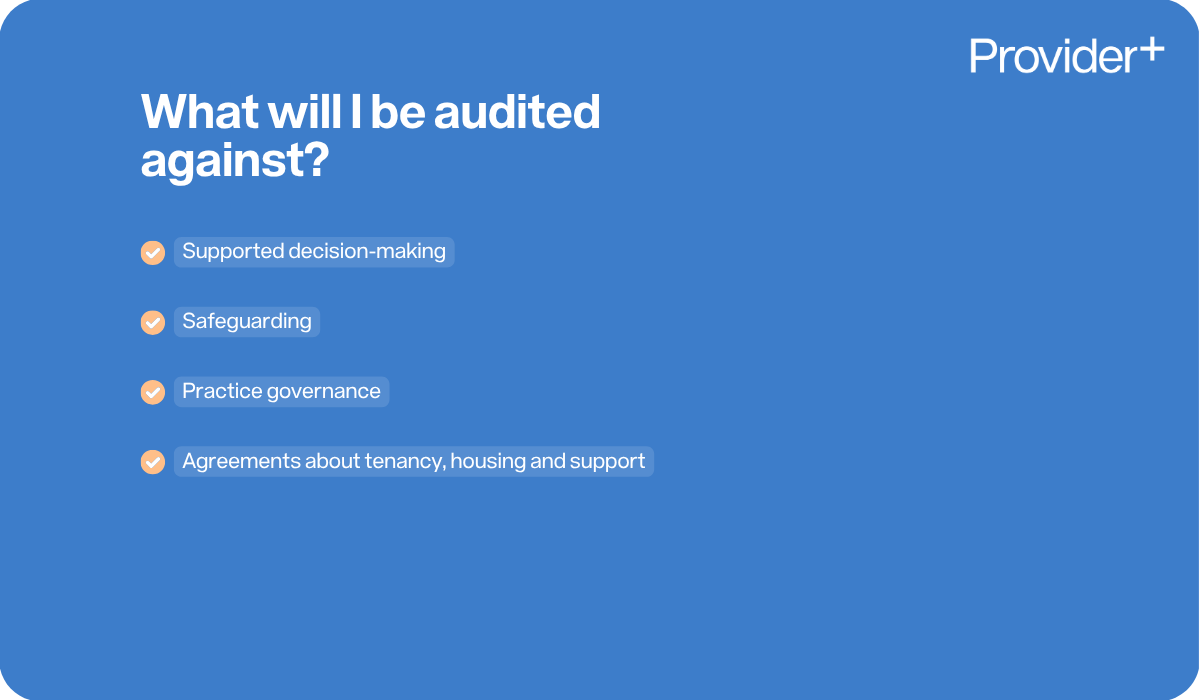
The new SIL Practice Standards rest on four outcomes, and an auditor draws evidence from four places: your documents, your records, what they observe in the service environment, and what your workers and participants say. As a brand-new provider, you are building all of this from scratch, so this is where most of your preparation goes.
- Supported decision-making. Decisions about a participant's home, routines and relationships are made by them, not for them, with a trail showing how a decision was reached and who was involved.
- Safeguarding. How you prevent, identify and respond to harm: incidents, complaints, risk and restrictive practices, supported by a working incident register.
- Practice governance. Whether your policies, supervision and training describe what actually happens, version-controlled and reviewed.
- Agreements about tenancy, housing and support. Separating the tenancy agreement from the service agreement where you are both landlord and provider, and treating the home as the participant's home first.
These sit alongside the Core Module, which you are assessed against as part of becoming registered. Most SIL providers also need the high intensity daily personal activities module, and the behaviour support module if restrictive practices apply. Every worker in a risk-assessed role needs a valid NDIS Worker Screening Check clearance, and clearances take weeks, so start them early.
What does it cost and how long does it take?
The NDIS Commission charges no fee for the application itself. The real costs sit with the auditor, insurance, worker screening and your setup. Because SIL requires the more thorough certification pathway, audit fees run higher than for low-risk verification, and as a brand-new provider you are also standing up policies, systems and insurance for the first time. The Commission does not set audit fees, so they vary by auditor and by the size and complexity of your planned service, which makes getting more than one quote worthwhile.
On timing, allow six to twelve months end to end, from starting preparation to holding a certificate. Since you cannot deliver SIL until approval, that timeline is effectively your runway to launch, so the earlier you begin, the sooner you can open.
What if I'm not approved?
If your application is not approved, you cannot deliver SIL, as there is no partial approval. For a new entrant, this is a delay to your launch rather than a risk to an existing business, but it is still worth avoiding. Strong foundations, real evidence and a genuine grasp of the four standards are what get you approved the first time, which is another reason not to rush the preparation.
What should I do now?
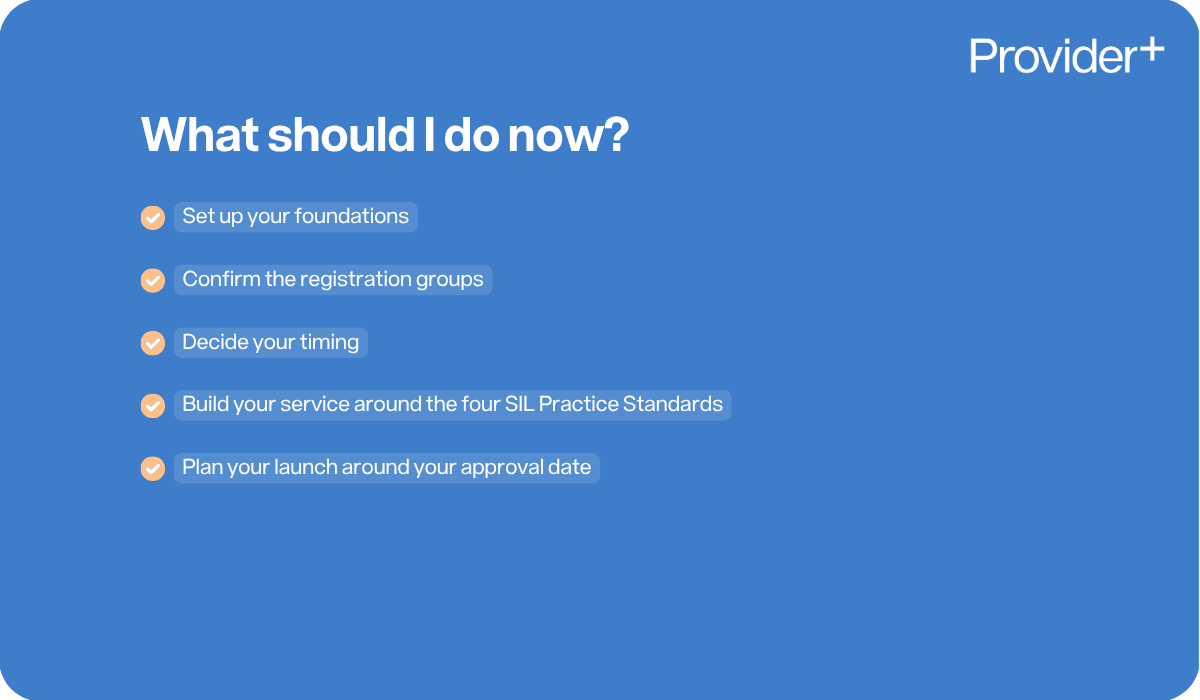
- Set up your foundations: business structure and ABN, insurance, and the start of your policies and systems.
- Confirm the registration groups you need for the SIL supports you plan to deliver.
- Decide your timing, weighing an earlier application (and possible lighter audit) against applying after 1 July.
- Build your service around the four SIL Practice Standards from the start.
- Plan your launch around your approval date, lining up participants for after it.
How Provider+ can help
Provider+ helps new providers enter the NDIS and register to deliver SIL: getting your foundations and systems in place, building the policies and evidence the new SIL Practice Standards require, and guiding you through the certification audit so you launch on solid ground.
Book a Call
This guide is general information for SIL providers. It is not legal advice and is not a substitute for the NDIS Practice Standards, the NDIS Act, or guidance from your approved quality auditor. For the authoritative and current position, see the NDIS Commission Reform Hub.
We strive to keep our content accurate and up to date; however, NDIS Commission rules and requirements can change. For the latest information, visit the NDIS Quality and Safeguards Commission website or contact our team.
FAQs
You register as a new NDIS provider before delivering any SIL. If you apply before 1 July 2026 you apply under group 0115 with 0138 added on approval; from 1 July you apply directly for 0138. You cannot deliver SIL until your registration is approved.
A suitable business structure and ABN, appropriate insurance, and the policies, procedures and record-keeping systems that registration expects. As a new entrant you build these from scratch, so factor in time for them.
New providers apply directly for Registration Group 0138 (Assistance with Supported Independent Living) together with any other applicable registration groups required for the supports they intend to deliver.
No. Because you are not already delivering SIL, there is no transitional allowance, and the 1 October 2026 date does not apply to you. You must wait until your registration is approved. Your existing unregistered supports can continue.
Yes. SIL sits in the higher-risk certification pathway and is held to the new SIL Practice Standards, so it asks more of a new provider than lighter supports do. It is entirely achievable with proper preparation, but it is worth going in with that expectation.

Understand exactly why registration takes 6–12+ months