How to Add Module 5A to Your Existing NDIS Registration
- Existing registered NDIS providers do not submit a new registration application to deliver Supported Independent Living (SIL). Instead, you must apply for a variation of registration to add Registration Group 0138 – Assistance with Supported Independent Living.
- Depending on your current registration scope and risk profile, the NDIS Commission may require an out-of-cycle certification audit before approving the variation.
- Providers must demonstrate compliance with both the NDIS Practice Standards Core Module and Module 5a: Assistance with Supported Independent Living.
- Preparation should focus on implementing SIL-specific governance systems and collecting evidence that demonstrates consistent practice across your organisation.
Can an Existing NDIS Provider Add SIL to Their Registration?
Yes. If your organisation is already registered with the NDIS Quality and Safeguards Commission, you do not need to apply for a completely new registration to begin delivering Supported Independent Living (SIL).
Instead, you apply for a variation of registration to add Registration Group 0138 – Assistance with Supported Independent Living to your existing registration.
Although this is an administrative variation rather than a new registration, providers should not assume the process is simple.
Adding SIL expands the scope of your registration into one of the NDIS's most heavily regulated support categories. Before approving the variation, the Commission may require additional auditing to ensure your organisation can safely deliver Supported Independent Living services.
For most providers, the challenge is not submitting the application—it's demonstrating that governance systems, workforce capability and participant safeguards meet the expectations of Module 5A.
Who Should Read This Guide?
This guide is designed for providers that are already registered with the NDIS Commission and want to expand their services to include Supported Independent Living.
For example, you may currently provide:
- Support Coordination
- Community Participation
- Assistance with Daily Living
- High Intensity Daily Personal Activities
- Behaviour Support
- Therapeutic Supports
- Early Childhood Supports
…and now wish to begin delivering SIL.
If you're not yet registered with the NDIS, you'll need to follow the registration process for new SIL providers instead.
Why Is Adding SIL Different from Adding Other Registration Groups?
Supported Independent Living is unique because it involves supporting participants in their homes, often every day and, in many cases, twenty-four hours a day.
This creates additional responsibilities that are not fully addressed by the Core Module alone.
Module 5A introduces SIL-specific expectations around:
- supported decision-making
- safeguarding in shared living environments
- practice governance
- workforce capability
- tenancy rights
- housing and support separation
As a result, organisations expanding into SIL often need to strengthen existing systems rather than simply adding another registration group.
Understanding the Registration Variation Process
Many providers are unsure where to begin.
Although the exact process may vary depending on your circumstances, it generally follows these stages.
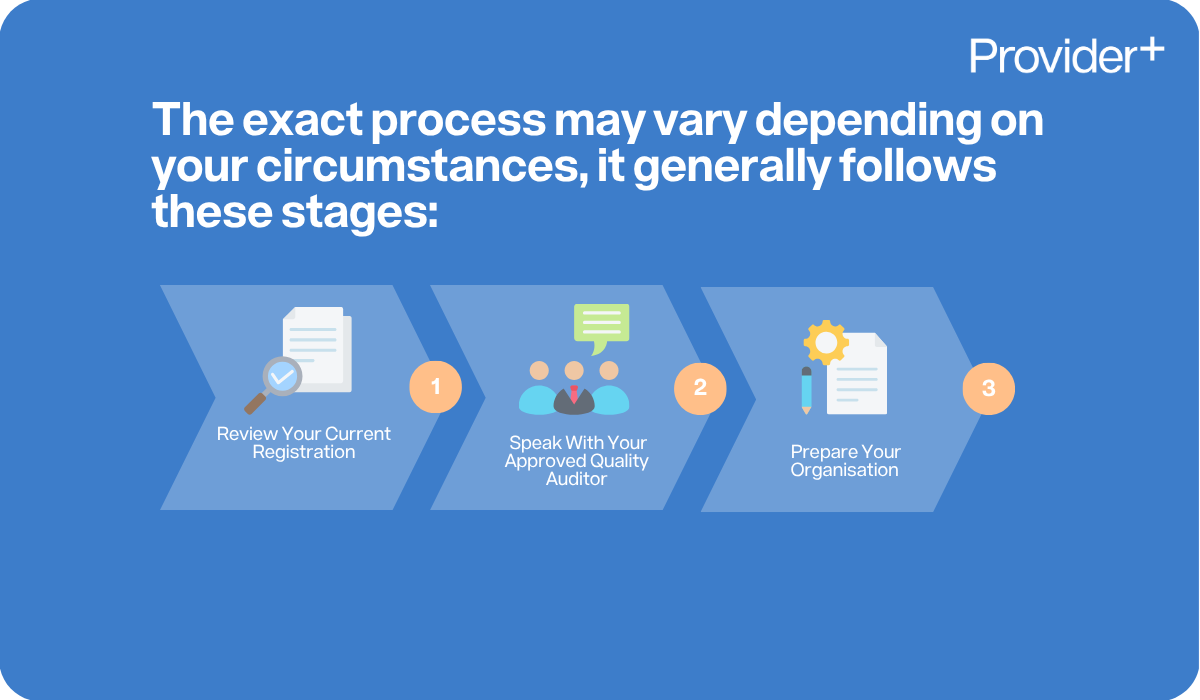
Step 1 – Review Your Current Registration
Before applying, review your existing registration scope and identify how SIL fits within your current services.
Consider:
- whether you already deliver supports that complement SIL
- whether your workforce has SIL experience
- whether additional registrations (such as High Intensity Supports) may also be required
Starting with a clear understanding of your existing scope helps identify any operational gaps before beginning the application.
Step 2 – Speak With Your Approved Quality Auditor
Before lodging a variation application, contact your Approved Quality Auditor (AQA).
Your auditor can advise whether adding Registration Group 0138 is likely to require an additional certification audit or an out-of-cycle assessment.
Early discussions also help you understand:
- likely audit timing
- documentation requirements
- evidence expectations
- preparation priorities
This allows your organisation to begin collecting evidence well before the audit commences.
Step 3 – Prepare Your Organisation
Many providers make the mistake of preparing only their policies.
Successful organisations prepare their entire management system.
This includes reviewing:
- governance frameworks
- workforce systems
- participant documentation
- supervision processes
- safeguarding systems
- continuous improvement
- service agreements
- risk management
Preparation should focus on ensuring these systems operate consistently rather than simply existing on paper.
Understanding the Standards You'll Be Assessed Against
Adding SIL does not replace your existing obligations.
Instead, it expands them.
Your organisation must continue meeting the NDIS Practice Standards Core Module while also demonstrating compliance with Module 5A.
A simple way to understand the relationship is:
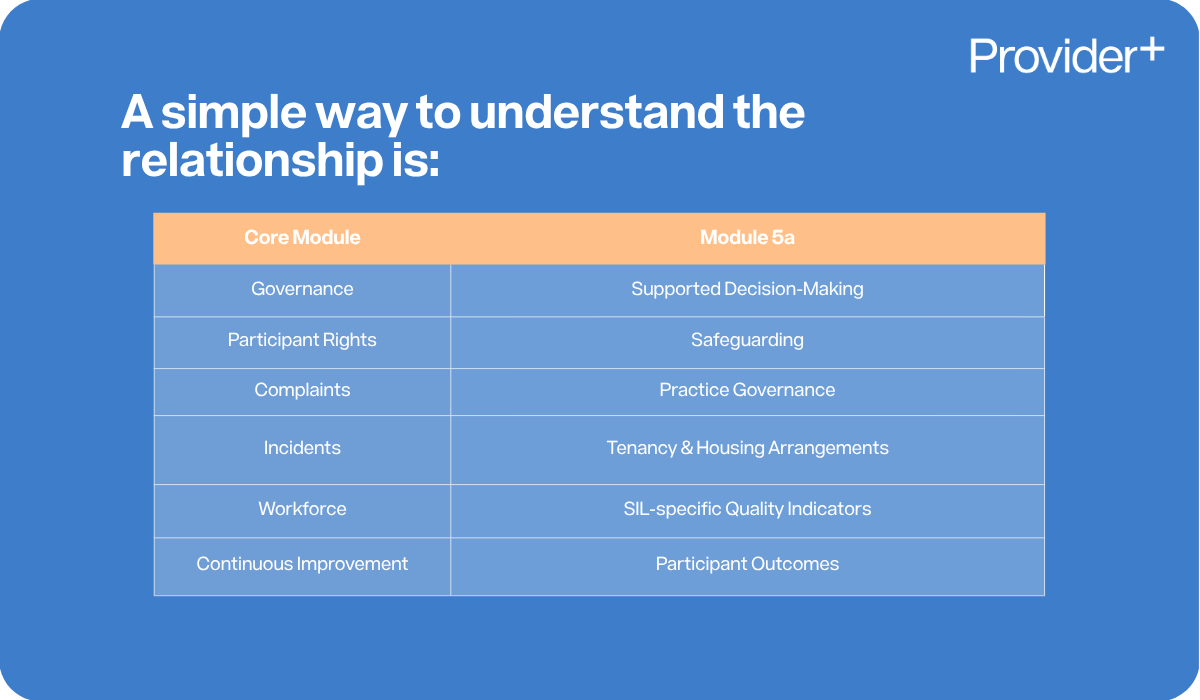
Module 5A demonstrates that those governance systems work effectively within Supported Independent Living environments.
Why Existing Providers May Need to Strengthen Their Systems
Many registered NDIS providers already have well-established governance, workforce and quality management systems that support their current registration groups.
However, Supported Independent Living presents unique operational and regulatory requirements that may not be fully addressed by existing systems.
As providers prepare to add Registration Group 0138, they should review whether their current practices adequately support:
- documenting supported decision-making in everyday service delivery
- safeguarding participants in shared living environments
- supervising and monitoring practice across multiple SIL homes
- clearly separating tenancy arrangements from support arrangements where both are provided
- demonstrating how participants are involved in decisions about their home and daily supports
These are not entirely new governance concepts, but they require providers to apply their existing systems within the context of Supported Independent Living and align them with the additional expectations introduced by Module 5A.
Reviewing these areas before applying for a registration variation can help identify gaps early and support a smoother audit process.
Conduct Your Internal Audit Before Applying
Before requesting Registration Group 0138, complete an internal review of your organisation.
Questions to ask include:
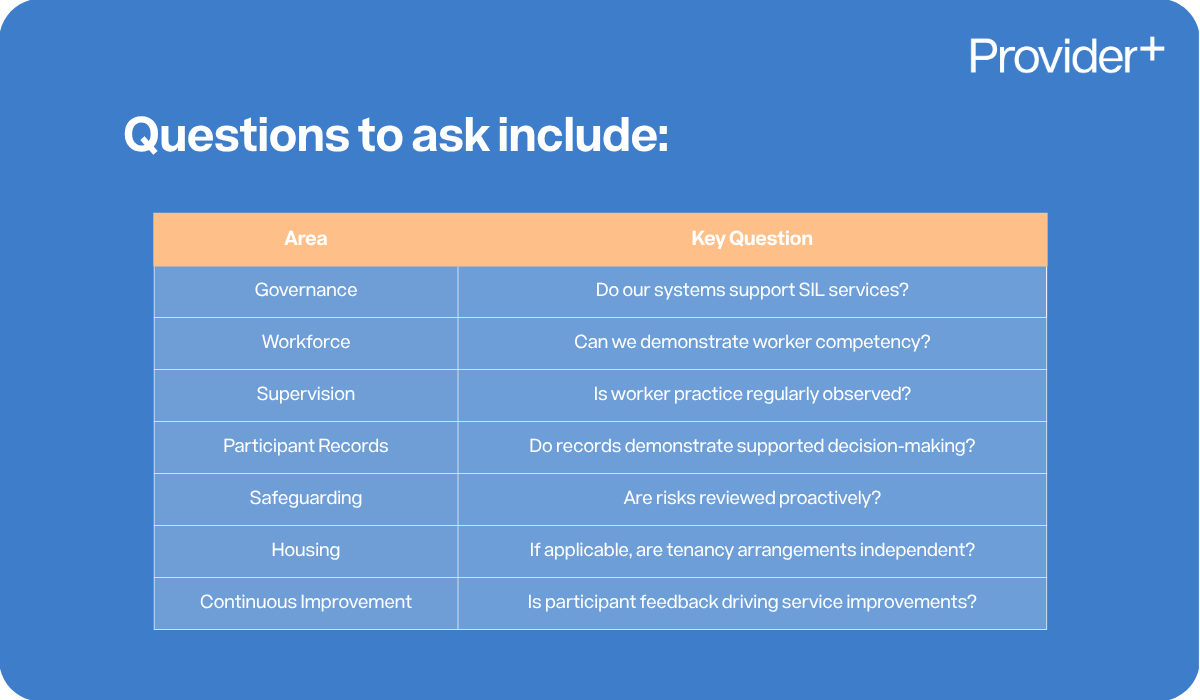
Completing a full internal audit before lodging your variation application allows you to resolve issues before an external auditor identifies them.
How Does Module 5A Apply to Existing Registered Providers?
Once you apply to add Registration Group 0138, you'll need to demonstrate that your existing management systems can safely support participants living in Supported Independent Living.
While your organisation may already comply with the Core Module, Module 5A introduces additional requirements that focus specifically on the participant experience within SIL homes.
Rather than creating completely new systems, many providers will strengthen existing governance processes so they address the unique risks and responsibilities associated with SIL.
Meeting the Supported Decision-Making Standard
Supported decision-making is one of the central principles of Module 5A.
Participants should be supported to make decisions about their own lives, with workers providing information, communication support and sufficient time for informed choices.
Examples include decisions about:
- daily routines
- meals and household activities
- community participation
- healthcare appointments
- personal goals
- relationships
- cultural and religious preferences
For providers expanding into SIL, this often means reviewing whether current documentation demonstrates participant choice throughout everyday support—not just during planning meetings.
Evidence auditors may review
- Supported Decision-Making Policy
- Communication profiles
- Participant support plans
- Progress notes
- Staff training records
- Supervision records
- Examples showing participant preferences influencing service delivery
The focus is on demonstrating that participant choice is consistently embedded across every SIL home.
Meeting the Safeguarding Standard
Safeguarding within SIL extends beyond incident management.
Because participants often live together and receive daily support, providers should demonstrate proactive systems that identify and reduce risks before harm occurs.
Areas commonly assessed include:
- abuse prevention
- neglect prevention
- financial exploitation
- conflict between co-tenants
- emergency preparedness
- privacy
- visitor management
- community safety
Workers should understand how to balance participant safety with dignity of risk, recognising that participants retain the right to make informed choices.
Evidence auditors may review
- Safeguarding framework
- Risk assessments
- Incident investigations
- Emergency plans
- Behaviour support processes (where applicable)
- Staff training
- Quality improvement records
Meeting the Practice Governance Standard
Practice Governance asks an important question:
How do you know workers consistently deliver safe, person-centred SIL supports?
To answer this, providers need evidence that leadership actively monitors practice rather than assuming policies are followed.
Examples include:
- structured induction
- competency assessments
- supervision
- practice observations
- mentoring
- coaching
- leadership reviews
- workforce development plans
For organisations entering SIL, competency assessment often becomes far more important than training attendance alone.
Meeting the Tenancy, Housing and Support Arrangement Standard
If your organisation provides both housing and SIL, Module 5A expects these arrangements to remain clearly separate.
Participants should understand:
- the difference between tenancy and service agreements
- their tenancy rights
- that changing support providers does not automatically affect their housing
- how to access advocacy or legal advice if required
Where housing and support are delivered by the same organisation, conflict of interest processes should also be documented and regularly reviewed.
What Evidence Should You Prepare?
Auditors generally assess evidence across multiple areas rather than relying on individual documents.
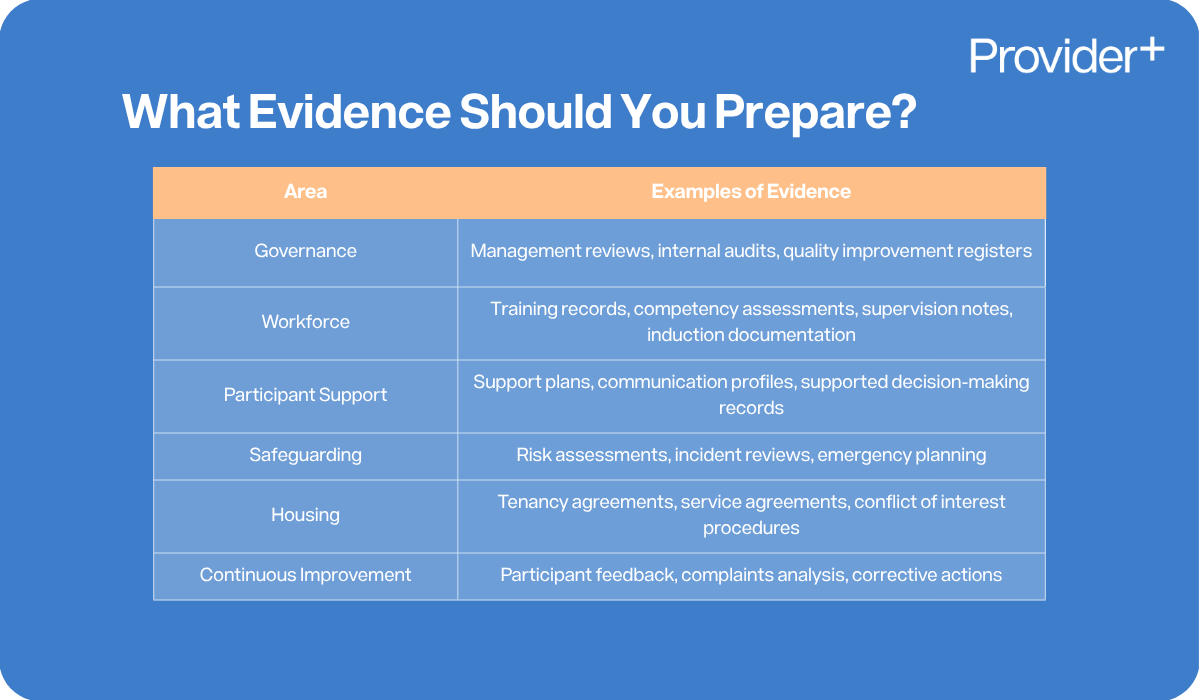
Building this evidence over time is generally far easier than collecting it immediately before an audit.
Common Mistakes Providers Make When Adding SIL
Although many organisations already have mature quality systems, several issues commonly arise during registration variations.
Assuming Existing Governance Is Enough
Good governance provides an excellent foundation, but SIL introduces additional operational risks that often require new procedures and stronger evidence.
Focusing on Policies Instead of Practice
Policies explain expectations.
Auditors also want evidence that workers consistently apply those expectations.
Limited Competency Assessment
Training records alone rarely demonstrate workforce capability.
Competency assessments and documented observations provide stronger evidence.
Weak Participant Documentation
Support records should clearly demonstrate:
- participant choice
- communication preferences
- supported decision-making
Overlooking Housing Arrangements
Providers delivering both housing and SIL should review tenancy arrangements early rather than waiting until the audit.
SIL Registration Variation Checklist
Before submitting your variation application, consider whether your organisation can answer "Yes" to the following questions.
- Have we reviewed Module 5A in detail?
- Do our existing governance systems support SIL?
- Are workers competent to deliver SIL supports?
- Is supervision documented?
- Are participant records person-centred?
- Are safeguarding systems operating effectively?
- auditIf we provide housing, are tenancy arrangements clearly separated?
- Can leadership demonstrate quality oversight across every SIL home?
- Do we have evidence of continuous improvement?
Completing this review before lodging your application can significantly improve audit readiness.
How Provider+ Can Help
Need help adding SIL to your NDIS registration? Provider+ provides the policies and expert support to help you prepare for your audit and registration variation.
Conclusion
Adding Supported Independent Living to your existing NDIS registration is more than an administrative variation.
It expands your organisation into one of the most highly regulated areas of disability support.
Providers that prepare early, strengthen governance systems and build evidence through everyday practice are generally better positioned for both the audit process and the delivery of high-quality SIL services.
Rather than viewing Module 5A as another compliance requirement, use it as an opportunity to strengthen participant outcomes, workforce capability and organisational governance.
We strive to keep our content accurate and up to date; however, NDIS Commission rules and requirements can change. For the latest information, visit the NDIS Quality and Safeguards Commission website or contact our team.
FAQs
No. Existing providers apply for a variation of registration to add Registration Group 0138 rather than submitting a new registration application.
Possibly. Depending on your current registration scope and risk profile, the NDIS Commission may require an out-of-cycle certification audit.
No. Module 5A contains additional SIL-specific Practice Standards that must also be satisfied.
Not necessarily. Many organisations update existing documentation rather than creating completely new policies.
The priority is ensuring policies accurately reflect current practice.
Yes. However, you'll still need to demonstrate compliance with Module 5A and any other applicable Practice Standards.
As early as possible. Building evidence gradually is generally much easier than preparing immediately before an audit.

Understand exactly why registration takes 6–12+ months