What's the Difference Between SIL, SDA and Other NDIS Living Supports?
- SIL, SDA, STA, MTA and ILO are not interchangeable — each funds a different type of support and serves a different purpose under the NDIS
- SIL funds support workers; SDA funds the physical home — a participant can receive one, both, or neither, assessed independently through their NDIS plan
- Short Term Accommodation (STA) is temporary accommodation for respite purposes; Medium Term Accommodation (MTA) is temporary housing while waiting for a permanent long-term solution — they are not the same
- ILO is more flexible than SIL — it designs a living arrangement around the participant's goals rather than placing them into an existing support model
- NDIS providers must register for the groups that match the services they deliver, not the housing model they operate — selecting the wrong groups can delay registration
If you're an NDIS provider looking at registration, one of the most important distinctions to understand is that SIL, SDA, STA and MTA are not the same type of support. Some are accommodation, some are support services, and some are temporary arrangements.
SIL, SDA, STA, MTA and ILO are different NDIS home and living supports, and they are not interchangeable. This guide explains what each support is, who it suits, and exactly what you need to do to become a registered provider for it.
At a glance: What's the difference between SIL, SDA, STA, MTA and ILO?
The easiest way to understand these supports is to separate accommodation from support services.
What is Supported Independent Living (SIL)?
Supported Independent Living (SIL) funds the support workers who help participants live as independently as possible. It does not pay for the home itself.
According to the National Disability Insurance Agency (NDIA), SIL generally supports participants who need significant assistance with everyday activities throughout the day, overnight or both.
Support may include:
- Personal care
- Meal preparation
- Household tasks
- Assistance with daily routines
- Developing independent living skills
- Medication assistance where appropriate
- Overnight support
SIL is commonly delivered in shared homes where multiple participants receive support, although it may also be delivered in individual living arrangements where appropriate.
The level of support varies depending on each participant's goals and assessed needs.
When is SIL appropriate?
SIL is generally considered when a participant requires ongoing daily support to live safely and independently.
Whether SIL is included in an NDIS plan depends on individual circumstances and whether it represents reasonable and necessary support under the NDIS.
Providers delivering SIL should ensure they understand the relevant NDIS Practice Standards and Quality Indicators as well as the applicable registration group requirements published by the NDIS Quality and Safeguards Commission.
What is Specialist Disability Accommodation (SDA)?
Specialist Disability Accommodation (SDA) funds specialised housing for participants who have extreme functional impairment or very high support needs.
Importantly, SDA pays for the physical home, not the support services delivered inside it.
The purpose of SDA is to provide housing designed with accessibility and support requirements in mind, allowing participants to live safely and maximise independence.
Examples of SDA features may include:
- Improved physical accessibility
- High levels of structural accessibility
- Assistive technology integration
- Housing designed to support complex mobility needs
Not every participant is eligible for SDA.
The NDIA states that SDA is intended for only a small proportion of NDIS participants who meet strict eligibility criteria.
Can participants receive both SIL and SDA?
Yes.
SIL and SDA often work together, but they fund different things.
For example:
- SDA pays for the specialised dwelling.
- SIL pays for the support workers who assist participants living there.
A participant living in SDA may not require SIL if they can live independently.
Likewise, someone may receive SIL while living in an ordinary rental property that is not SDA.
What is Short Term Accommodation (STA)?
Short Term Accommodation provides temporary accommodation together with personal care and support for a short period.
STA gives participants an opportunity to:
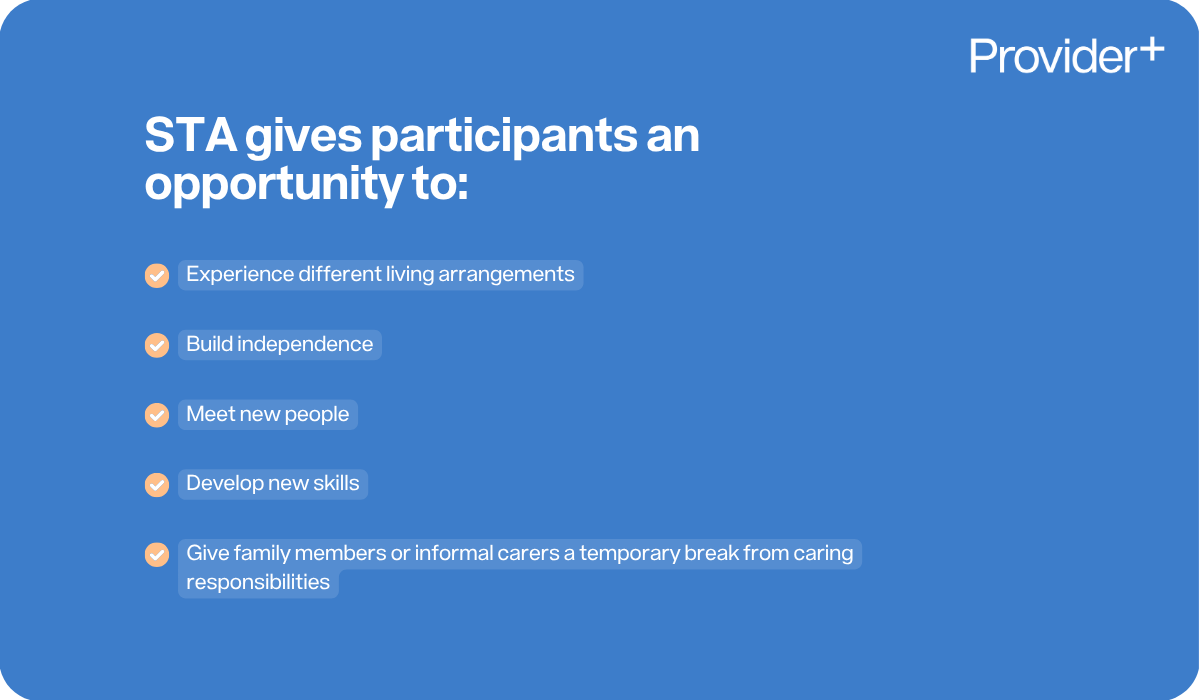
- Experience different living arrangements
- Build independence
- Meet new people
- Develop new skills
- Give family members or informal carers a temporary break from caring responsibilities
STA generally includes:
- Accommodation
- Personal care
- Food
- Agreed support services
It is designed as a temporary support rather than a permanent housing solution.
When is STA used?
Examples include:
- Planned respite stays
- Short breaks from the family home
- Skill-building opportunities
- Temporary support while carers take a break
Providers should ensure they understand the participant's plan funding and service agreements before delivering STA supports.
What is Medium Term Accommodation (MTA)?
Medium Term Accommodation (MTA) provides temporary accommodation for participants who are waiting for their long-term housing solution to become available.
Unlike STA, MTA is not designed as respite.
Instead, it bridges the gap while participants wait for:
- Home modifications
- SDA to become available
- Long-term disability housing
- Other permanent living arrangements
According to the NDIA, MTA is available only in specific circumstances where a participant has a confirmed long-term housing solution but cannot move into it immediately.
What does MTA fund?
MTA funds the accommodation itself during the transition period.
It does not automatically include daily support services.
Participants who require daily support may receive separate supports within their NDIS plan where approved.
What are Individualised Living Options (ILO)?
Individualised Living Options (ILO) help participants explore and establish living arrangements that best suit their personal goals and preferences.
Unlike SIL, ILO is highly flexible.
Rather than fitting participants into an existing service model, ILO is designed around how the participant wants to live.
Examples may include:
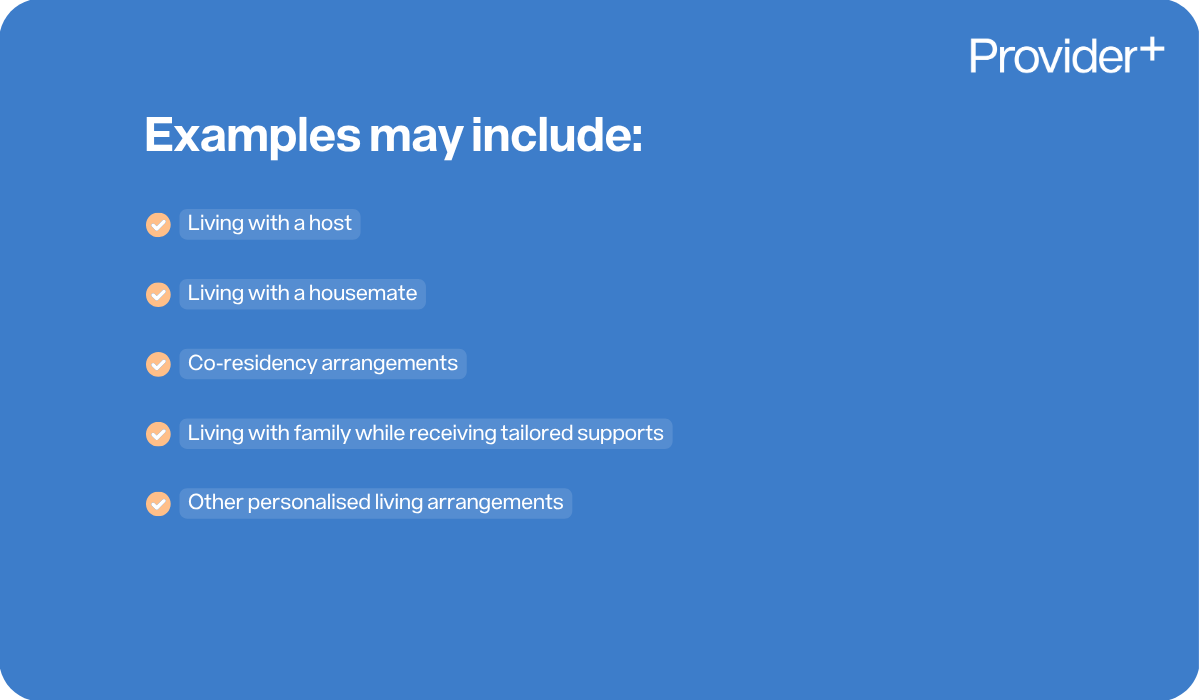
- Living with a host
- Living with a housemate
- Co-residency arrangements
- Living with family while receiving tailored supports
- Other personalised living arrangements
ILO focuses on creating sustainable living arrangements that strengthen independence, relationships and community participation.
How is ILO different from SIL?

The main difference is flexibility.
SIL generally funds rostered daily support.
ILO focuses on designing an individual living arrangement around the participant's circumstances.
Some participants may move from ILO to SIL over time, while others may never require SIL.
Each support is assessed independently.
Which NDIS registration groups apply to these supports?
The NDIS Quality and Safeguards Commission publishes registration groups that determine which supports registered providers are approved to deliver.
Depending on your services, registration groups may include:
- Assistance with Daily Life Tasks in a Group or Shared Living Arrangement (commonly associated with SIL)
- Specialist Disability Accommodation
- Short Term Accommodation and Assistance (including respite)
- Medium Term Accommodation and other applicable support classes
- Other registration groups relevant to your service model
Providers should always refer to the current NDIS Commission registration group guidance before selecting registration groups during their application.
Registration is based on the services you intend to deliver, not simply the housing model you operate.
Which housing and support model is right for participants?
Each support addresses a different need.
SIL suits participants who require regular daily assistance.
SDA provides specialised housing.
STA offers temporary respite.
MTA bridges the gap while waiting for permanent accommodation.
ILO supports personalised living arrangements built around individual goals.
Participants may receive one, several or none of these supports depending on their NDIS plan.
Because funding decisions are individual, providers should avoid assuming that one support automatically qualifies a participant for another.
What should unregistered providers know before applying for registration?
Many providers already deliver disability services outside the registered provider framework before deciding to become registered.
Understanding these housing and support categories helps ensure your registration application reflects the services you actually provide.
Before applying, providers should:
- Review their current service offering.
- Identify which NDIS registration groups apply.
- Understand the relevant Practice Standards.
- Prepare evidence for the required audit.
- Ensure policies, procedures and governance align with Commission requirements.
- Confirm workforce capability for the supports they intend to deliver.
Applying for the correct registration groups from the beginning can reduce unnecessary delays and help ensure your registration reflects your long-term service strategy.
If you're planning to become an NDIS registered provider or expand your existing registration, contact Provider+ to discuss your registration pathway.
We strive to keep our content accurate and up to date; however, NDIS Commission rules and requirements can change. For the latest information, visit the NDIS Quality and Safeguards Commission website or contact our team.
Need help with the NDIS?
Fill in the form below to get started.
FAQs
Yes. SIL funds support services, while SDA funds specialised housing. A participant may receive either support independently or both together if included in their NDIS plan.
No. Short Term Respite provides temporary accommodation and support for respite purposes. Medium Term Accommodation provides temporary housing while a participant waits for an approved long-term housing solution.
No. SDA funds the specialised dwelling. Daily support services are funded separately where approved, such as through SIL or other NDIS supports.
No. ILO and SIL are different supports. SIL provides ongoing daily support, while ILO helps participants develop personalised living arrangements that suit their goals.
Providers must apply for the registration groups that match the services they intend to deliver. The applicable registration groups are published by the NDIS Quality and Safeguards Commission and should be checked before submitting an application.
Understand exactly why registration takes 6–12+ months